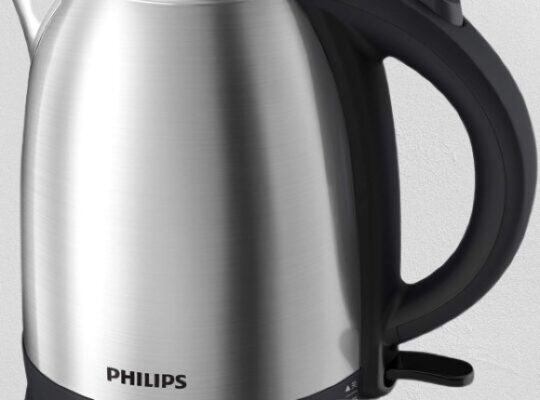
Your kettle turns off automatically to protect the heater, the appliance, and you. You’re dealing with a thermostat or electronic controller that senses temperature or the absence of water and then cuts power to prevent overheating, boil‑dry damage, and scald risks. The mechanism can be a bimetallic strip, a thermistor with logic, or a simple cutout, and understanding which one your kettle uses explains common faults and how to fix them—so let’s examine how they work.
Key Takeaways
- The kettle’s thermostat or bimetal cutoff senses boiling steam and mechanically or electrically interrupts power at the set temperature.
- Boil-dry protection detects low or no water (via thermal sensor, float, or conductivity) and shuts off to prevent overheating.
- Mineral scale on the element raises local temperature, causing premature or erratic automatic shutoff.
- Faulty sensors, corroded contacts, or water ingress on the PCB can create false shutdowns.
- High-wattage elements heat faster, making shutoff occur sooner; sensor placement and hysteresis affect timing.
How Auto-Shutoff Protects You and Your Home
How does the auto-shutoff feature actually protect you and your home? You rely on this mechanism to interrupt power when predefined conditions indicate risk: it senses temperature or steam thresholds and breaks the circuit to prevent overheating. By eliminating sustained heating after water boils or when the vessel is dry, it reduces thermal stress on internal components, decreasing insulation degradation and lowering fire initiation probability. The system also minimizes scald hazards by limiting unintended prolonged boiling that can cause explosive splatter or steam surges. In fault scenarios—like a stuck switch or malfunctioning indicator—the auto-shutoff provides a secondary, rapid-response safeguard that isolates live elements from the enclosure. You should treat it as an engineered control with finite response time; regular maintenance and adherence to manufacturer limits ensure it functions within design parameters. Proper operation therefore materially lowers both personal injury risk and property-damage potential through controlled, automatic de-energization. Frying in an electric kettle is generally discouraged due to safety and control limitations, so rely on the auto-shutoff as one layer of protection rather than a substitute for safe cooking methods.
The Role of Thermostats in Kettles
Why does a tiny thermostat determine whether your kettle heats or shuts down? You rely on this compact sensor to monitor fluid temperature and enforce safe operation. The thermostat samples temperature near the heating element or base plate and converts thermal input into an electrical or mechanical response that interrupts power when a setpoint is met. In electric kettles, thermostats are calibrated to a specific threshold—typically around boiling—so they deliver repeatable cutoff behavior within defined tolerances.
You should know thermostats are chosen for responsiveness, stability, and longevity; their thermal mass and placement influence accuracy and overrun. They also protect against dry-boil conditions by detecting rapid temperature rise without liquid. Proper design ensures the thermostat’s setpoint, hysteresis, and thermal coupling minimize chatter and prevent nuisance trips while ensuring timely shutdown. For safety-focused users, confirm the kettle’s thermostat is factory-calibrated, enclosed against moisture, and integrated with redundant cutoffs in quality appliances. Materials like stainless steel or glass can affect thermal coupling and overall performance, so consider the kettle material choice when evaluating thermostat accuracy.
How Bimetallic Strips Trigger Shutoff
You’ll observe that a bimetallic strip bends predictably as its layered metals expand at different rates under heat, producing a controlled mechanical displacement. That thermal bending action is used to actuate a contact separation mechanism: as the strip deflects it moves a lever or breaks an electrical contact, interrupting the circuit. This simple thermal-to-mechanical transduction gives the thermostat a reliable, repeatable shutoff point for the kettle. Regular maintenance like descaling with vinegar-water helps keep the thermostat and heating element free of buildup and operating reliably.
Thermal Bending Action
Curious how a tiny metal strip can cut power to a boiling kettle? You’re looking at thermal bending action: a bimetallic strip made of two metals with different coefficients of thermal expansion bonded together. As the strip heats, one metal expands more than the other, producing predictable curvature. You’ll find the strip positioned so that its bend actuates a mechanical linkage when water reaches boiling temperature. The strip’s geometry, material pair, and thickness determine its deflection versus temperature curve, giving a repeatable trip point and hysteresis for safety. Design tolerances ensure the strip won’t trip prematurely or fail to actuate. Because this is a mechanical temperature sensor, you should regularly inspect for corrosion, deformation, or debris that can impair reliable shutoff and create a hazard.
Contact Separation Mechanism
Having seen how a bimetallic strip bends predictably with temperature, you can now examine how that motion actually opens the electrical circuit: the strip is mounted so its thermal deflection drives a contact separation mechanism that physically breaks the live connection. You’ll observe a rapid, controlled separation engineered to minimize arcing and contact wear. The strip either unlatches a spring-loaded contact or moves a bridge away from a fixed terminal; both designs prioritize positive open distance and repeatable thresholds. You should inspect insulation, contact material, and spring force to ensure reliable safety operation. Maintenance focuses on clean contacts and intact springs. The following summary shows key elements and safety concerns:
| Component | Purpose |
|---|---|
| Contact gap | Prevent arcing |
| Spring | Ensure rapid separation |
| Contact material | Resist wear and corrosion |
Thermistors and Electronic Control Circuits
How does an electric kettle know when water has reached the set temperature? You rely on a thermistor—a temperature-dependent resistor—mounted in contact with the kettle base or immersed in a sensor well. As temperature rises, the thermistor’s resistance changes predictably (NTC decreases, PTC increases). The control circuit measures that resistance via a voltage divider or bridge, converting it to a temperature value with an analog-to-digital converter. You’ll find a microcontroller or comparator interpreting the signal against a preset threshold; when the measured temperature equals the setpoint, the controller issues a switch-off command to a relay or solid-state switch. The electronics include filtering and hysteresis to avoid rapid on/off cycling from noise or transient spikes. For safety, circuits incorporate over-temperature detection and fail-safe timing so a stuck sensor won’t leave the heater energized indefinitely. Design emphasizes reliable sensor contact, electromagnetic immunity, and component ratings to prevent overheating and electrical hazards. Many kettles also include automatic shut-off and insulated exteriors to improve user safety and convenience.
Boil-Dry Protection: What It Is and How It Works
Besides temperature sensing, kettles must guard against scenarios where the heating element runs with little or no water — a condition that can rapidly overheat and damage the appliance. Boil-dry protection is a safety interlock that detects insufficient liquid and interrupts power before temperatures reach destructive levels. You rely on either a float switch, a conductivity sensor, or a thermal cutoff; each senses absence of water or abnormal temperature rise and trips the control logic. The mechanism is fail-safe: once triggered it needs manual reset or power-cycle to prevent automatic restart into a hazardous state. Maintenance is simple but critical — keep sensors clean and inspect seals so detection remains reliable. For design visualization:
| Component | Function |
|---|---|
| Float/Probe | Detects liquid level |
| Thermistor/Cutoff | Measures rapid temp rise |
| Control Logic | Executes shutdown |
| Manual Reset | Ensures human verification |
Understand that boil-dry protection minimizes fire risk and element burnout by enforcing an irreversible interruption until safe conditions return. Regular descaling with limescale removal helps sensors and probes function correctly and prevents false trips.
Why Some Kettles Turn Off Faster Than Others
You’ll notice some kettles shut off noticeably sooner than others because the temperature sensor calibration and thermistor sensitivity vary between models, affecting the trip point for the cutoff. Element wattage and heating profile also change how quickly water reaches that sensor threshold, so higher-wattage units can trigger cutoff faster or overshoot depending on control logic. Finally, differing build quality and explicit safety cutouts (mechanical bimetal vs. electronic controllers) determine how conservatively the appliance responds to high temperatures or dry conditions. Many popular models also use a stainless steel body which can affect heat retention and cooling behavior after cutoff.
Thermostat/Thermistor Sensitivity
Why does one kettle click off noticeably sooner than another? You’re dealing with thermostat and thermistor characteristics: setpoint calibration, hysteresis width, and response time. A thermostat is a mechanical switch with a bimetal element that trips at a defined temperature; manufacturing tolerances and adjustment determine when it breaks the circuit. A thermistor is an electronic temperature sensor whose resistance curve and ADC resolution affect the controller’s perceived temperature. Faster trip behavior can result from tighter setpoints, narrower hysteresis, or more sensitive sensor placement near the heating element. For safety, manufacturers choose conservative trip thresholds and hysteresis to avoid under- or over-shoot. If you’re assessing a kettle, check documented trip specs and avoid modifying sensors—incorrect changes can create burn or electrical hazards.
Element Wattage Differences
Sensor behavior explains some differences, but the heating element’s wattage is a primary determinant of how quickly a kettle reaches the thermostat/thermistor trip point. If you choose a higher-wattage element, it supplies more energy per second, shortening time-to-trip; lower wattage lengthens it. You should consider watt density, power supply limits, and how faster heating affects localized boiling and steam generation near the sensor. Faster cycles can reduce dry-boil risk if control is correct, but they also increase stress on seals and wiring, so inspect ratings. Match kettle capacity to wattage for predictable shutoff timing. Compare typical specifications:
| Wattage (W) | Typical Effect |
|---|---|
| 1000 | Slower heat-up |
| 1500 | Moderate |
| 3000 | Rapid |
Build and Safety Cutouts
How do construction choices and safety cutouts influence how quickly a kettle shuts off? You’ll find that material selection, sensor placement, and cutout thresholds determine shutoff timing. Metal-bodied kettles conduct heat to the thermostat faster, causing earlier activation; double-wall or insulated models delay thermal transfer, prolonging boil detection. The thermostat type matters: bimetallic strips react mechanically with a defined hysteresis, while electronic thermistors sample temperature more precisely and can trigger faster or programmable cutouts. Manufacturers set safety cutouts (overheat limit, boil-dry protection) with conservative margins to prevent damage; lower thresholds force earlier shutdowns. Airflow, steam channeling, and lid fit affect sensor exposure and thus timing. When safety is critical, choose models with redundant cutouts and documented trip points so you’ll know the exact protection behavior.
Common Causes of Faulty Auto-Shutoff
When did your kettle last get inspected for mineral scale, loose wiring, or a degraded thermal cutout? Scale buildup on the heating element raises thermal resistance, causing localized overheating that can trigger premature or erratic shutoff sensors. Mechanical wear or corrosion of the bimetallic strip or spring in the cutout reduces responsiveness, so the mechanism may fail to actuate at the correct temperature. Electrical faults — intermittent connections, broken solder joints, or frayed wiring to the thermostat — produce unstable sensor signals that mimic rapid temperature changes and cause unintended trip events. Faulty PCB components, such as a degraded temperature sensor (NTC/thermistor) or failing comparator circuitry, will present incorrect voltage thresholds and misinterpret actual water temperature. Water ingress or condensation can short sensor contacts, introducing noise into the control circuit and provoking shutdown. Manufacturing tolerances out of specification, or improper assembly alignment of the sensor to the heating chamber, also lead to inconsistent thermal coupling and unreliable auto-shutoff behavior. Regular descaling with white vinegar helps prevent mineral buildup that commonly causes these problems.
How to Test and Maintain Your Kettle’s Safety Features
Want to be sure your kettle’s safety systems will behave reliably when you need them to? Begin by visually inspecting the power cord, plug, and housing for abrasion, melting, or corrosion; any anomaly can compromise earth continuity and thermal cutoff response. Test the automatic shutoff by filling the kettle to the minimum and maximum marks separately, bringing water to boil while timing shutoff; deviations from the manufacturer’s cycle time or failure to shut off indicate sensor or thermostat drift. Verify the boil-dry protection by operating with the minimum water level and confirming immediate shutoff without heating element glow or continued current draw—use a clamp meter if available. Clean the temperature sensor and heating element contact areas to remove scale using descaling solution per instructions, then rinse thoroughly. Check the lid seal and hinge for proper closure force; incomplete closure can prevent thermostatic contact engagement. Record test results and schedule periodic checks every three months to maintain predictable safety performance. Also consider the kettle’s power rating and heating element wattage when assessing boil speed and overall performance.
When to Repair or Replace a Kettle
When deciding whether to repair or replace your kettle, compare the estimated repair cost to the price of a new unit and factor in remaining warranty coverage. You’ll also consider the appliance’s age and any warranty voids that affect cost-effectiveness. Finally, weigh safety and performance risks—persistent auto-shutoff faults, heating-element degradation, or exposed wiring usually justify replacement rather than repair. Also consider routine maintenance needs like regular descaling to maintain performance and prevent limescale buildup.
Cost of Repair Vs Replacement
Budget is the primary constraint you’ll weigh when deciding whether to repair or replace a kettle: compare the cost of parts and labor (or DIY time) against the price of a new unit, factoring in the kettle’s age, warranty status, and remaining expected service life. Calculate total repair cost including replacement heating element, thermostat, switch, connectors, and any required diagnostic time. Estimate downtime and potential safety upgrades (insulation, grounded plug) a repair may not provide. If repair cost approaches 50–70% of a comparable new kettle that meets current safety standards, replacement is generally the prudent choice. Prioritize minimizing residual risk: choose the option that restores certified protective functions (auto-shutoff, thermal cutout) and documented safe operation.
Age and Warranty Status
How old is your kettle, and does it still have warranty coverage? Age and warranty determine the rational decision pathway: a unit within warranty should be evaluated for manufacturer repair or replacement to preserve cost-effectiveness and documented service history. If it’s out of warranty, quantify remaining useful life by estimating cycles-to-failure based on typical duty cycles (boiling frequency per day) and known component lifespans (heating element, thermostat, PCB). Calculate repair cost versus prorated replacement cost, adjusting for likelihood of subsequent failures as age increases. Retain records of serial number and purchase date to validate claims. If warranty applies, follow prescribed service channels to avoid voiding coverage; if not, prioritize solutions that minimize downtime and ensure certified parts and procedures.
Safety and Performance Risks
Why should you weigh safety and performance risks before deciding to repair or replace a kettle? You’ll need to assess collapse of insulation, compromised thermal cutouts, and corrosion of heating elements—conditions that increase shock, fire, and scald hazards. Quantify risk by inspecting visible damage, smelling burnt components, and testing automatic shutoff consistency; intermittent trips indicate failing sensors or wiring. Consider performance deficits: prolonged boil times, scale accumulation reducing power transfer, and leakage at seals. If remediation requires replacement of safety-critical components (thermal fuse, PCB, element) or exceeds 50% of replacement cost, replacement is prudent. Prioritize units with safety certifications; don’t attempt high-voltage repairs unless you’re qualified. Your decision should minimize residual risk and restore reliable thermal control.
Tips for Safe and Efficient Kettle Use
When should you descale, filter water, and position the kettle to extend component life and maintain heating efficiency? Descale at manufacturer-recommended intervals or when you observe scale accumulation; heavy limescale increases thermal resistance and triggers premature shutoff. Use a basic inline or countertop filter if your supply has high hardness to reduce scale formation and sediment that can foul sensors. Position the kettle on a stable, level surface away from drafts and heat sources so convection and airflow don’t produce uneven heating or false dry-boil signals. Fill to marked capacity—underfilling exposes elements, overfilling causes spillage that corrodes contacts. Inspect the base, lid seal, and spout filter for deposits and wear; replace worn seals to maintain pressure and correct sensor calibration. Employ periodic functional checks: boil with a calibrated thermometer and observe auto-shutoff timing. If shutoff timing drifts or you detect odors or smoke, stop using the unit and obtain professional inspection or replace the appliance to ensure safety. Many users choose reputable brands like Prestige for affordable, reliable kettles and easier access to replacement parts.
Frequently Asked Questions
Can a Kettle’s Auto-Shutoff Be Bypassed for Continuous Boiling?
You can’t safely bypass an auto‑shutoff without modifying the kettle; doing so risks overheating, fire, and voids warranties. If you need continuous heating, use purpose‑built lab equipment or a kettle with a thermostat rated for continuous operation.
Do Kettles Use the Same Safety Features Worldwide?
No — you won’t find identical safety features worldwide; regional standards, electrical mains, required certifications, and mandated thermostats or thermal fuses vary, so you’ll need to verify local regulations and appliance markings before assuming equivalent protections.
Can Hard Water Affect the Auto-Shutoff Mechanism?
Yes — hard water can impair the auto-shutoff. Mineral scale builds on heating elements and sensors, degrading thermal conductivity and sensor readings, so you’ll get delayed or failed shutoff; descaling maintenance prevents safety risks.
Are There Smart Kettles That Report Shutoff Faults to Phones?
Yes — you can get smart kettles that report shutoff faults to phones. You’ll receive diagnostic alerts, fault codes, and usage logs via app; they use Wi‑Fi/Bluetooth and integrate safety interlocks and firmware error reporting for remote monitoring.
Do Warranty Terms Cover Accidental Boil-Dry Damage?
Usually not — warranties typically exclude accidental boil-dry damage since it’s misuse. You should check specific terms: some manufacturers offer limited coverage or paid repairs, but expect responsibility for negligent thermal-damage and replaceable dry-boil protection parts.