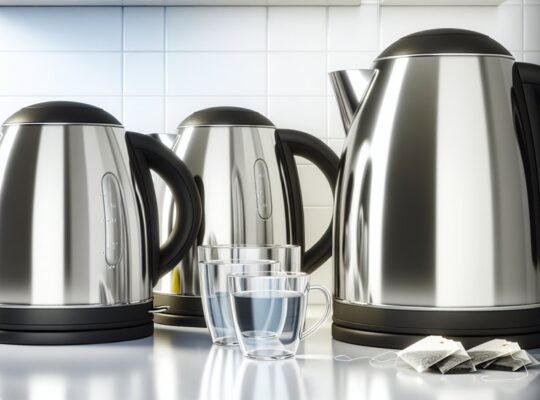
If you want your kettle to heat faster and taste better, you’ll need to remove limescale regularly. Use mild acids like white vinegar or citric acid—they’re effective, cheap, and safe for most kettles. Boil the solution, let it sit, then rinse well; for glass or stainless there are slight tweaks to protect finishes. Keep going to learn the right method for your kettle and how often to do it.
Key Takeaways
- Use a mild acid: white vinegar (1:1 with water) or 1 tablespoon citric acid per cup to dissolve limescale effectively.
- Boil the solution, let it soak 20–30 minutes (or overnight for heavy buildup), then discard the liquid.
- Scrub gently with a soft cloth or non-abrasive sponge to remove loosened deposits; avoid steel wool.
- Rinse the kettle thoroughly 3–4 times and boil fresh water once, discarding it to remove odors and residue.
- Descale every 1–3 months depending on water hardness to maintain efficiency and prevent heavy scale buildup.
Why Limescale Forms and Why It Matters
Why does limescale form in your kettle, and why should you care? Hard water contains dissolved calcium and magnesium. When you boil it, those minerals precipitate as calcium carbonate and other salts, creating a white, crusty deposit on heating elements and interior surfaces. You’ll notice faster buildup where water repeatedly heats and evaporates.
You should care because limescale reduces efficiency and can pose safety risks. A scaled element transfers heat less effectively, so the kettle runs longer or cycles more, increasing energy use and wear on thermostats. Thick deposits can trap heat, overheat components, or trigger automatic shutoffs unpredictably. Limescale also harbors bacteria in microcrevices, so regular removal supports hygiene.
Descaling restores efficient heat transfer, reduces energy consumption, and lowers mechanical stress. Using tested, non-corrosive methods protects seals and electrical parts; avoid abrasive tools or harsh acids that could damage components or create safety hazards. For routine maintenance, descale every 1-3 months with white vinegar to prevent heavy buildup.
Signs Your Electric Kettle Needs Descaling
You’ll usually notice limescale as white, chalky deposits inside the kettle or around the spout. If water takes noticeably longer to reach boiling, mineral buildup is reducing heating efficiency. Also watch for metallic or off smells on steam or water, which can indicate corrosion or concentrated deposits. Regular descaling helps maintain heating efficiency and prolongs the kettle’s life.
White Mineral Buildup
Noticing white, chalky flakes or cloudy residue inside your kettle is the most obvious sign it’s time to descale. That white mineral buildup is limescale (calcium carbonate) from hard water; it’s inert but can affect safety and performance if it flakes into your cup. You should act when you see visible deposits or feel rough patches on the heating element or interior.
- Scrape gently with a nonabrasive sponge to check adherence.
- Smell for stale or metallic odors that can accompany buildup.
- Note any floating flakes after boiling — avoid ingesting them.
- Inspect around the spout and lid where scale first forms.
Descale promptly using natural methods to reduce contaminants and maintain safe boiling surfaces.
Slower Boiling Time
How much longer is your kettle taking to reach a boil? Slower boiling is a clear, measurable sign of scale insulating the heating element or base. Scale reduces heat transfer, so water needs more energy and time to reach 100°C. You can test it: time a full kettle before and after descaling; significant increases in minutes indicate buildup. Slower boils also raise energy use and can stress the appliance, increasing failure risk. For safety, unplug before inspecting the interior and avoid running an empty, scaled kettle. Regular descaling with vinegar or citric acid restores efficiency and reduces boiling time. If descaling doesn’t help, have the kettle checked—element damage may mimic scale-related slow heating.
Metallic or off Smells
Ever wondered why your tea suddenly smells metallic or off after boiling? If you notice a persistent metallic or chemical odor, mineral buildup or corrosion inside the kettle is often the cause. That smell can leach into water and affect taste, and it may signal compromised surfaces that need attention for safety.
- Taste/odor change: metallic, sour, or plastic-like smell after boiling.
- Visible residue: white/gray scale or dark spots on heating elements or interior.
- Frequency: smells return quickly after cleaning — indicating thick limescale.
- Health caution: avoid drinking if odor persists; prolonged exposure to corroded metals can be unsafe.
Descale naturally (vinegar or citric acid), rinse thoroughly, and repeat until odors stop.
Choosing Between White Vinegar, Lemon, and Citric Acid
When choosing between white vinegar, lemon, and citric acid, you’ll want to weigh their relative strength and effectiveness at dissolving limescale. Consider surface safety too—acid concentration affects metal and heating-element coatings differently—and whether each option leaves a lingering smell or sticky residue that’s hard to rinse. I’ll compare their descaling power, material compatibility, and odor/residue cleanup so you can pick the best fit for your kettle. Frying in an electric kettle presents serious safety risks and fire hazards, so avoid using the appliance for cooking and stick to descaling and boiling tasks instead, as detailed in safety guidelines.
Strength and Effectiveness
Which acid should you pick depends on how quickly and thoroughly you need to remove limescale: white vinegar (5–8% acetic acid) is widely available and effective for light-to-moderate build-up, lemon juice is milder and leaves a pleasant scent but works slower, and pure citric acid powder is the strongest option per gram and typically gives the fastest, most complete results without long soaking. Choose based on scale severity, time, and smell tolerance. Consider these practical notes:
- Vinegar: good general-purpose choice; dilute 1:1 with water for routine descaling.
- Lemon juice: pleasant odor, best for light deposits or quick freshening.
- Citric acid: use measured powder (1–2 tbsp per liter) for heavy scale.
- Rinse thoroughly after any treatment to remove residual acid and loosened minerals.
Surface Safety Concerns
How will the descaling agent affect your kettle’s interior and exterior surfaces? You’ll want an agent that removes limescale without corroding metal or degrading coatings. White vinegar (acetic acid) is effective but, at household concentrations, can etch soft metals or dull stainless finishes if left too long; always rinse thoroughly and limit contact time. Lemon juice is milder; citric acid is comparable in effectiveness to vinegar but generally gentler on surfaces when used at recommended concentrations. Avoid abrasive scrubbing that can scratch protective coatings and expose metal to accelerated corrosion. If your kettle has painted, plastic, or anodized parts, test a small area and consult the manufacturer. When in doubt, use diluted citric acid for a balance of safety and descaling power.
Smell and Residue Removal
After you’ve checked surface compatibility, you’ll want to contemplate odors and any residue left behind by the descaler—these affect taste and how much rinsing you’ll need. White vinegar is effective and inexpensive but can leave a sour smell; rinse thoroughly (2–3 full boils and discards) and air-dry to remove odor. Lemon juice smells pleasant and leaves minimal residue, but it’s less potent on heavy scale. Citric acid is odorless, strong, and leaves little residue; it’s often the best balance of effectiveness and minimal rinsing. Choose based on sensitivity to smell and scale severity.
- White vinegar: strong odor, thorough rinsing required.
- Lemon: mild scent, moderate strength.
- Citric acid: odorless, highly effective.
- Rinse protocol: multiple boils and cool-water rinses.
How to Descale a Stainless Steel Kettle Naturally
Want a simple, effective way to remove mineral buildup from your stainless steel kettle without harsh chemicals? Fill the kettle halfway with equal parts white vinegar and water, bring to a boil, then turn off and let it sit for 15–30 minutes. Vinegar’s acetic acid dissolves limescale safely and is supported by routine cleaning guidance. After soaking, pour out the solution, rinse thoroughly, and boil fresh water once to remove residual odor. For stubborn spots, make a paste of baking soda and a little water, gently scrub with a soft cloth or non-abrasive sponge, then rinse well; baking soda is mildly abrasive and neutralizes remaining acid. Avoid steel wool or harsh scouring pads that can scratch stainless steel and trap bacteria. Dry the kettle inside and out with a clean towel to prevent new deposits. Repeat every 1–3 months depending on water hardness; frequent light maintenance reduces heavy buildup and keeps your kettle safe for daily use. Be mindful of train appliance rules and safety if you plan to descale or use kettles while traveling.
How to Descale a Glass Kettle Naturally
Looking for a simple, non-toxic way to remove limescale from a glass kettle? You can safely descale glass with gentle acids that won’t damage the material. Follow this practical, evidence-based method:
- Measure: Fill the kettle halfway with equal parts water and white vinegar (or 1 tbsp citric acid per cup).
- Heat: Bring the solution to a boil, then turn off and let it sit 20–30 minutes to dissolve scale.
- Scrub: Pour out solution, use a soft brush or sponge to remove loosened deposits; avoid abrasive pads that can scratch glass.
- Rinse & repeat: Rinse thoroughly 3–4 times with clean water; boil fresh water once and discard to remove any residual odor.
Work in a well-ventilated area and let the kettle cool before handling. If heavy buildup remains, repeat the cycle rather than using stronger chemicals. This method is effective, safe for glass, and keeps your kettle sanitary. For routine care, establish a regular cleaning schedule to prevent stubborn limescale buildup.
How to Descale a Plastic or Coated Kettle Safely
Before you start, check the manufacturer’s guidance to confirm which cleaners and temperatures are safe for plastic or coated interiors. If it’s allowed, use a mild acid solution like diluted white vinegar or citric acid to loosen scale without damaging the surface. Rinse thoroughly several times and let the kettle dry completely to remove residual acid and prevent taste or corrosion. Regular descaling is recommended at least once a month to prevent limescale buildup.
Check Manufacturer’s Guidance
Check your kettle’s user manual or the manufacturer’s website before you try any descaling method, because plastics and coatings can react poorly to acids, abrasives, or high heat. If you skip this, you may void warranties or damage surfaces.
Follow these manufacturer-focused steps to stay safe and effective:
- Locate care and descaling instructions specific to your model; note prohibited substances and temperature limits.
- Check warranty terms for coverage related to corrosion or chemical damage from cleaning.
- Contact customer support with your kettle’s serial number if guidance is unclear or you need approved products.
- Keep a record of recommended methods and any replacement parts suggested for longevity.
Relying on manufacturer guidance reduces risk and ensures any natural method you choose won’t harm the kettle.
Use Mild Acid Solutions
Curious which mild acids are safe for plastic or coated kettles? Use white vinegar (4–8% acetic acid) or food-grade citric acid—both are effective at dissolving limescale and are widely recommended in appliance maintenance guides. Mix vinegar with equal parts water or dissolve 1–2 tablespoons of citric acid per liter; those concentrations are strong enough to descale without degrading plastics or coatings when used briefly. Never use strong acids (hydrochloric, muriatic) or abrasive cleaners. Always ensure the kettle is unplugged and cool before adding solution, and avoid soaking external electrical parts. Run a short heating cycle only if the manufacturer allows; otherwise let the solution sit for 15–30 minutes. These mild acids balance effectiveness with safety when used properly.
Rinse Thoroughly and Dry
After neutralizing and loosening scale with vinegar or citric acid, you’ll need to flush the kettle several times to remove residual acid and dissolved minerals so they don’t affect taste or corrode surfaces. Rinsing and drying properly protects plastic or coated interiors and guarantees safety.
- Fill with fresh water, boil once, discard to remove dissolved residues.
- Repeat filling and emptying at least two more times until water tastes neutral and has no odor.
- Wipe the interior and exterior with a soft cloth; avoid abrasive scrubbers that can damage coatings and trap contaminants.
- Leave the lid open to air-dry fully, or dry with a clean microfiber cloth to prevent trapped moisture and bacterial growth.
Check seals and the heating element for deposits; repeat if needed.
Step-by-Step Overnight Descaling Method
Want the simplest effective way to remove limescale overnight? You’ll use white vinegar (or citric acid) and water, soak, then rinse—safe, proven, and low-effort. Fill the kettle halfway with a 1:1 vinegar-to-water mix (or 1 tbsp citric acid per cup), let it sit unplugged overnight, then boil in the morning and discard the solution. Rinse thoroughly, wipe interior, and dry. Electric kettles often include automatic shut-off features that help prevent overheating while descaling.
| Step | Time | Safety tip |
|---|---|---|
| Prepare solution | 5 min | Use gloves if sensitive |
| Fill kettle | 2 min | Don’t overfill |
| Soak overnight | 8–12 hrs | Unplug kettle |
| Boil morning | 10 min | Ventilate steam |
| Rinse & dry | 5–10 min | Remove residue fully |
This method dissolves mineral deposits without harsh chemicals. If heavy scale remains, repeat once. Always ensure the heating element is free of vinegar residue before reuse to protect taste and appliance longevity.
Quick Descale Method for Light Buildup
Need a fast fix for light limescale? You can remove thin deposits in minutes with safe, proven steps that don’t harm the kettle. Use distilled white vinegar or citric acid; both dissolve calcium effectively. Rinse thoroughly afterward to protect taste and safety.
- Measure: add 1 part white vinegar to 2 parts water (or 1–2 tsp citric acid per 500 ml) into the cold kettle.
- Heat: bring to a gentle boil, then switch off and let sit 10–15 minutes to loosen scale.
- Scrub: pour out solution, use a soft brush or sponge to remove remaining flakes; avoid abrasive pads that scratch heating elements.
- Rinse: fill, boil, discard twice; smell should be gone and water clear.
If heavy scale returns quickly, follow a longer overnight method. Always unplug before cleaning and avoid submerging electrical bases. For regular upkeep, schedule periodic descaling to prevent buildup and prolong the kettle’s lifespan, and check your water quality for hard water.
Preventing Limescale: Daily and Weekly Habits
How can you stop limescale from building up in the first place? Rinse and dry the kettle after each use to prevent mineral-rich water sitting and evaporating, which concentrates deposits. Empty the kettle rather than leaving water overnight. Use filtered or softened water if your supply is hard; studies show reduced scale with lower calcium/magnesium content. Boil only the volume you need—less repeated heating reduces deposition. Weekly, run a mild vinegar or citric acid cycle (1–2 tablespoons citric acid or 1 part white vinegar to 4 parts water), bring to a boil, let sit 15–30 minutes, then rinse thoroughly; this prevents small accumulations becoming stubborn. Wipe the spout, lid, and exterior with a damp cloth to remove splashes and mineral dust. Inspect the heating element and seals monthly for buildup; if you spot persistent residue, descale more frequently. Always unplug before cleaning and avoid abrasive tools that can damage protective coatings or heating elements. For quick everyday uses like making instant noodles or tea, boiling only what you need helps reduce the frequency of limescale buildup.
Troubleshooting Common Descaling Problems
Troubleshooting descaling issues? You can fix most problems with safe, simple steps based on evidence and common-sense precautions. Check these likely causes and remedies.
- Scale not loosening: Use a stronger natural solution — equal parts white vinegar and water or a citric acid solution (1–2 tbsp per 500 ml). Boil, soak 20–30 minutes, then scrub gently. Rinse thoroughly.
- Odor or taste persists: Rinse kettle 3–5 times with fresh water and bring to a boil once to volatilize residues. If smell continues, repeat descaling with citric acid; it’s neutral and food-safe.
- Stains or pitting: Avoid abrasive scrubbing; use a soft brush. Pitting from harsh acids means professional assessment; stop using if metal is compromised.
- Electric element not heating: Mineral buildup may isolate the element. Descale, test function, and contact manufacturer or technician if performance doesn’t return.
Always unplug before working, allow cooling, and follow manufacturer warnings. Choose a descaling method appropriate to your kettle’s material and safety to protect performance and longevity.
Frequently Asked Questions
Can Descaling Affect My Kettle’s Warranty?
Usually not if you follow the manufacturer’s instructions; using approved descaling agents or plain vinegar/baking soda per their guidance won’t void warranty. Check the manual or contact support first, and keep proof of proper care.
Can I Use Baking Soda for Descaling?
You can, but it’s not ideal: baking soda is mildly abrasive and won’t dissolve limescale well. For safety and effectiveness, use vinegar or citric acid diluted with water, rinse thoroughly, and check manufacturer guidance to protect the kettle.
Is Distilled Water Better to Boil After Descaling?
Yes — distilled water’s low mineral content prevents immediate re-scaling, so it’s better to boil after descaling. You’ll reduce deposits and prolong kettle life; just rinse thoroughly first and avoid contaminating the distilled water afterward.
How Often Should I Descale in Hard-Water Areas?
You should descale every 1–4 weeks in hard-water areas, depending on use; heavy daily boiling needs weekly care, moderate use monthly. Always unplug first, use safe natural descalers, rinse thoroughly before reheating.
Can Descaling Remove Stains Outside the Kettle?
Yes — descaling can remove some exterior stains if they’re mineral deposits; you’ll want to unplug the kettle, use a mild vinegar solution or baking soda paste, scrub gently, rinse, and dry to avoid damage or residues.