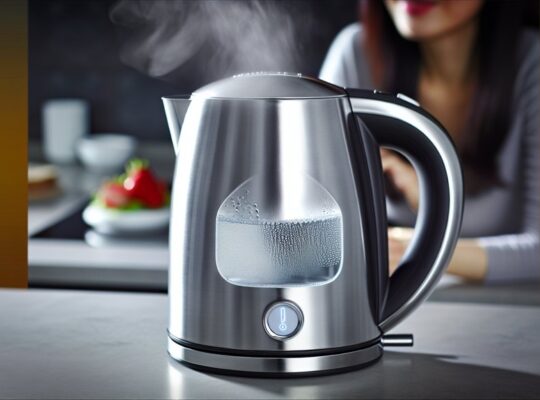
You can boil potatoes in an electric kettle if you take care and follow safe steps. Start with firm, evenly sized tubers, rinse or peel, and cut them so they cook uniformly. Don’t overfill the kettle and keep water below the max line. Monitor the boil, avoid scalding steam, and plan how you’ll drain and cool them safely — there’s more to know to avoid damage and get consistent results.
Key Takeaways
- Choose firm, similar-sized waxy potatoes and cut into uniform pieces so they cook evenly in the kettle.
- Rinse and scrub potatoes, then dry the outside to reduce slipping when handling before placing them in the kettle.
- Add enough water to cover potatoes by 1–2 cm but never exceed the kettle’s maximum fill line.
- Boil while monitoring, unplug and wait 1–2 minutes to vent steam, then remove potatoes with long-handled tongs or a slotted spoon.
- Drain in a heatproof colander, rinse briefly with cool water to stop cooking, and cool on a towel-lined tray before serving or storing.
Choosing the Right Kettle and Safety Checklist
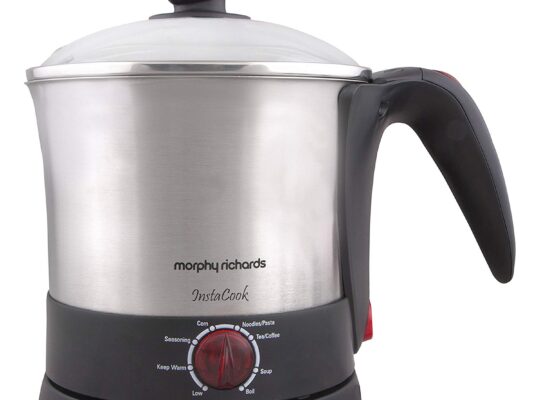
Which kettle should you pick to boil potatoes safely and effectively? You’ll want a model with a wide mouth and stable base so potatoes fit without forcing the lid and the kettle won’t tip when full. Choose stainless steel or food-grade materials; plastic kettles can leach if scratched or overheated. Ensure the kettle has clear maximum-fill markings and don’t exceed them—boiling potatoes displace water and can cause dangerous overflow. Prefer kettles with automatic shut-off and boil-dry protection; these reduce fire and electrical risks if water evaporates. Check that the power cord and plug are intact and that the handle stays cool to prevent burns when lifting. Always use a heatproof surface and keep the kettle away from edges and children. Before each use, inspect for corrosion, loose parts, or abnormal noises; if anything’s wrong, don’t use it. Following these precautions minimizes injury and equipment damage. Electric kettles are generally more energy-efficient than stovetop kettles, which can lower overall energy use when boiling water for cooking.
Selecting Potato Varieties and Preparation Tips
When you’re choosing potatoes to boil in an electric kettle, go for waxy varieties like Yukon Gold, red potatoes, or fingerlings because they hold their shape and cook evenly without turning mealy; starchy types such as russets will break down and can clog or scald if they disintegrate. Pick firm, blemish-free tubers with smooth skin and no green spots or sprouts—those indicate solanine, which can be toxic in high amounts. Choose similar-sized potatoes so they cook at the same rate; a mix will give you uneven doneness and increase the chance of overcooking smaller pieces. Limit quantity to what fits comfortably below the kettle’s maximum water line; overfilling raises boil-over and electrical hazards. If you plan to season, add salts and acids after boiling to avoid concentration at the surface during heating. Handle potatoes with clean hands and use tongs or a slotted spoon when removing them to avoid burns and scalds. Also, inspect the kettle for regular descaling to prevent mineral buildup that can affect heating efficiency and safety.
How to Wash, Peel, and Cut Potatoes for Even Cooking
Now that you’ve picked the right potatoes and limited the batch to fit the kettle, wash, peel (or not), and cut them in a way that promotes even cooking and safety. Rinse each potato under cold running water, scrubbing with a brush to remove dirt and pesticide residues; dry them to reduce slipping. If you’ll eat the skins, leave them on for nutrients and structural integrity; otherwise use a sharp peeler, moving away from your body and keeping fingers clear. Inspect for eyes or bruises and remove them with a paring knife.
Cut potatoes into uniform pieces — for small kettles, halve or quarter so all pieces are similar size; for larger ones, aim for 2–3 cm cubes. Uniformity ensures even cook time and avoids undercooked centers. Keep a stable cutting board, use a non-skid mat, and steady your knife technique to prevent accidents. Rinse cut pieces briefly to remove excess starch, then proceed with boiling steps. Be mindful that electric kettles are designed for boiling water and not frying, so prioritize safety precautions when adapting their use.
Measuring Water and Potato Ratios for Your Kettle
You’ll want to follow a simple water-to-potato ratio — generally enough water to cover the potato pieces by about 1 inch — so they cook evenly without diluting heat. Check your kettle’s maximum fill line and never exceed it, since overfilling can cause boiling water to spill or damage the appliance. If your batch would surpass the capacity, cook in smaller batches to maintain safety and consistent results. For more even cooking, start with room temperature potatoes and cold water so they heat consistently through.
Water-To-Potato Ratio
How much water should you add so the potatoes cook through without overflowing the kettle? Aim for just enough to cover potatoes by about 1–2 cm (roughly 0.5–1 inch). That depth provides full submersion for even heat transfer while leaving headspace to prevent boiling over. Use a kitchen scale or measuring cup: weigh potatoes, then add water volume roughly equal to potato volume plus the 1–2 cm allowance; for small batches, 500 g potatoes usually need about 600–700 ml water depending on size and kettle shape. Don’t pack potatoes tightly; circulate heat by leaving slight gaps. If you’re uncertain, start with less water — you can always add a little through the spout between boils if safe and recommended by your kettle’s manual.
Kettle Capacity Limits
Wondering how to match potato quantity to your kettle’s limits? You should first check the kettle’s max-fill line or manual; overfilling risks boil-over, scalding, and element damage. Measure potatoes so total volume plus cold water stays below that line, leaving at least 1–2 cm (about 0.4–0.8 in) headspace. Small potatoes can be cooked whole; larger ones should be halved to reduce displacement. Weighing potatoes helps: as a rule, 500–700 g of small potatoes fit most 1.5–1.7 L kettles when covered by water under the max line. Always add cold water slowly and test the lid closure. If unsure, cook in batches or use a stovetop pot designed for boiling to avoid hazards.
Step-by-Step Method to Boil Potatoes in an Electric Kettle
Want a quick, energy-efficient way to cook small potatoes? Follow a safe, step-by-step method so you won’t overload the kettle or risk burns.
| Step | Action |
|---|---|
| 1 | Inspect kettle: clean, dry, and free of scale. |
| 2 | Prepare potatoes: wash, leave whole if small, pierce skins once. |
| 3 | Add water: cover potatoes but keep below max fill line. |
| 4 | Boil: switch kettle on and monitor; don’t leave unattended. |
| 5 | Cool and remove: unplug, let sit briefly, use tongs or heatproof gloves. |
Start with a single batch to confirm capacity and heating pattern. Pierce skins to reduce bursting; evidence supports controlled venting. Avoid metal utensils inside heating elements; they can damage the kettle and create shock risk. Use a thermometer if you want precise control, but prioritize visual vigilance: steam and boiling indicate activity. After use, unplug and let the kettle cool fully before draining and washing. If you detect odd smells or noises, stop and inspect before repeating. Stainless steel and glass kettles offer better heat retention and are generally more durable than plastic models.
How to Test Potatoes for Doneness Without a Stove
Now that you’ve boiled potatoes in the kettle, you’ll need a reliable way to check they’re done without a stove. Use a clean, heatproof tool—like a metal skewer, fork, or paring knife—to probe the largest potato. Insert gently to the center; cooked potato offers little resistance and the tool slides in smoothly. If it meets firm resistance or a gritty core, it needs more time. Test at least two potatoes of different sizes, since small ones cook faster. Avoid relying on surface appearance or floating, which aren’t reliable indicators of internal doneness. If you probe and the center is slightly firm, let them sit in the hot water off heat for 5–10 minutes; residual heat will finish cooking. Always handle tools and the kettle carefully to prevent burns. If you’re unsure, cut one potato open with a sanitized knife: a fully cooked potato has a uniform, moist texture with no translucent, raw streaks. Prestige kettles often come in capacities from 0.5 L to 1.8 L, so choose the right size for capacity when boiling multiple potatoes.
Draining, Cooling, and Handling Hot Potatoes Safely
How do you safely get hot potatoes out of the kettle without burning yourself? Use long-handled tongs or a slotted spoon and wear heat-resistant gloves; don’t reach inside while steam’s escaping. Turn the kettle off and unplug it, then let steam vent for 1–2 minutes to reduce scald risk. Pour water into a heatproof colander over the sink—use a lid or tongs to steady the kettle. Rinse briefly with cool running water to stop cooking, but avoid ice-cold shocks that crack skins. Transfer potatoes to a tray lined with a clean towel; let them rest until they reach handling temperature (about 10–15 minutes). Check one with a thermometer or touch (with glove) before handling. If you must halve them hot, use a stable cutting board and a sharp knife; cut away from your hand. Dispose of kettle water carefully; descale regularly to maintain appliance safety. If using an electric kettle, ensure it has automatic shut-off and overheat protection to reduce fire and scald risks.
| Safety Step | Why it matters |
|---|---|
| Unplug kettle | Prevents accidental reheating |
| Vent steam | Reduces scald risk |
| Use tongs/gloves | Protects hands |
| Cool briefly | Stops carryover cooking |
| Stable cutting | Prevents slips and cuts |
Recipes and Uses for Kettle-Boiled Potatoes
Once your kettle-boiled potatoes are cooled and handled safely, you can mash them quickly with butter and milk for a reliable mashed potato base. You can also chop chilled potatoes into a speedy potato salad with mayo, mustard, and herbs, noting that using vinegar-based dressings helps retard bacterial growth. For a hot snack, reheat slices briefly and top with olive oil, grated cheese, or spices, and always check internal temperature before serving. When preparing in an electric kettle, remember to avoid overfilling and monitor boiling to prevent spills, as many kettles include automatic shut-off features to enhance safety.
Quick Mashed Potato Base
A quick mashed potato base from kettle-boiled potatoes gives you a fast, reliable starting point for many dishes, but you’ll want to follow a few precautions to get the best texture and food-safety outcomes. After boiling, drain and cool briefly to stop overcooking; work while still warm for smoother mash. Use a potato ricer or masher—overworking starch-rich potatoes makes them gluey. Season and bind with measured hot milk and melted butter; warm liquids absorb better and cut bacterial risk.
- Cut uniform pieces so boiling is even and doneness is predictable.
- Drain promptly and steam-off in the kettle or strainer to avoid sogginess.
- Mash minimally and add hot dairy gradually for texture control.
- Chill quickly if not serving within two hours; refrigerate below 5°C.
Potato Salad Shortcut
Looking for a fast potato salad that’s safe and still flavorful? You can use kettle-boiled potatoes cooled quickly to reduce bacterial risk. After boiling, drain and transfer potatoes to a clean bowl placed in an ice bath or run cold water over them until lukewarm; this limits time in the danger zone (40–140°F / 4–60°C). Peel if desired, then cut into uniform pieces so dressing chills evenly. Use a simple dressing of yogurt or mayonnaise mixed with mustard, vinegar, salt and pepper—keep portions refrigerated and use pasteurized ingredients. Chill the salad promptly, cover, and consume within 2 days. If it smells off or has visual changes, discard it. These steps reduce food-safety risks while saving time.
Warm Snack Toppings
Having cooled and prepped your kettle-boiled potatoes for salad, you can also turn them into quick warm snack toppings that’re safe and satisfying. Slice or dice potatoes while still slightly warm—this reduces handling time and bacterial risk. Reheat gently in a microwave or skillet to 165°F (74°C) measured with a food thermometer before serving. Use toppings that add flavor and safety.
- Crispy herb potatoes: toss with olive oil, chopped rosemary, salt; pan-sear until crisp, serve immediately.
- Garlic-yogurt dollop: cool briefly, top with yogurt mixed with minced garlic and lemon; eat promptly.
- Cheesy melt: grate cheese over hot slices, cover to melt; consume while hot.
- Smoky beans: warm canned beans, spoon over potatoes, garnish with parsley.
Follow temperature and hygiene guidance to reduce food-safety risks.
Cleaning and Caring for Your Kettle After Boiling Potatoes
After boiling potatoes in your electric kettle, you’ll want to clean it promptly to prevent starch buildup, off-odors, and potential damage to the heating element. First, unplug and let the kettle cool completely to avoid burns. Discard the potato water down the sink; don’t submerge the base or get electrical parts wet. Rinse the interior with warm water to remove loose starch, then fill halfway with a 1:1 solution of water and white vinegar; boil or heat briefly if manufacturer allows, let sit 15–20 minutes, and pour out. Use a soft sponge or cloth to wipe the interior—avoid abrasive pads that can scratch protective coatings. For mineral scale, gently scrub with a soft brush and a paste of baking soda and water. Rinse thoroughly several times to remove vinegar or baking soda residue. Dry the kettle with a clean towel and air-dry fully before storing or next use. Check the manual for model-specific care to maintain safety and warranty. Regular descaling with vinegar or lemon juice helps maintain performance and safe drinking water.
Troubleshooting Common Issues When Boiling Potatoes in a Kettle
Once you’ve cleaned and inspected your kettle, it’s helpful to know how to handle common problems that can occur when boiling potatoes. You should always prioritize safety: unplug the kettle before troubleshooting and avoid immersing the base in water. If potatoes stick or scorch, let the kettle cool, remove debris with a soft brush, and descale; mineral build-up raises local temperatures and causes sticking. If the kettle trips or won’t heat, check the lid and thermostat—steam blockage or a faulty switch can trigger safety cutoffs. If water is cloudy or smells, discard, clean thoroughly with vinegar or citric acid, and rinse; residues can harbor bacteria. If potatoes cook unevenly, ensure they’re cut uniformly and submerged; overcrowding reduces heat transfer.
- Check power and safety switches before each use.
- Descale regularly to maintain even heating.
- Avoid metal tools that can damage heating elements.
- Don’t overfill; follow the kettle’s max-fill line.
- Place the kettle on a stable, heat-resistant surface away from edges and heat sources to reduce risk of accidents and damage, and always verify the cord is intact before use (automatic shut-off).
Frequently Asked Questions
Can You Boil Frozen Potatoes in an Electric Kettle?
You can, but you shouldn’t; frozen potatoes can jam or damage automatic kettles, create uneven cooking, and pose scald risk from sudden boiling. If you must, thaw first, use a stovetop pot or appliance designed for food.
Will Boiling Potatoes in a Kettle Affect Water Taste for Drinking?
Yes — it can. Starch, oils and food residue can linger, altering taste and promoting bacterial growth. If you must, thoroughly clean and boil fresh water afterward; better to avoid using kettles for cooking when safety matters.
Can I Add Salt or Seasonings While Kettle-Boiling Potatoes?
You can add a pinch of salt, but avoid heavy seasonings or oils that can clog or damage the kettle. Rinse thoroughly after use; metallic or persistent flavors may linger, so prioritize mild amounts for safety and cleanliness.
Is It Safe to Leave the Kettle Unattended While Potatoes Boil?
No, it isn’t safe to leave the kettle unattended; you shouldn’t risk overheating, boiling dry, or scalding. Stay nearby, monitor water level and heat, and unplug once potatoes are cooked to prevent fire or damage.
Does Kettle-Boiled Potato Texture Differ for Mash Versus Roasting?
Yes — kettle-boiled potatoes can be wetter and more waterlogged, making them better for mash than roasting; you’ll want firmer, drier interiors for roasting, so drain, steam-off, or par-cook differently to avoid soggy results.