You’ll want an appliance that’s fast, safe, and fits your space, and both electric kettles and induction cooktops claim those strengths. Kettles heat water quickly and use less energy for simple tasks, while induction gives precise heat and more cooking options but needs suitable pans and more room. Decide what you actually cook, then compare speed, cost, and convenience to pick the right tool for campus life.
Key Takeaways
- Kettles are cheaper, more compact, and boil small amounts of water fastest for tea, coffee, noodles, and instant meals.
- Induction cooktops offer far greater cooking versatility: sautéing, simmering, frying, and precise temperature control for full meals.
- Kettles have built-in boil-dry protection and auto-shutoff; induction adds cool-to-touch surfaces and auto-detection for safer shared spaces.
- Kettles use slightly less energy for small boils; induction can be more efficient for larger pots or multi-course cooking.
- Dorm rules, space, and cookware needs should guide choice: use travel-approved kettles where restricted, otherwise choose by cooking habits.
Why Students Need the Right Cooking Appliance
Why does the appliance you pick matter? You’ll rely on a compact cooker daily, so safety, speed, cost, and space should guide your choice. Compare how each fits your routine: will you mostly boil water or cook simple meals? An appliance that’s fast reduces time spent in shared kitchens and lowers accident risk from prolonged cooking. Consider energy use and bills—efficient devices cut costs and overheating. Size and storage matter in dorms; smaller units lessen trip and fire hazards. Think about noise, surface heat, and ease of cleaning—devices that stay cool to the touch or have simple controls lower burn and misuse chances. Look for built-in safety features like auto-shutoff and overheat protection; they prevent common student mishaps. Finally, evaluate durability and warranty so repairs don’t leave you without a safe option. Choose the appliance that balances convenience with clear, reliable safety features tailored to student life. Also remember that some settings prohibit high-wattage or personal electrical appliances for safety (electrical safety standards).
How Electric Kettles Work and Their Key Benefits
An electric kettle uses a hidden or exposed heating element that transfers heat directly to the water, so you get faster boil times than most stovetops. That direct-transfer design is also more energy-efficient for small batches, which matters when you’re trying to keep bills low. Comparing models, you’ll want to check element type and wattage to balance speed, efficiency, and durability. They’re also handy for quick meals and drinks like instant noodles or instant oatmeal, making them great for students on a budget.
Heating Element Design
How does an electric kettle heat water so quickly? You’ll find two common heating element designs: exposed coil and concealed (flat) element. Exposed coils sit directly in the water, transferring heat fast but requiring regular descaling and careful cleaning to avoid buildup that reduces efficiency and poses safety risks. Concealed flat elements are sealed under stainless steel or aluminum plates, offering easier cleaning, reduced limescale contact, and a lower risk of electric faults. For dorm use, concealed elements are generally safer—less surface contact, fewer sharp edges, and easier to inspect. Choose kettles with automatic shutoff, boil-dry protection, and a removable filter to complement the element design. That combination gives practical, safer operation for busy students.
Boil Speed & Efficiency
Beyond element type, the real win for students is how fast and efficiently a kettle brings water to a boil. You’ll usually get boiling in 2–4 minutes for a liter, faster than most stovetop pans and often quicker than an induction hob when you factor heat-up time. Kettles concentrate heat directly into the water with minimal losses; induction is efficient too but needs a compatible pot and some surface heat losses. For safety, kettles auto-shutoff at boil and many have boil-dry protection, lowering risk if you’re distracted. Energy-wise, kettles use less electricity per boil for small amounts. If you need rapid hot water for drinks, instant meals, or cleaning, a kettle is practical, economical, and safer in tight student living spaces.
How Induction Cooktops Work and Their Key Benefits
Curious why induction cooktops heat faster than gas or electric coils? They use electromagnetic fields to induce currents directly in ferrous cookware, so heat is generated in the pan, not the cooktop. That direct transfer speeds up heating, gives precise temperature control, and reduces hot-surface burns — useful in small shared kitchens where safety matters.
| Benefit | Why it helps |
|---|---|
| Faster heat-up | Pan heats directly for quick cooking |
| Precise control | Tight temperature adjustments reduce mistakes |
| Cooler surface | Less residual heat lowers burn risk |
For you as a student, that means shorter prep times, less risk of accidental fires, and easier cleanup — spills don’t carbonize on a hot plate. Induction also senses when compatible cookware is absent, automatically shutting off, which adds a layer of safety. Compare this to gas or coils: they waste heat around the pot and keep surfaces hot longer. If you value speed, control, and safer cooking in compact living, induction is a strong, practical choice. Trains and shared housing often restrict appliances for safety, so consider using a travel kettle or other approved options when regulations apply.
Energy Use and Running Costs Compared
You’ll want to compare how much electricity each appliance uses per boil and how that translates into cost per litre. An electric kettle typically uses less energy for small amounts of water, while an induction cooktop can be more efficient for larger pots. Knowing your typical batch size and local electricity rate will show which saves you money over time. Regular descaling helps maintain an electric kettle’s efficiency and prevents limescale buildup.
Electricity Consumption per Use
How much electricity will each option actually use for a single kettle of water? You’ll see an electric kettle draws around 2–3 kW and boils a typical 1–1.5 L in 3–5 minutes, using roughly 0.1–0.25 kWh per boil. An induction cooktop set to high uses 1.2–2 kW; bringing the same volume to a boil takes longer and wastes more heat to the pot and surroundings, so expect about 0.15–0.35 kWh per boil depending on cookware and lid use. That means kettles are generally more efficient per use. For safety, always use a kettle with automatic shutoff and an induction-safe pan with a stable handle and fitted lid to reduce boil time and prevent spills.
Cost per Litre Boiled
Want to know which costs you less per litre boiled? You’ll usually pay less with an electric kettle because it’s more efficient at transferring energy to water. An induction cooktop wastes more heat to the pan and surroundings, so its per-litre cost is higher unless you use a snug, well-matched pot and lid.
| Appliance | Efficiency (%) | Typical cost per litre* |
|---|---|---|
| Electric kettle | 80–90 | £0.02–£0.04 |
| Induction cooktop | 70–80 | £0.03–£0.05 |
| Notes | Use lids, match cookware | Reduces waste, improves safety |
Factor in local electricity rates and kettle size. For safety, don’t overfill or leave boiling unattended; both methods heat quickly but behave differently.
Speed and Cooking Performance for Dorm Meals
Which heats faster for quick dorm meals — an electric kettle or an induction cooktop? An electric kettle wins for boiling water: it brings a liter to a boil in a couple of minutes, so you’ll have instant water for noodles, soup cups, or tea. It’s optimized for one task, so you get predictable, fast results every time.
An induction cooktop heats cookware directly and gives you more versatility: you can simmer, stir-fry, or sauté, and it responds instantly to temperature changes. For meals that need controlled simmering or browning, induction will cut overall prep time because you’re not transferring heat inefficiently. But small pans take longer to heat than a kettle boiling water.
If speed is your priority for simple hot-food needs, go with a kettle. If you want fast, precise cooking for a variety of dishes, choose induction. Either way, follow manufacturer instructions and use suitable cookware to keep things safe and efficient. Many student-friendly kettles offer auto shut-off and boil-dry protection for added safety.
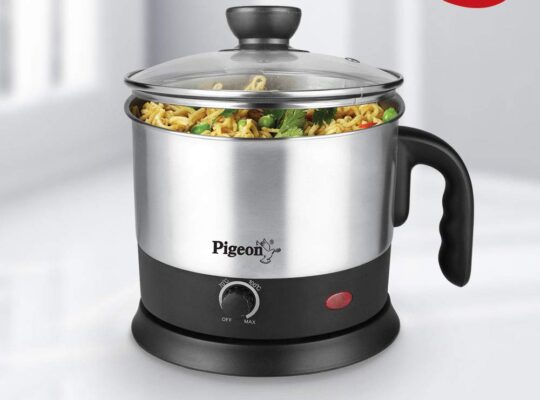
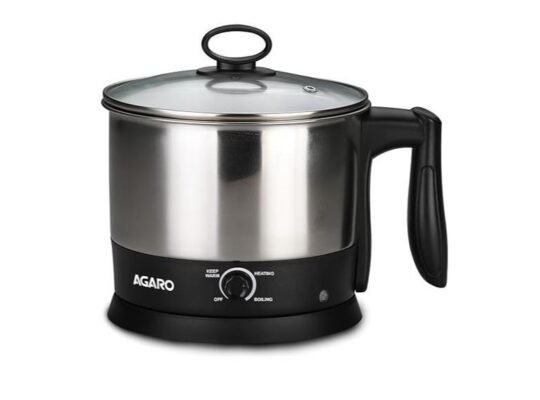
In tight dorms you’ll need to think about how an appliance affects space and clutter — a slim kettle can tuck away, while an induction cooktop takes counter room. Also consider burn and spill risk: kettles limit exposed hot surfaces but can spill boiling water, whereas induction tops stay cool but still involve hot cookware. Weigh which trade-offs fit your layout and roommate rules. You can even use an electric kettle to prepare simple meals like instant noodles with just hot water, making it a versatile option for small spaces and quick cooking Maggi preparation.
Space and Clutter
Because space is limited in dorms and shared flats, you’ll want the appliance that keeps counters clear and minimizes crowding. An electric kettle is usually compact and stows on a shelf when not in use, freeing prep area and reducing trip hazards. Induction cooktops take more surface area, and if you keep pots, pans and a trivet nearby they quickly dominate limited counters. You’ll also consider cords and plugs: kettles have short, tucked cords; portable induction units often need a cleared zone for ventilation and a longer cable path. For shared kitchens, a kettle’s smaller footprint makes rotation and storage easier, lowering clutter and the chance someone knocks gear over. Choose what fits your specific counter layout and storage options.
Burn and Spill Risk
How likely are you to get burned or make a mess when space is tight? You’ll find an electric kettle is generally safer: it keeps boiling water contained, shuts off automatically, and limits open flames or hot plates. Spills are usually just water from the spout, easy to wipe up, and the cord and base reduce accidental tipping if placed on stable surfaces. An induction cooktop can be safe too, but pans get hot and you’ll be handling larger, heavier cookware in cramped areas—raising the chance of scalds and dropped pots. If you share space, an induction surface needs clear cook zones and careful coordination to avoid collisions. Choose the appliance that matches your habits: minimal handling favors a kettle; cooking larger meals leans toward induction.
Portability, Size, and Storage for Student Rooms
Want something that fits your tiny dorm shelf and moves easily between rooms? An electric kettle is typically compact and lightweight, so you can tuck it on a shelf, stash it in a locker, and carry it to class or a study group without strain. It usually has a small footprint and cord storage, which helps keep shared spaces tidy and reduces trip hazards.
An induction cooktop is bulkier and heavier, especially single-burner models with sturdy glass tops; it needs a flat, heat-resistant surface and more clear counter space. If you plan to store it under a bed or in a closet, factor in its weight and fragility — the glass surface can crack if mishandled.
For safety and convenience, pick what matches your routine: choose the kettle if you need ultra-portability and minimal setup; choose a compact induction unit only if you’re willing to allocate stable storage and handle the appliance more carefully.
Electric kettles are often more energy-efficient for boiling small amounts of water compared with stovetops and can include auto shut-off safety features to prevent dry boiling.
Versatility: What Each Appliance Can Actually Cook
You’ve got portability down, but what you can actually cook matters more for meal variety. An electric kettle excels at boiling water quickly and safely: instant noodles, oatmeal, tea, coffee, and blanching vegetables are all easy. You’ll also steam dumplings or rehydrate freeze-dried meals with a kettle, but you’re limited to foods needing only hot water or covered-steam methods.
An induction cooktop gives you real stovetop control: sautéing, frying, simmering, boiling, and making sauces or scrambled eggs are straightforward. You can use pots and pans for one-pot meals, stir-fries, grilled sandwiches, and even simple baked dishes with the right cookware. Induction heats evenly and responds fast, lowering burn risk when you monitor it.
For student life, pair the kettle with ready-to-eat staples for speed and safety, or choose an induction cooktop if you want broader cooking options and hands-on meal prep. Philips kettles often include features like a flat heating element that boil water quickly and are easy to clean.
Maintenance, Durability, and Cleaning Tips
Curious which one will make your life easier after class? You’ll find kettles are low-maintenance: descale every 1–2 months if you have hard water, wipe exterior with a damp cloth, and avoid immersing the base. Their simple construction means fewer parts to fail, so they tend to last if you don’t leave them boiling dry. Induction cooktops need gentler care: use non-abrasive cleaners, wipe spills promptly to prevent burned-on residues, and avoid dragging cookware to protect the glass surface. They have electronics, so keep them dry and ventilated; fan vents can collect dust—clean vents occasionally to maintain cooling. For durability, choose kettles with stainless interiors and auto-shutoff; for cooktops, look for tempered glass and reliable sensors. Always unplug either appliance before cleaning, let components cool, and handle cords safely. With routine, safe cleaning and sensible use, both will serve you well through college. Descale kettles regularly because mineral buildup from hard water (mainly calcium and magnesium) can affect performance and taste.
Budget-Friendly Buying Guide and Recommended Features
Looking for the best value without sacrificing performance? Start by comparing total cost: purchase price, energy use, and expected lifespan. You’ll usually pay less up front for an electric kettle; induction cooktops can cost more but may save on energy over time. Prioritize units with automatic shutoff, boil-dry protection, and cool-touch surfaces for safety.
Check capacity and speed—kettles heat small volumes fastest; induction gives flexible cooking but needs magnetic cookware. Look for stainless-steel or BPA-free interiors, easy-to-clean surfaces, and detachable filters or smooth glass tops to reduce maintenance effort. Energy efficiency ratings and wattage help estimate running costs; lower wattage is safer on shared circuits, higher wattage heats faster.
Warranty and parts availability are key—longer warranties often reflect better durability. Read user reviews focused on safety and reliability. Pick the appliance that fits your budget, dorm electrical limits, and simple safety features to minimize risk while keeping costs down. Glass kettles are elegant and let you monitor water levels and brew color while offering corrosion-resistant performance.
Frequently Asked Questions
Can Either Appliance Be Used in International Dorms With Different Voltages?
Yes — but you’ll need voltage-compatible models or a proper converter/transformer. Kettles often have dual-voltage options; induction cooktops usually don’t. Always check labels, use certified converters, and follow dorm electrical safety rules to avoid hazards.
Do Induction Cooktops Work With All Types of Cookware?
No, induction cooktops only work with magnetic cookware; you’ll need cast iron or stainless steel with a magnetic base. Nonmagnetic pans like aluminum, copper or glass won’t work unless they have an induction-ready layer.
Can Either Appliance Be Covered by Dorm Insurance or Warranties?
Yes — both can be covered: dorm insurance may cover theft or accidental damage, and manufacturers offer warranties; you’ll need to check policy exclusions, appliance-specific warranty terms, and register products to guarantee claims are valid.
Which Option Produces Less Noise During Operation?
The electric kettle’s quieter; it mostly hums and clicks briefly, while induction cooktops can emit a continuous fan noise and occasional high-pitched coil buzz. You’ll prefer a kettle if minimizing steady operational noise matters for safety.
Are There Any Cooking Restrictions Imposed by Campus Housing Policies?
Yes — many dorms ban open flames and high-power appliances; you’ll often be restricted to low-wattage kettles, microwaves, or induction units on approved settings. Check your housing rules, fire codes, and permitted appliance lists first.