If you want hot water fast and precise temps for tea or coffee, an electric kettle usually wins; if you need versatility for reheating and small cooking tasks, a microwave often makes more sense. You’ll weigh speed, energy use, taste, and safety differently depending on routine and space. Keep this practical comparison in mind as you decide which appliance will actually save you time and bother — and which won’t.
Key Takeaways
- For boiling water quickly and consistently, an electric kettle is usually faster and more energy-efficient than a microwave.
- For precise temperatures (tea, coffee), kettles offer presets and repeatable control; microwaves do not.
- Microwaves are more versatile for reheating, defrosting, and small-cook tasks beyond boiling water.
- Kettles have safety features like automatic shutoff and boil-dry protection; microwaves require careful handling of steam and hotspots.
- Taste and extraction are more consistent with kettles; microwaves can produce uneven heating and hot spots.
How an Electric Kettle Works
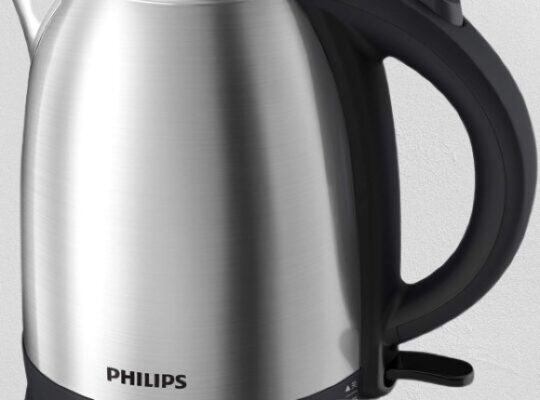
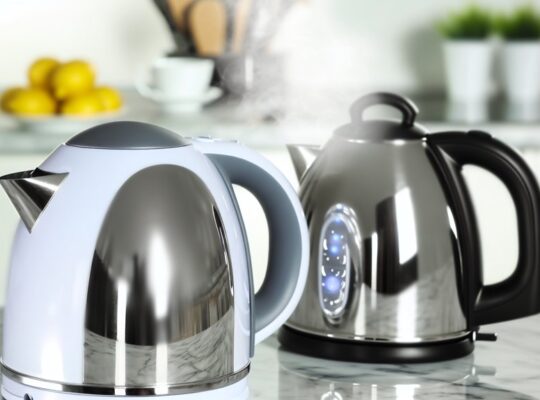
Curious how an electric kettle heats water so quickly? You’ll find it’s simple and efficient: a concealed or exposed heating element converts electrical energy into heat, which is transferred directly to the water. Compared to stovetop kettles, the direct-contact design reduces energy loss and shortens boil time. Most kettles include an automatic shutoff triggered by a thermostat or boil-dry sensor, so you won’t leave it running and risk damage. You’ll also see insulated handles and cool-touch exteriors on many models, lowering burn risk when you pour. When choosing one, compare power ratings—higher watts mean faster boils—and check for sturdy lids and spouts to prevent splashes. Scale buildup is common if you have hard water; regular descaling preserves efficiency and safety. Cordless bases add convenience and reduce tripping hazards from dangling cords. Overall, an electric kettle gives fast, controlled boiling with safety features that make it a practical choice for heating water. The Wipro Vesta’s triple protection system is an example of added safety features that can help prevent accidents.
How a Microwave Heats Food and Liquids
If an electric kettle heats water by direct contact with a heating element, a microwave uses electromagnetic waves to agitate molecules inside your food or drink. Those microwaves — primarily at 2.45 GHz — cause polar molecules, especially water, to rotate and generate heat through friction. That means heating is volumetric: energy is deposited throughout the item, not only at the surface, so you may get hot spots and uneven temperatures if you don’t stir or rotate food.
You’ll notice dense or dry foods absorb differently than watery ones; containers and lids can affect distribution, and metal reflects microwaves so it’s unsafe to use. Because microwaves heat from within, steam can build up; always vent covers and handle containers carefully to avoid burns. Use microwave-safe dishes, avoid sealed containers, and follow recommended standing times so heat evens out. For safe, efficient reheating, monitor power level and pause to stir, ensuring food reaches a uniform, safe temperature without scalding. Place the appliance on a stable, heat-resistant surface and keep it away from edges to reduce the risk of accidents and damage to electrical components stable surface.
Speed Comparison: Boiling and Reheating Times
You’ll notice an electric kettle brings water to a rolling boil much faster than a microwave, especially for larger volumes. For reheating food, microwaves win on convenience and speed for small portions but can heat unevenly compared with stovetop or kettle-heated liquids. We’ll compare typical boil times versus reheat speeds to help you pick the right tool for the task. It’s also important to consider safety features like automatic shut-off and overheat protection when choosing portable heating options.
Boil Time Comparison
How fast do you need hot water? If you want pure boiling for tea or sterilizing, an electric kettle reaches rolling boil faster than a microwave for the same volume. Kettles concentrate energy directly into water with an efficient element; a typical 1 L kettle boils in 3–5 minutes. Microwaves heat unevenly and take longer to bring larger volumes to a full boil, often requiring stirring or pauses to avoid superheating. For small amounts (cup-sized), microwave times can be comparable, but you’ll sacrifice control and safety cues like visible bubbling. Kettles also shut off automatically at boil, reducing burn risk. Choose a kettle when speed, consistency, and safer automatic shutoff matter; use a microwave only for very small, cautious heats.
Reheat Speed Differences
Wondering which is quicker for reheating your drink or leftovers? You’ll find the kettle excels for liquids: it brings water to boiling in a minute or two, so tea or instant soup’s ready faster and with predictable heat. The microwave wins for mixed reheats and solid foods because it targets volume and can be paused to check temperature. Safety-wise, you’ll want an even temperature to avoid scalds or cold spots.
- Electric kettle — fastest for plain liquids; avoid overflows and steam burns.
- Microwave — faster for portions and leftovers; stir and use microwave-safe covers to prevent splatter and hotspots.
- Practical tip — measure, stir, and test temperature before serving to ensure safe reheating.
Energy Efficiency and Electricity Costs
Generally, an electric kettle will heat water more efficiently than a microwave, so you’ll spend less on electricity for the same amount of hot water. An electric kettle transfers most energy directly into the water via a concealed heating element; typical efficiencies are around 80–90%. Microwaves lose energy to the cavity, turntable motor, and uneven heating, so their practical efficiency for boiling water is often lower, around 50–70%. That means shorter run times and lower bills with a kettle for frequent boiling.
If you care about costs, check the wattage and boil only the volume you need; both appliances waste energy if you heat excess water. Also factor standby power—some kettles use negligible standby energy, while microwaves draw a small continuous load when plugged in. For safety and savings, avoid repeated short bursts in a microwave (which can overheat spots) and descale kettles regularly to maintain efficiency. Regular descaling with vinegar solution helps restore kettle efficiency and prevent limescale buildup.
Temperature Control and Precision
You’ll notice electric kettles often offer precise temperature settings for tasks like brewing green tea or proofing dough, while microwaves generally heat less predictably. That precision means kettles deliver consistent heat and repeatable results, whereas microwaves can create hot spots and variable temperatures. Consider how much control you need for the recipes you make before choosing between them. Selecting the right materials and understanding efficiency enhances brewing and reduces energy waste by providing faster, more reliable heat heat retention.
Precise Temperature Settings
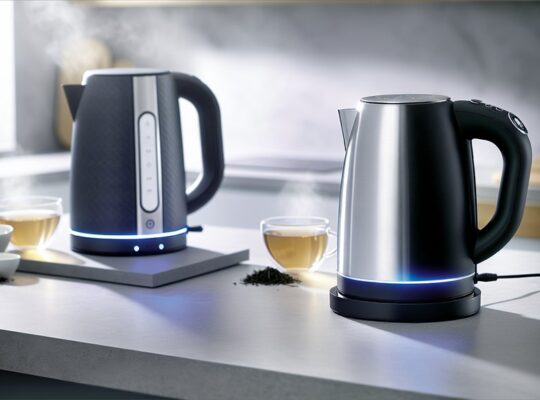
How precise do you need your water temperature? If you brew delicate teas, make baby formula, or want repeatable results, precision matters. An electric kettle with preset temperatures or a variable thermostat lets you hit specific targets safely; you’ll avoid scalding by choosing a lower setting and the kettle will shut off when reached. A microwave offers only rough heating, so you’ll have to measure and check temperature manually, increasing risk and inconvenience. Consider these practical points:
- Electric kettle: selectable temps (e.g., 60–100°C), automatic shutoff, minimal monitoring.
- Microwave: uneven heating, manual stirring and checking, higher error margin.
- Safety tip: always verify with a reliable thermometer, especially for infant or medical needs.
Consistency of Heat
If precise setpoints matter, you’ll also want consistent heat from start to finish. With an electric kettle that has temperature controls, you’re getting steady, uniform heating once the element cycles to maintain the set point, so your tea, baby formula, or lab tasks reach and hold the right temperature with minimal hotspots. A microwave heats unevenly by nature—waves create hot and cold spots—so you’ll need stirring, standing time, or lower power and intervals to approach uniformity. For safety, that inconsistency can mask scald risks or leave bacteria-friendly cool pockets in reheated food. If you need repeatable, predictable results, choose a kettle with good calibration. If you use a microwave, test and adjust procedures to ensure even, safe temperatures.
Safety Considerations for Home Use
Curious which is safer for daily use — a boiling kettle or a microwave? You’ll want to weigh immediate risks, ongoing hazards, and user behavior. Both can be safe if you follow simple rules, but they differ in failure modes and common injuries.
- Burns and scalds: Kettles pour boiling water, so spills cause severe scalds; microwaves can create superheated liquids and uneven hot spots that splash. Use lids, mitts, and stable surfaces for kettles; stir and let items stand from microwaves.
- Electrical and fire risks: Kettles usually draw steady current and shut off automatically; faulty cords or overfilling create hazards. Microwaves can spark with metal or run empty, risking fires. Keep cords intact and avoid metal in microwaves.
- Child and pet safety: Kettles with exposed spouts and reachable cords are high risk; microwaves are safer when mounted out of reach but still need supervision for hot contents.
Choose based on your habits: prioritize prevention, maintenance, and clear safe routines.
Glass kettles are corrosion-resistant and allow easy monitoring of water levels, which can reduce spill-related accidents when handled properly.
Versatility and What Each Appliance Can Do
You’ll notice the kettle usually wins on pure heating speed for water, while the microwave handles a wider range of foods and tasks. Consider how each appliance’s functions—boiling, reheating, defrosting, or steaming—match the meals you actually make. Also weigh energy use: kettles can be more efficient for small boils, microwaves better for quick reheats of solids. Always check airline rules if you plan to travel with an electric kettle, since airline regulations can vary by carrier.
Heating Speed Comparison
How fast do they really heat water and food, and which one suits your routine? You’ll find kettles reach boiling faster for plain water—typically 3–5 minutes—while microwaves heat varied foods unevenly but can be quicker for small portions. Choose by task and safety needs: kettles are faster and safer for boiling water; microwaves offer speed for reheating where stirring is possible to avoid hotspots.
- Electric kettle: consistent, rapid boiling for water; minimal monitoring, auto-shutoff reduces scald risk.
- Microwave: faster for small food portions; use short intervals and stir to prevent uneven heating and steam injuries.
- Practical tip: pick the appliance matching the item — water and instant drinks go to kettles; small leftovers suit microwaves.
Range of Functions
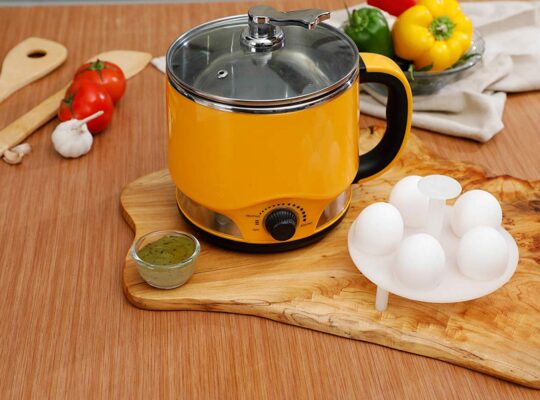
Having covered speed and safety, let’s look at what each appliance actually does beyond heating. You’ll find the kettle is focused: boiling water quickly, steeping tea, and blanching vegetables. The microwave is more versatile: reheating, defrosting, quick cooking, and sterilizing small items. You’ll choose based on tasks, space, and safety needs—kettles limit splatter and steam control; microwaves need safe containers and cautious handling of hot spots.
| Task | Electric Kettle | Microwave |
|---|---|---|
| Boiling water | Excellent | Poor |
| Reheating liquids/food | Limited | Good |
| Defrosting | No | Good |
| Sterilizing/quick cooking | Minimal | Good |
| Tea/infusions | Excellent | Limited |
Energy Efficiency Differences
Curious which uses less electricity for everyday tasks? You’ll find an electric kettle is usually more efficient when boiling water because it heats directly and wastes less energy. A microwave is versatile for reheating and softening food, but it loses efficiency with small water volumes and uneven heating. Consider safety: kettles auto-shutoff at boiling; microwaves can create hot spots and superheated liquids.
- Boiling water: kettle wins — faster, less energy, automatic shutoff.
- Reheating/defrosting: microwave wins — convenient, broader functions, but watch for steam and uneven heat.
- Small tasks: kettle is better for single cups; microwave may be wasteful and risk superheating.
Choose based on typical tasks, energy use per job, and safety needs.
Taste and Water Quality Effects
Want crisper-tasting tea or cleaner-tasting water? If you care about flavor and safety, an electric kettle usually gives you more control. Kettles heat water evenly to a rolling boil, which helps extract tea flavors predictably and can reduce off-tastes from under-heated water. Many models reach specific temperatures, so you can avoid scalding delicate leaves and prevent bitter compounds. Microwaves heat unevenly, creating hot spots and cooler pockets that can yield inconsistent extraction and muted flavors. For water quality, neither device removes contaminants; but rapid boiling in a kettle can drive off volatile gases and some chlorine, improving taste. Microwaving won’t reliably do that because heating is uneven and often doesn’t reach a full boil. If you’re using filtered or bottled water, differences shrink. In short: choose a kettle for consistent flavor and safer, more reliable boiling; a microwave’s convenience comes at the cost of variable taste and less predictable water quality. Regular descaling helps prevent mineral buildup that can lengthen boiling times and affect taste.
Maintenance, Cleaning, and Durability
Flavor and safety matter, but you’ll also want to think about upkeep and how long each appliance lasts. An electric kettle needs regular descaling if you have hard water; it’s quick with vinegar or citric acid and prevents mineral buildup that can affect performance and safety. A microwave is low-maintenance for boiling tasks, but food splatters require frequent wiping to avoid odors and microbial growth. Materials matter: stainless steel kettles resist stains and corrosion, while cheaper plastics can stain or warp over years. Microwaves have fewer replaceable parts but electronic failures can be costly.
- Cleanliness: Kettles need interior descaling; microwaves need interior wipes and occasional deodorizing.
- Wear & tear: Kettles have heating elements and lids that may fail; microwaves’ magnetrons and seals determine lifespan.
- Safety checks: Inspect kettle cords and microwave door seals; replace or service if frayed, leaking, or sparking.
Choose based on how much maintenance you’re willing to do and how long you want it to last. Electric kettles are not designed for frying and attempting to fry in them can create serious safety hazards like oil overheating and fire risk, so avoid using them for frying and stick to appliances designed for high-temperature oil cooking with proper temperature control.
Choosing the Right Appliance for Your Routine
How do your daily habits and priorities shape whether an electric kettle or microwave makes more sense for you? If you mostly boil water for tea, instant meals, or baby formula, an electric kettle is faster, uses less energy for small volumes, and reduces scald risk with automatic shutoff. If you reheat leftovers, cook in containers, or defrost often, a microwave gives versatility and even heating when used with safe cookware.
Consider routine frequency: frequent short tasks favor a kettle; varied cooking needs favor a microwave. Space and installation matter — kettles need minimal counter space and no venting; microwaves need clearance and stable placement. Think about safety habits: you’ll want cool-touch handles, cord management, and regular descaling for kettles; for microwaves, use microwave-safe dishes, cover food to prevent splatter, and keep vents clear.
Match the appliance to your most common tasks, prioritize safety features, and you’ll simplify daily cooking while minimizing hazards and maintenance. Portable travel kettles like the InstaCuppa offer compact, foldable designs made from food-grade silicone for easy packing and quick heating, making them useful for travelers who still need boiled water on the go foldable silicone.
Frequently Asked Questions
Can You Sterilize Baby Bottles With an Electric Kettle or Microwave?
Yes — you can sterilize bottles in an electric kettle or microwave, but you’ll need proper technique: kettles boil water covering bottles, microwaves use steam bags or sanitizers. Both work if you follow manufacturer safety and timing instructions.
Which Method Is Quieter During Operation?
The microwave’s usually quieter during operation; you’ll mostly hear a low hum and occasional motor noise, while an electric kettle boils loudly and clicks off. For safety, keep lids secure and don’t leave either unattended.
Do Either Appliance Affect Minerals in Bottled or Filtered Water?
No, neither markedly alters dissolved minerals in bottled or filtered water; heating concentrates them slightly by evaporation, but chemical composition stays the same. If you’re cautious, avoid boiling repeatedly and store water in clean, covered containers.
Can Either Be Used Safely in a Camper or RV?
Yes — you can safely use both in a camper or RV, but you’ll want to ensure adequate ventilation, secure placement, shore or inverter power capacity, proper grounding, and never leave either unattended while operating.
Which Has Lower Upfront Cost and Longer Warranty Options?
Microwaves usually have lower upfront costs and broader warranty options; you’ll often find budget models undercutting kettles, while many brands offer extended warranties on microwaves, though specific deals and safety certifications matter for your choice.