You’ll want a focused checklist before festival deals tempt you into a fast buy. Compare capacity and footprint for your kitchen, check wattage versus boil time, and weigh stainless, glass, and plastic for durability and taste impact. Prioritize temp control, concealed elements, and two-stage safety features, then confirm warranty and service reach—do this right and you’ll avoid common returns and hidden costs, but there’s one more trade-off to consider.
Key Takeaways
- Verify wattage and boil-time claims (2000–3000W heats fastest); ensure your home circuit can handle the rating.
- Confirm auto-shutoff and boil-dry protections, plus clear indicators or alarms for safety engagement.
- Check usable capacity versus maximum fill, handle ergonomics, and base stability for safe pouring when full.
- Prefer concealed stainless-steel heating elements or borosilicate glass for durability and easy cleaning; confirm BPA-free plastics.
- Compare warranty scope (parts & labor), start date, authorized service centers, and verified user reviews before buying.
Why Capacity and Size Matter for Your Household
How many liters do you actually need? You’ll match capacity to routine: single users often need 0.5–1.0 L for tea or instant meals, couples 1.0–1.5 L, small families 1.5–2.0 L. Choose a size that minimizes frequent refills to reduce boiling cycles and wear. Pay attention to usable volume versus maximum fill; safety requires staying below the maximum to prevent boiling overflow and steam contact with handles.
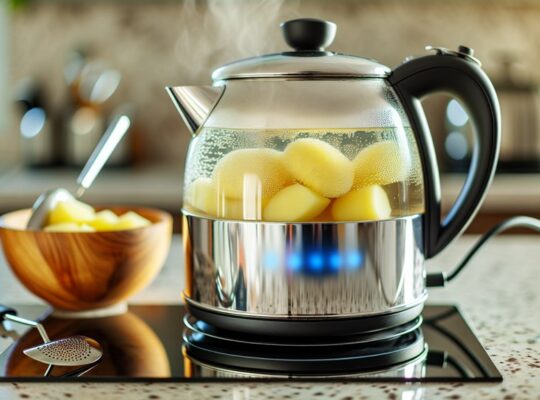
Compare physical dimensions to your countertop and storage—tall narrow kettles save counter depth but may be unstable; wider bases offer lower center of gravity. Consider pour control: larger kettles can spill if handles or spouts aren’t ergonomically designed. Material choice (stainless steel, glass, BPA-free plastic) affects weight and insulation; heavier units may be harder to lift when full. Prioritize a model whose capacity, footprint, and materials align with your daily water needs and safe, comfortable handling. Glass kettles are corrosion-resistant and let you monitor water level and brew color, but they can be heavier and need careful handling to avoid breakage.
Heating Speed and Power Ratings to Compare
Want water fast or willing to trade time for efficiency? You’ll compare wattage: higher watts (2000–3000W) heat quicker, reducing boil time significantly, while lower-watt models (1000–1500W) consume less instantaneous power but take longer. Check rated power on the label and match it to your circuit capacity — simultaneous high-watt appliances can trip breakers. Consider element type: concealed rapid-heating elements typically transfer power efficiently; confirm manufacturer heat-up tests and realistic boil times for 1L and full-capacity fills. Look for thermostatic control and auto-shutoff accuracy; faster heating should not override reliable cutoff at boiling to prevent dry-boil risks. Some kettles offer variable power modes or eco-settings — compare energy use per liter at different settings if efficiency matters. Finally, verify safety certifications (ISI, BIS, CE) and documented standby power draw. Balance speed needs against household wiring and safety margins to pick a kettle that’s fast, compliant, and safe. Regular descaling with vinegar solution helps maintain heating efficiency and prevent limescale buildup.
Material Choices: Stainless Steel, Glass, and Plastic Pros and Cons
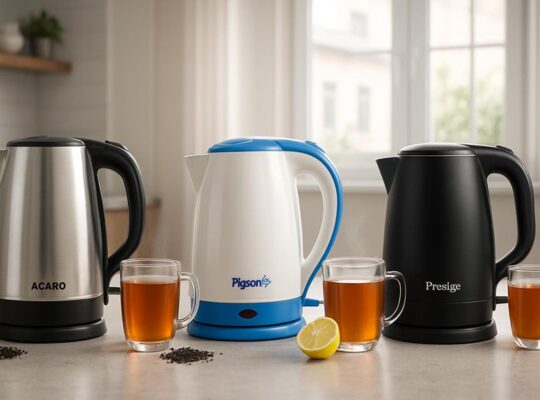
After checking power and safety, you’ll want to pick a material that matches your priorities: stainless steel, glass, or plastic. Stainless steel is durable, corrosion-resistant, and transfers heat efficiently; it minimizes leaching and is best if you prioritize longevity and hygiene. It can retain heat longer but may conceal scale buildup, so inspect and descale regularly. Glass gives visual clarity—easy to spot scaling and boil level—and is inert, so you won’t get metallic taste. Tempered borosilicate resists thermal shock but is heavier and more fragile; expect chipping risk and ensure a secure base connection. Plastic models are lightweight and cost-effective, with rapid manufacturing variety, but you should choose BPA-free, food-grade polymers and check for odor or discoloration over time. Plastic often degrades faster and may trap residues in seams. For safety, favor materials with clear certifications, easy-to-clean designs, and visible indicators of wear so you can replace or service the kettle promptly. Many stainless steel kettles, including popular models, come with a 2 years warranty which can simplify repairs or replacements.
Temperature Control and Preset Functions to Look for
You’ll want a kettle that offers precise temperature settings so you can target exact °C/°F for different beverages. Compare models by temperature increment (e.g., 1°C vs 5°C) and stability after reaching the set point. Also look for useful preset programs (tea types, keep-warm timers) that save steps without sacrificing control. Be sure to check for an automatic shut-off feature to improve safety and energy efficiency.
Precise Temperature Settings
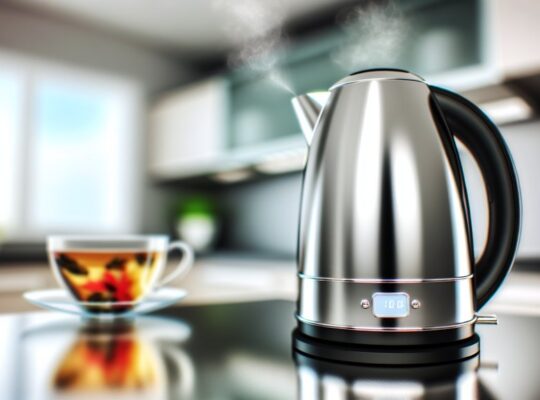
How precise do you need temperature control? You’ll want kettles that report target and achieved temperatures to within ±1–2°C; that accuracy matters for tea chemistry and avoiding scalding. Compare PID or digital thermostats versus simple bi-metal bimetal switches: PID offers tighter stability and fewer overshoots. Check if the display updates in real time and whether the unit holds temperature reliably without repetitive heating cycles that raise energy use and risk. Prefer models with direct-set temperature input rather than vague presets — they’re more predictable and auditable. Ensure the control mechanism isolates electronics from the water path and has automatic shutoff and boil-dry protection calibrated to the chosen setpoint. Prioritise documented accuracy specifications and third-party tests for safety.
Useful Preset Programs
Which presets will actually save you time and improve brew consistency? You’ll want kettles with clearly labeled, lockable presets for common targets: 80°C for green tea, 90°C for oolong, 96°C for coffee, plus a boil. Prioritize models with programmable temperature increments (1–5°C steps), a keep-warm timer with auto-shutoff, and a memory function for repeated routines. Compare response time, temperature accuracy (±1–2°C), and safety features like boil-dry protection and cool-touch handles. The table below helps you weigh options by function, safety and convenience.
| Function | Safety impact | Convenience benefit |
|---|---|---|
| Precise presets | Reduces overheating risk | Consistent extraction |
| Keep-warm | Prevents reboil hazards | Ready-to-serve time |
| Programmable steps | Limits user error | Fine-tuned brews |
| Memory | Prevents repeated setup | Fast repetition |
Safety Features: Auto-Shutoff, Boil-Dry Protection, and Cool-Touch Design
Although cheaper models may skip advanced protections, safety features like auto-shutoff, boil-dry protection, and cool-touch design are nonnegotiable for reliable daily use. You should expect auto-shutoff to engage promptly when water reaches boiling point; verify sensor type (bimetallic, thermistor, or temperature probe) and response time. Compare models by error margin — faster, more accurate shutoff reduces overboiling risk. Boil-dry protection is critical: it detects absent or low water and cuts power to prevent element damage and fire hazards. Look for two-stage systems that pair temperature sensing with flow or level detection for redundancy. Cool-touch design reduces scald risk during handling; evaluate exterior materials (double-wall stainless, insulated plastic) and measured surface temperatures at one minute post-boil. Also check venting paths to avoid steam contact with handles. Prefer kettles that combine independent safety mechanisms and clear indicator LEDs or audible alarms so you’ll get immediate, unambiguous feedback if a protection engages. Many reliable models, like the iBell SEK150L, also offer fast boiling performance along with multi-year warranties.
Cordless Base, Cable Storage, and Ergonomic Handling
Want effortless pour-and-go use? Choose a cordless base with a secure docking mechanism and 360° rotation so you can lift and replace the kettle from any angle without twisting the cord. Compare bases for firm click engagement and low wobble; loose docks increase spill risk. Look for a concealed heating element and non-slip rubber feet on the base to minimize tip-over and conductive-exposure hazards.
Evaluate cable storage: integrated reel or underside channel keeps excess wire contained and reduces countertop clutter, lowering trip and snag incidents. Prefer bases that lock the plug when retracted to prevent accidental extension.
Assess ergonomic handling: a balanced center of gravity, contoured handle with textured, heat-resistant material, and thumb-activated spout control let you pour steadily with one hand. Check handle reach and grip diameter against your hand size; thin or slippery grips increase strain and chance of dropping. Prioritize tactile feedback and secure locking for safe, repeatable operation. Modern kettles also commonly include auto shut off for added safety and convenience.
Warranty, Brand Reputation, and Service Network
You’ll want clear specs on warranty duration and what’s actually covered, since a two-year parts-and-labor policy isn’t the same as limited-component coverage. Compare brand reliability history by checking failure rates and user-reported issues to prioritize proven designs. Finally, confirm the manufacturer’s after-sales service network and local repair options so you’re not stranded if a component needs replacement. Regular descaling and maintenance can extend a kettle’s usable life, so follow recommended descaling schedule to reduce scale buildup and avoid performance issues.
Warranty Duration Clarity
How long should a kettle be covered before you consider it reliable? You’ll want at least a one-year comprehensive warranty as a baseline; two to three years is preferable for critical components like the heating element and thermostat. Compare warranty scopes — parts-only versus parts-and-labor — and check for exclusions such as scale buildup, misuse, or commercial use that void coverage. Look for clear start dates (purchase vs. registration) and simple claim processes (online, authorized centers). Extended warranties matter more for stainless-steel and digital models with electronics; basic plastic kettles can be lower priority. Prioritize models whose warranty documents explicitly state turnaround times for repairs and replacement policies. Clear, enforceable terms reduce safety risk and downtime.
Brand Reliability History
Why pick a brand with a proven service record? You want predictable performance and documented safety compliance; established brands tend to meet certifications, use higher-quality components, and issue clearer warranty terms. Compare brands on failure rates, recall history, and transparency of technical specs rather than marketing claims. Check independent reviews and consumer-complaint databases for recurring faults like overheating or faulty auto-shutoff. Prioritize brands that publish test standards, component origins, and warranty claim procedures — that reduces ambiguity during incidents. You’ll also favor manufacturers with consistent model updates and firmware or component revision logs, which indicate active quality control. In short, choose brands with verifiable reliability metrics, concise warranty policies, and documented safety histories to minimize risk during heavy-sale purchases.
After-Sales Service Network
Need reliable support when something goes wrong? You’ll want a clear warranty period, defined coverage (heating element, thermostat, casing), and simple claim procedures. Compare brands by service-response times and authorized-center density in your city; a reputed brand with fewer service centers can still be risky if response logistics are slow. Check whether labor, parts, and pickup/drop are included, and verify turnaround targets (48–72 hours is preferable for safety-critical faults). Look for certified technicians and genuine spare parts to avoid electrical hazards from improper repairs. Read user reports about claim denials and hidden exclusions. Prioritize manufacturers offering extended warranties or paid service plans with networked centers—those reduce downtime and ensure repairs meet safety and compliance standards.
How to Evaluate Festival Deals and Read Genuine Reviews
Want to spot a genuine festival kettle deal fast? Compare listed specs against the manufacturer page: wattage, auto-shutoff, boil-dry protection, material, and warranty. If the festival price matches or slightly undercuts the brand site and specs align, it’s likely authentic. Beware steep discounts with vague specs or no model number.
Assess seller credibility: prioritize authorized sellers or well-rated marketplace stores. Check return window and service center availability in your area; deep discounts from third-party sellers can complicate repairs.
Read reviews quantitatively and qualitatively. Filter for verified purchases, sort by recent entries, and note consistency in complaints about safety (e.g., overheating, sparking). A few isolated negative reviews amid many positives is different from repeated failure modes.
Use review ratios: ≥4.3 average with >100 verified reviews is stronger than 4.7 with 10 reviews. Cross-reference external sources—consumer forums, manufacturer recalls—for safety alerts before you buy.
Also verify that the kettle includes auto-shutoff and boil-dry protection to reduce the risk of overheating and damage.
Frequently Asked Questions
Can I Use My Kettle for Simmering Soups or Sauces?
Yes — you can use some kettles for simmering, but you’ll want a stovetop or variable-temperature electric model. Desktop rapid-boil kettles lack low-heat control and risk scorching, damage, or safety hazards compared to adjustable units.
Are There Energy-Saving Modes or Smart App Integrations?
Yes — some kettles offer energy-saving modes and smart app integrations, letting you schedule heating, monitor temperature, and receive safety alerts; compare models for standby power, secure Bluetooth/Wi‑Fi, firmware updates, and certified safety features.
Can I Boil Milk or Dairy in an Electric Kettle?
Yes, you can boil milk in many kettles, but it’s riskier than water: milk scorches, foams and can overflow. Use a kettle with stainless interior, thermostatic control, easy-clean surfaces, and monitor closely to avoid hazards.
How Do Kettles Perform at High-Altitude Locations?
Kettles boil faster but at lower temperatures at high altitude; you’ll see longer simmer times for sterilization. Choose models with accurate thermostats, dry-boil protection and pressure-tolerant lids; compare wattage and automatic shutoff reliability.
Are Replacement Parts (Filters, Lids) Sold Separately?
Yes — many manufacturers sell replacement lids and filters separately, but availability varies by brand and model. You’ll want to verify part numbers, compatibility, and safety certifications before purchase, prioritizing genuine OEM components for reliability.