If you’re shopping for an electric kettle in India, you’ll want clear, practical answers to capacity, power, safety and maintenance questions so you don’t buy the wrong model. I’ll cover what size suits families or solo users, how wattage affects boil speed and bills, which materials are safest, and simple care tips to keep taste and performance intact. Keep this guide handy — the right details can save time, money and headaches.
Key Takeaways
- Choose capacity by household size: 0.8–1.2 L (1–2 people), 1.5–1.8 L (3–5), 2–2.5 L (hosting/baby care).
- Pick wattage matching wiring: 1000–1500 W for older wiring, 1500–2200 W balanced, 2200–3000 W for fastest boils.
- Prefer stainless steel, toughened glass, or certified BPA-free plastics; titanium if budget allows and copper only if well-lined.
- Look for safety features: auto-shutoff, boil-dry protection, cool-touch handle, stable non-slip base, and relevant safety marks.
- Descale regularly based on hardness: very hard every 2–4 weeks, moderate every 1–2 months, soft every 3–6 months.
What Capacity Should I Choose for My Household?
How many litres do you actually need? Start by counting daily uses—tea, coffee, instant meals—and the number of people served at once. For one or two people, a 0.8–1.2 L kettle is efficient: it boils quickly and limits wasted water. For families of three to five, choose 1.5–1.8 L so you won’t refill repeatedly. If you host often or use hot water for cleaning and baby care, a 2–2.5 L model gives margin without frequent cycles. Consider the kettle’s usable capacity; manufacturers often state maximum fill—don’t overfill for safety. Also factor in countertop space, weight when full, and pour control to avoid scalding. If energy savings matter, smaller capacity that matches typical use is safer and faster. Finally, pick a model with clear level markings and an automatic shut-off to prevent dry-boil hazards; those features keep everyday use predictable and secure. Many multipurpose kettles also include temperature control and keep-warm functions that expand cooking options.
How Much Electricity Does an Electric Kettle Use?
Wondering what running an electric kettle will do to your electricity bill? You’ll find it’s mainly about power rating (typically 1500–3000 W), how much water you boil, and how long it takes. A 2 kW kettle boiling 1 litre takes ~3–4 minutes and uses about 0.06–0.08 kWh per boil. That’s small per use, but frequent boils add up. To be safe and efficient, boil only what you need, descale regularly to maintain heating efficiency, and avoid reheating unnecessarily. The kettle’s heating element converts electrical energy into heat and determines how quickly the water boils.
| Kettle Power (W) | Time to Boil 1L (min) | Energy per Boil (kWh) |
|---|---|---|
| 1500 | 4–5 | 0.10–0.13 |
| 2000 | 3–4 | 0.06–0.08 |
| 3000 | 2–3 | 0.05–0.09 |
Check your meter rate to convert kWh to rupees. Prioritise safe handling and regular maintenance for consistent performance.
Which Kettle Material Is Safest for Boiling Water?
After you’ve considered energy use and upkeep, the next key choice is material—because what the kettle’s made of affects safety, taste, durability and cleaning. You want materials that won’t leach, resist scaling, and stand up to repeated heating. Choose a kettle with food-grade, BPA-free components and clear manufacturer assurances about coatings and inner linings. Prefer uncoated surfaces where possible, since damaged coatings can expose underlying metal. Also check warranty and certification marks to confirm testing for potable-water safety.
- Stainless options: durable, non-reactive if high-grade and uncoated; check for food-grade certification.
- Glass options: inert and visually reassuring; choose toughened glass and heat-resistant seals to avoid micro-cracks.
- BPA-free plastic parts: safe only if explicitly certified; avoid polycarbonate and any solvents or scented plastics.
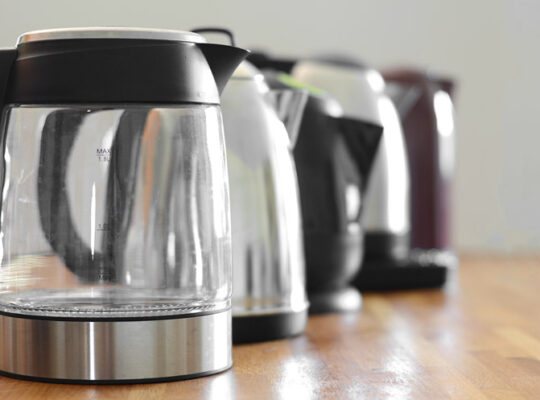
Inspect joins, lids and spouts for safe seals and easily removable parts for thorough cleaning to minimise bacterial buildup and scale. iBell kettles often offer fast boiling performance, which can be useful when choosing by practicality and power.
Is Stainless Steel Better Than Glass or Plastic?
Which one’s better for you depends on priorities like durability, taste neutrality, maintenance and safety—stainless steel usually wins on toughness and long-term performance, glass scores for visual purity and taste, while plastic can be lightweight and cheap but risks odor, staining and chemical concerns unless explicitly food-grade and BPA-free. If you prioritise longevity and low reactivity, stainless steel (preferably 18/8 or 304 grade) resists dents, won’t leach, and handles frequent heating without degrading. It’s easy to descale and sanitise, though it can retain hardness marks and slightly affect water taste for very sensitive palates. Glass gives you visibility to avoid scale and is inert, so taste stays clean, but it’s heavier and breakable. Plastic kettles can be fine if they’re certified food-safe and BPA-free, but you should inspect for discoloration, smells and surface scratches that trap bacteria. For safety, choose certified materials, follow manufacturer care instructions and replace any unit showing damage or persistent odour. Regular descaling with vinegar solution helps prevent scale buildup and maintain kettle performance.
Does the Kettle’s Base Affect Performance?
Material choice matters, but the kettle’s base also has a big say in how the appliance performs. You’ll want a stable, well-insulated base that sits flat and connects securely to the kettle body; poor contact wastes energy and can trigger false shutoffs. Check for heat-resistant plastics around the contact points and rubber feet to prevent slipping on wet countertops. Maintenance matters too: a removable base with sealed wiring is easier and safer to clean.
- Base contact quality — ensures consistent power transfer, avoids sparks, and supports the auto-off sensor.
- Insulation & feet — reduce heat transfer to surfaces and prevent accidental movement when you lift or set down the kettle.
- Sealed wiring & detachable design — allow safe cleaning and reduce risk of moisture ingress, extending lifespan.
Inspect bases for solid fit, UL/ISI markings, and no wobble before you buy. Many reliable brands offer models with concealed elements for easier cleaning and durability, such as Philips kettles known for their quality.
What Wattage Gives the Fastest Boil?
If you want the fastest boil, pick a kettle with higher wattage because more power heats water quicker. You’ll also want to check heating-element efficiency — some high-watt models transfer heat better than others, cutting actual boil time. Ultimately, boil time scales with power but depends on element design and kettle build, so compare specs rather than just the watt number. Also consider kettles with adjustable temperature control to prevent overheating and suit different drinks.
Higher Wattage = Faster
Wondering how wattage affects boil time? You’ll find higher wattage generally boils water faster, but practical limits and safety matter. A 1500–3000 W kettle will reduce time significantly compared with 1000 W. Don’t assume more is always better: electrical circuit capacity, cord rating, and user safety set safe upper bounds.
- 1000–1500 W — slower, safer for older wiring; good for small households and controlled use.
- 1500–2200 W — balanced: fast enough for most needs, compatible with typical Indian sockets and stabilizers.
- 2200–3000 W — fastest boils; check plug, socket, and MCB rating, and avoid prolonged use on weak wiring.
Choose wattage that matches your wiring and safety priorities rather than only speed.
Heating Element Efficiency
How fast your kettle boils isn’t just about raw wattage — it’s also about how efficiently the heating element transfers that power into the water. You should look for concealed or directly immersed elements; concealed flat-plate elements reduce scale buildup and transfer heat broadly, while immersed coils give quick, localized heating but can trap limescale. Material matters: stainless steel and copper conduct well and resist corrosion, maintaining efficiency over time. Good contact between element and kettle base minimizes energy loss; poor seals or air gaps waste power and increase boil time. Also check element wattage rating versus actual delivery—quality thermostats and safety cut-offs prevent overheating and maintain consistent transfer. Prioritize models with reliable element construction to be safe and efficient long-term.
Boil Time Vs Power
Curious about which wattage will get your kettle boiling fastest? You’ll find higher-wattage kettles reach boil quicker, but efficiency, water volume, and element contact matter. Choose a model with 1800–2200 W for fastest home performance; it’ll cut boil times significantly compared with 1200–1500 W units. Balance speed with safety: ensure proper auto-shutoff, thermal cutouts, and stable base to handle higher power.
- 1800–2200 W: fastest for typical 1–1.7 L kettles, ideal if you boil often and need rapid results.
- 1500–1800 W: moderate speed, lower electrical load—good for smaller households or weaker circuits.
- 1200–1500 W: slower but safer on weak wiring; best for minimal use.
Always match wattage to your supply and safety needs.
Are Titanium or Copper Kettles Worth the Price?
If you’re weighing titanium or copper kettles, consider whether the premium metal benefits justify the price—titanium offers light, non-reactive durability while copper provides superior heat conduction but needs more upkeep. Think about how each metal affects taste and water quality, especially with soft or acidic water that can leach flavors or require lining. Finally, factor in long-term maintenance and lifespan: copper often needs polishing and re-tinning over years, whereas titanium resists corrosion and demands less care. Also consider features like precise temperature controls and automatic shut-off that add convenience and safety.
Material Benefits Vs Cost
Wondering whether titanium or copper kettles justify their higher price? You’ll pay more for corrosion resistance, faster heat-up (copper) and lightweight durability (titanium). Consider real safety and lifecycle cost rather than hype: check food-grade certification, internal coatings, and warranty before buying.
- Lifespan vs cost: titanium resists dents and corrosion longer, so higher upfront cost can mean fewer replacements and lower long-term risk.
- Safety and maintenance: copper conducts heat well but needs proper lining to prevent leaching; if you want low maintenance, titanium or stainless with certified lining is safer.
- Efficiency and value: copper heats fastest, saving energy; calculate energy savings against price difference to see if premium pays off for your usage.
Taste and Water Quality
Beyond durability and cost, the metal you choose can subtly change what you taste and how your water behaves. If you’re considering titanium or copper, know that titanium is inert and won’t impart flavors; it’s often used as a lining to keep water neutral and reduces metallic aftertaste. Copper can slightly sweeten or change mineral balance, which some people like for tea or Ayurvedic uses, but it can also react with acidic water — so you’d need safe, food-grade finishes and occasional testing. For regular drinking water and sensitive palates, titanium offers predictable, safe taste. If you prefer copper’s traditional profile, ensure the kettle is certified, cleaned properly, and matched to your local water chemistry to avoid unwanted reactions.
Durability and Maintenance
Choosing between titanium and copper kettles comes down to how much lifespan, upkeep, and upfront cost you’re willing to trade for performance. You’ll find titanium is lightweight, corrosion-resistant, and nearly maintenance-free; it won’t taint taste and handles hard water better. Copper heats fast and looks premium, but it needs regular polishing and anti-tarnish care; untreated copper can react with water, so lined interiors are safer. For daily use in India’s varied water quality, durability plus low upkeep usually wins.
- Lifespan: titanium resists dents and corrosion; copper ages but can last if lined and maintained.
- Maintenance: copper requires polishing and occasional re-lining; titanium needs simple descaling.
- Safety: choose certified linings and follow manufacturer cleaning schedules to avoid contamination.
How Does Hard Water Affect a Kettle?
How does hard water change the way your kettle performs and how long it lasts? Hard water contains dissolved calcium and magnesium; when you heat it in a kettle these minerals precipitate as limescale. That scale builds on heating elements and the inner surface, reducing thermal transfer so your kettle takes longer to boil and uses more electricity. Over time limescale can trap moisture, accelerate corrosion in some metals, and clog spouts or filters, raising safety risks like overheating or element failure. Visible white crust or flaky deposits indicate accumulation. For electric kettles with concealed elements, scale still interferes with heat flow and sensor accuracy; for exposed coils it adheres directly and can flake off into drinks. If your household water is hard, choosing kettles with corrosion-resistant interiors and reliable auto-shutoff features helps maintain safe operation. Regular visual checks and prompt removal of thick deposits keep performance consistent and lower the chance of malfunction. Descaling every few weeks with white vinegar is a simple preventative step to reduce limescale buildup.
How Often Should I Descale My Kettle?
How often you should descale depends on your water hardness: if you’re on very hard water, aim for every 2–4 weeks; on moderately hard water, every 1–2 months; and if you have soft or filtered water, every 3–6 months. You’ll know it’s time when you see white limescale buildup, slower boil times, strange noises or reduced capacity. Regular checks and timely descaling will keep your kettle efficient and extend its lifespan. Place the kettle on a stable, heat-resistant surface before use to reduce risks while cleaning or descaling.
Frequency by Water Hardness
Want to know when to descale your kettle? Your water hardness determines the schedule: harder water = faster limescale buildup, which affects heating efficiency and safety. Check local water reports or test strips to classify hardness and set a routine.
- Soft water (0–60 mg/L): descaleeevery 3–6 months — low risk, occasional check keeps elements efficient.
- Moderately hard (61–120 mg/L): descale every 1–3 months — regular removal prevents insulation of heating elements and overheating.
- Hard/very hard (>120 mg/L): descale monthly or biweekly if you boil daily — frequent maintenance protects performance and reduces energy use.
Always follow manufacturer instructions and use safe descalers or vinegar solutions diluted as recommended.
Signs You Should Descale
When should you descale your kettle? Watch for visible white or chalky scale inside the kettle, slower boiling times, odd metallic or muted taste in water, or frequent automatic shut-offs—these are clear signs mineral buildup is affecting performance and safety. You’ll also notice uneven heating spots or banging noises as trapped scale disrupts the element. If you live where water is hard, these signs can appear within weeks; in soft-water areas they take months. Descaling when you first see any of these prevents overheating, reduces energy use, and prolongs the kettle’s life. Use recommended vinegar or citric-acid methods, rinse thoroughly, and run a full boil cycle before drinking. If scale returns rapidly, consider a water softener or filter.
What Are the Best Descaling Methods for Indian Homes?
Why bother descaling regularly? You want a safe, efficient kettle and reduced limescale that can harbor bacteria and shorten appliance life. Use methods that are effective, non-toxic, and suited to Indian water hardness.
- Vinegar solution: Mix equal parts white vinegar and water, boil briefly, let sit 20–30 minutes, then rinse thoroughly. Vinegar dissolves calcium safely but needs full rinsing to remove odor.
- Lemon juice: Use fresh lemon or bottled citric acid mixed with water, boil and soak 15–20 minutes. It’s food-safe, leaves a pleasant smell, and works well for light to moderate scale.
- Commercial descaler: Choose a kettle-compatible, food-safe descaler (citric-acid based preferred). Follow manufacturer instructions, rinse multiple times, and ventilate if needed.
After any method, run at least one clear-water boil and inspect the heating element. Wear gloves if handling concentrated solutions and keep children away until the kettle is fully rinsed and odor-free. A regular descaling schedule also helps maintain efficiency and lifespan, especially for kettles used frequently.
Can I Use Tap Water Directly in the Kettle?
Can you use tap water directly in the kettle? Yes, you can, but you should be cautious depending on your local supply. Untreated tap water is usually safe for boiling, yet hard water with high mineral content will cause scale buildup faster, reducing heating efficiency and shortening the kettle’s life. If your area has visible sediment, discoloration, or a strong odor, consider filtering before use.
For routine safety: empty and dry the kettle after use to limit microbial growth, and don’t leave water standing for long periods. Use the kettle’s fill lines; overfilling can spill boiling water and trigger hazards. If your home gets municipal water treated to standards, boiling will neutralize most biological risks, but it won’t remove dissolved minerals. To protect the appliance and ensure clean-tasting water, use a basic inline filter, a small countertop filter pitcher, or periodically descale with vinegar or citric acid as recommended.
Is There a Risk of Chemicals Leaching From Plastic Kettles?
After checking whether your tap water needs filtering or descaling, you might wonder if the kettle itself could introduce unwanted chemicals—especially if it’s made of plastic. You’ll want reassurance: modern food-grade plastics used in reputable kettles are designed to resist leaching at boiling temperatures, but lower-quality or uncertified units can be risky. Look for BPA-free, food-grade PP (polypropylene) or Tritan labels and relevant safety certifications (ISI, CE, BIS). Avoid kettles with a strong plastic odor after heating; that’s a warning sign.
- Check certification and material: choose BPA-free, food-grade plastics with clear standards.
- Inspect and smell: persistent plastic odor or discoloration means replace it.
- Prefer designs where water contacts stainless steel or glass rather than plastic.
You should follow manufacturer care instructions, avoid abrasive cleaning that degrades liners, and replace kettles showing wear. Prioritise safety over low cost.
Which Kettles Are Best for Making Chai Quickly?
Looking to make chai fast without sacrificing flavor? Choose a kettle that heats evenly and has precise temperature control so you can bring water to a rolling boil quickly without overcooking delicate spices. Stainless-steel kettles with a flat, heavy base heat reliably and won’t impart taste; look for food-grade 304 (18/8) steel. Glass kettles let you watch boil stages, helping time infusion, but ensure borosilicate glass and sturdy lids for safety. If you brew multiple cups, pick a higher wattage (1800–2200 W) model with a good power-to-volume ratio to reduce wait time. Auto-shutoff and boil-dry protection are essential—chai involves milk and simmering, so safety cutouts prevent accidents. Choose models with easy-to-clean, detachable filters or wide mouths to remove tea leaves and avoid residue. Finally, check for a secure spout to pour concentrated chai without spills; precise pouring preserves strength and keeps your kitchen safe.
Do Cordless Kettles Perform Differently Than Corded Ones?
You’ll find that cordless and corded kettles heat similarly because the heating element and wattage determine boil speed more than the presence of a detachable base. Cordless models score higher on convenience—easy to lift, pour and store—while corded units can feel slightly more stable on the countertop. From a safety standpoint cordless kettles reduce tripping and cord-related risks, but check for sturdy base connections and automatic shut-off features before buying.
Heating Performance Differences
Curious whether cordless kettles heat differently than corded ones? You’ll find performance mainly depends on wattage, element design and build quality, not cord type. Cordless models have a detachable base; that base houses the power connection but the heating element and watts determine speed and consistency.
- Wattage and element placement: Higher watts and exposed or flat-bottom elements heat faster and maintain even boiling; check specs rather than assuming cord type matters.
- Thermal efficiency: Well-insulated kettles lose less heat during boiling, so they reach and retain temperature more predictably — useful when you need reliable results.
- Temperature control and sensor accuracy: Precise thermostats and quality sensors give repeatable heating profiles; prefer models with proven sensor calibration for safe, accurate boiling.
Convenience and Safety
How do cordless and corded kettles compare on convenience and safety? You’ll find cordless kettles offer greater mobility: you lift the pot off its base to pour without tripping over a cord, making serving safer and easier. Bases still supply power and usually include auto-shutoff and boil-dry protection, so safety features are comparable. Corded kettles eliminate a separate base but can restrict placement and increase cable exposure near water, which you’ll want to manage carefully. Also check for cool-touch handles, secure lids, and stable bases—these matter more than cord type. For the safest setup, place any kettle on a dry, level surface, keep cords away from edges, and inspect power connections regularly to prevent shocks or spills.
Should I Look for Auto-Shutoff and Boil-Dry Protection?
Want peace of mind when the kettle’s doing its job? You should — auto-shutoff and boil-dry protection are basic safety features that prevent overheating, fires, and damage. Auto-shutoff senses steam or a boil point and cuts power; boil-dry protection detects low or no water and turns the element off. Together they protect your home, the kettle’s heating element, and reduce accident risk if you forget the appliance on.
- Auto-shutoff: prevents prolonged heating once water boils, reducing energy waste and accidental scalds.
- Boil-dry protection: safeguards the element if you accidentally switch on an empty kettle, avoiding melting or fire hazards.
- Reliability checks: choose kettles with quick, proven sensors and clear indicator lights; prefer models with certifications (ISI/BIS) for electrical safety.
If safety matters to you, don’t compromise. These features are inexpensive yet essential for everyday use in an Indian kitchen.
Are Variable Temperature Settings Necessary?
If you care about precise tea extraction — for example green versus masala chai — variable temperature lets you hit the sweet spot for flavor rather than always boiling. Keep in mind lower setpoints can save energy and boil faster for smaller volumes, but you’ll trade simplicity for slightly longer heating times when using multiple temperatures. For most buyers, weigh the extra cost against how often you’ll use those specific temperatures before choosing a kettle.
Tea and Brewing Precision
Curious whether variable temperature settings really matter for your daily cup? You’ll find they do when you want consistent results and safe handling. If you brew delicate green or white teas, lower temps prevent bitterness and reduce scalding risk; for black or masala chai, near-boil extraction gives full flavour. A kettle with precise control lets you repeat recipes reliably, which is important if you’re sharing brewing instructions or using tea scales and timers.
- Match temperature to tea type to control extraction and avoid overbitter cups.
- Use repeatable settings for consistent strength, aroma, and reduced safety mistakes.
- Prefer clear indicators and automatic shutoff to prevent overheating, boiling dry, or accidental burns.
Choose precision for predictable, safer brewing.
Energy and Speed Tradeoffs
How much extra time or electricity will you really spend using variable temperature settings? You’ll usually see minimal difference: heating to 100°C and stopping at 90°C takes only a minute or two less, and energy use varies by a few percent because most kettles heat quickly and insulation is limited. Variable settings give control for delicate teas and reduce reboiling, which can slightly save energy over repeated use. However, using lower temps means you may reheat more often if you undershoot. Prioritise kettles with accurate thermostats and automatic shutoff for safety; poorly calibrated controls can cause underheating or unexpected boilovers. In short, variable temps offer sensible precision and modest energy tradeoffs if you use them deliberately.
Cost Versus Practicality
Wondering whether variable temperature settings are worth the extra cost? You’ll pay more for presets and precise control, but they can improve safety and beverage quality when used correctly. If you make tea, coffee, or baby formula regularly, controlled temperatures reduce scald risk and prevent overheating. For basic boiling needs—instant noodles, sterilizing—you won’t miss them and can save money. Consider durability, warranty, and clear temperature markings; cheap controls can fail and create hazards. Balance how often you’ll use specific temperatures against long-term safety benefits.
- Frequency: choose presets if you brew specialty tea/coffee daily.
- Safety: variable control lowers boil-over and scald risks for infants.
- Cost-effectiveness: skip extras if you only need rolling boil.
Which Kettles Are Suitable for Green and Black Tea?
Which kettles should you pick if you want perfect green or black tea? For green tea, choose a kettle with precise temperature control (around 70–80°C) so you won’t scald delicate leaves; models with adjustable presets or a variable thermostat are best. Look for rapid, even heating and good insulation to hold temperature without boiling. For black tea, a kettle that reliably reaches and maintains a rolling boil (100°C) is appropriate; simple, sturdy models with full power and quick recovery work well.
Prefer stainless steel or high-grade glass interiors; they’re inert, easy to clean, and safer than poorly coated surfaces. Avoid kettles that overheat or lack automatic shut-off—safety cutouts and boil-dry protection are essential. If you brew both types, a unit with selectable temperature presets plus accurate display gives consistent results. Check wattage for speed, and ensure the lid seals well to prevent accidental spills while pouring.
How Important Is a Filter or Mesh Spout?
A mesh spout or built-in filter matters because it catches scale and sediment, keeping your cup clearer and reducing limescale buildup in the kettle. It also improves pouring precision and safety by preventing unexpected splashes or larger particles from escaping. Finally, consider how easy the filter is to remove and clean—simple maintenance means better long-term performance.
Scale and Sediment Control
Because tap water in many parts of India carries minerals that precipitate when heated, a good filter or mesh spout on your kettle can make a noticeable difference in taste, appliance longevity, and safety. You’ll want one that traps visible sediment and reduces scale buildup at the spout, lowering the chance of blocked flow and reducing off-flavors. Cleanable, stainless or food-grade nylon meshes work well; avoid fragile, glued-in screens.
- Choose a removable, washable filter to prevent clogging and allow regular inspection.
- Prefer fine mesh for smaller particles but ensure it doesn’t impede pouring or trap too much residue.
- Descale your kettle monthly and replace filters per manufacturer guidance to maintain safety and performance.
Pouring Precision Safety
How well your kettle pours can matter as much as how fast it boils—especially when hot water and small mouths (like those of a teapot or cup) are involved. You want a spout with a fine mesh or built-in filter to stop scale flakes and large particles from exiting with the stream. A good mesh also smooths flow, reducing splatter and sudden gushes that can scald fingers or lips. Look for tightly fitted filters that won’t shift when you tilt the kettle and for spouts shaped to give a steady, controllable pour. If you often brew tea or pour into narrow vessels, prioritize this feature. It’s a small safety investment that prevents burns and protects your tea’s clarity.
Maintenance and Cleaning
Why should you care about a mesh or filter in your kettle? You’ll want one to keep scale, sediment and rust fragments out of your cup and brewing equipment. A good mesh improves pour control and prevents accidental spills of particles that can clog tea strainers or damage espresso machines. Clean and inspect the filter regularly; a clogged mesh reduces flow and causes overheating when the element works harder.
- Removeable mesh is easiest to clean — rinse after each use and soak in vinegar monthly to dissolve limescale.
- Fine stainless-steel filters resist corrosion and won’t alter taste; replace if warped or pitted.
- A damaged filter is a safety risk — replace immediately to avoid ingestion of particles or element stress.
What’s the Difference Between Concealed and Exposed Heating Elements?
Curious which design suits your kitchen and safety needs best? Concealed heating elements are tucked under a flat stainless-steel or aluminium plate inside the kettle. That design limits direct contact with the element, makes descaling easier, and reduces the risk of accidental burns or food particles catching on coils. For safety-conscious users, concealed elements minimise exposed hot surfaces and often pair with faster boiling and more even heat distribution.
Exposed heating elements are the visible metal coils at the bottom. They heat quickly and can be more energy-efficient in small boils, but they collect limescale and debris faster, so you’ll need to clean them more frequently. Exposed coils present a greater burn risk if you reach inside or touch the base when hot, and they may be less ideal if you often make milk-based beverages that can scald.
Choose concealed if safety, easy cleaning, and low maintenance matter most; pick exposed only if you prioritise simple, sometimes quicker heating and don’t mind extra upkeep.
How Loud Are Electric Kettles During Operation?
Wondering whether an electric kettle will add noise to your kitchen routine? You’ll find most kettles produce a modest hum and occasional bubbling or clicking as water heats and the auto shut-off engages. Noise varies by design, build quality, and whether you have a concealed or exposed heating element. You’ll want quieter models if you make tea early, have sleeping family members, or value a calm kitchen.
- Quiet (50–60 dB): premium insulated or low-noise models—suitable for early mornings without disturbing others.
- Moderate (60–70 dB): common stainless-steel or plastic kettles—noticeable but not alarming during boiling.
- Loud (>70 dB): rare, usually older or defective units with loose components—inspect and service for safety.
When a kettle sounds unusually loud, stop using it, check for scale, loose parts, or damaged bases, and contact the manufacturer to avoid safety hazards.
Are Travel Kettles Useful for Domestic Use?
Ever thought a travel kettle might double as your everyday kitchen workhorse? You can use one at home if your needs are modest: boiling small volumes for tea, instant coffee, baby formula or quick soups. Travel kettles heat fast and use less energy for 0.5–1.0 litre tasks, so they’re economical when you don’t need a full pot. However, check build quality: thin metal or cheap plastics can warp or leach with repeated use. Look for BPA-free materials, auto shut-off, boil-dry protection and a stable base to prevent tipping. Note that many travel models lack robust handles, wide mouths for easy cleaning, or higher wattage for heavier daily loads. If you’ll boil frequently for several people, a standard domestic kettle is safer and more durable. But for singles, small families, or as a secondary appliance, a certified travel kettle can be practical—just prioritise safety features and proper maintenance.
How Compact Can a Kettle Be for Small Indian Kitchens?
If a travel kettle can handle small, occasional jobs, you’ll want something even more space-smart when kitchen counter real estate is tight. You can opt for slim, vertical designs or low-profile models that fit under cabinets and on narrow shelves without compromising safety features like automatic shut-off and boil-dry protection. Capacity choices usually range from 0.5–1.5 litres; for one or two people, 0.7–1.0 L balances compactness with usefulness. Check base diameter and cord storage so the unit won’t wobble or leave wires exposed.
- Choose capacity: 0.7–1.0 L for daily tea/coffee, 0.5 L for solo use or travel.
- Measure footprint: aim for a base under 18 cm diameter to fit small counters and shelves.
- Prioritise safety features: secure lid latch, cool-touch handle, clear water gauge, and certified electrical standards.
You’ll save space without sacrificing safe, reliable boiling by matching size to your routine.
Which Brands Offer the Best After-Sales Service in India?
Which brands will give you the smoothest support after purchase? You’ll find names like Philips, Bajaj, Havells and Croma consistently rated for dependable service networks across India. They maintain widespread service centres, trained technicians and standardised repair procedures, so faults are diagnosed and fixed quickly without compromising safety. You’ll also see Morphy Richards and Prestige praised for timely customer support and accessible spare parts, which matter when heating elements or switches need replacement. When you contact brands, note response time, availability of authorised technicians in your city, and clarity of safety-related guidance—these reduce risk during repairs. Local brands such as Butterfly and Usha can offer fast on-site assistance in many regions, often at lower cost. Before buying, check recent user reviews and official service-mapping tools to confirm active centres near you. Prioritise brands that publish clear safety instructions for servicing and offer certified technicians; that’s the best way to keep your kettle reliable and safe.
What Warranty Terms Should I Expect?
What should you expect from kettle warranties in India? You’ll typically get 1–2 years of coverage on the appliance and sometimes longer for the heating element or motor, depending on brand and model. Warranties usually cover manufacturing defects and electrical failures under normal use, not damage from misuse, water scaling, tampering, or accidental drops.
- Duration and scope: Check whether the warranty is for the whole kettle or limited to specific parts (heating element, lid, base). Longer or component-specific warranties add peace of mind.
- Service process: Confirm authorized service centers in your city, whether on-site repair is offered, and if returns/replacements are straightforward—keep proof of purchase.
- Exclusions and maintenance: Read exclusions (e.g., immersion, descaling neglect) and follow recommended maintenance to keep coverage valid.
Always register your appliance if required and retain invoices; that simple step protects your safety and investment.
Can I Repair a Kettle if the Heating Element Fails?
Curious whether a failed heating element means you’re stuck buying a new kettle? You’re not automatically doomed to replace it, but repairs depend on design, cost and safety. Many modern kettles have sealed bases or integrated flat disks; these are difficult and often unsafe to open, so professional replacement or warranty service is the better route. If your kettle has a visible, removable coil and you’re competent with basic electrical checks, you can test the element with a multimeter (power unplugged) to confirm continuity. Even then, replacement parts may be scarce and fitting must preserve insulation, earthing and waterproof seals.
Never attempt repairs if you can’t restore proper grounding, insulation or strain relief; that risks shock or fire. For metal-bodied kettles, corrosion or scale damage often means replacement is safer. Always consult the manufacturer or an authorised service centre first—doing so protects you, keeps warranties intact, and prevents dangerous DIY shortcuts.
How Do I Clean the Exterior Without Damaging Finishes?
Want to keep your kettle looking new without harming its finish? Wipe the exterior with a soft microfiber cloth dampened with mild dish soap and warm water; avoid abrasive pads or bleach that strip coatings. Unplug and cool the kettle before cleaning, and never immerse the base or switch assembly.
- Rinse the cloth frequently and dry immediately to prevent water seeping into seams or electrical parts.
- For stainless steel, polish with a soft cloth using a 1:1 mix of white vinegar and water for streak-free shine; test on a hidden spot first.
- For plastic or painted finishes, use only diluted soap solution and a non-abrasive sponge; don’t use solvent-based cleaners, which can weaken plastic and affect safety markings.
Pay attention to vents, handles and lids—use cotton swabs to remove grime. Regular gentle cleaning prevents buildup that could hide damage, helping you maintain both appearance and safe operation.
Is It Safe to Leave a Kettle Plugged in Overnight?
After wiping down the exterior and checking for any chips or loosened seals, you might wonder if it’s safe to leave the kettle plugged in overnight. Generally, most modern electric kettles have automatic shut-off and boil-dry protection, so leaving them plugged in isn’t inherently dangerous if the unit is in good condition and placed on a stable, heat-resistant surface. However, you shouldn’t treat “safe” as blanket permission: check the manufacturer’s instructions, ensure the cord and plug show no damage, and avoid extension leads that can overheat. Unplugging reduces risk from electrical faults, voltage spikes, or accidental activation. If your kettle is old, has exposed wiring, or the base feels hot when idle, unplug it. Also keep the area clear of flammable materials and children’s reach. When in doubt, unplug overnight—simple, low-effort prevention that protects your home and gives you peace of mind.
Do Kettles With Keep-Warm Functions Consume a Lot of Power?
If your kettle has a keep‑warm function, expect a continuous but relatively low power draw—typically a few watts to a few dozen watts depending on the model. How long you leave it active is the key driver of actual energy use, since a small steady draw over hours can add up. Check the spec label or measure with a plug‑in power meter to see the exact standby consumption for your unit.
Keep‑Warm Power Draw
Curious how much extra electricity a keep‑warm function really uses? You’ll find it’s typically low compared with full boil cycles, but exact draw varies by design and temperature setting. Treat it like a low steady heater: it cycles on and off to maintain set temperature, so instantaneous wattage is small but continuous.
- Typical draw: many kettles use 20–100 W while holding, far below 1500–2000 W boiling elements.
- Safety note: lower draw reduces overheating risk, but ensure auto‑shutoff and proper insulation to prevent dry‑boil hazards.
- Energy control: choose models with precise thermostats or timed keep‑warm to limit unnecessary power use.
Check specifications and safety certifications before buying.
Usage Time Impact
How long you keep the kettle on keep‑warm is the main factor determining extra energy use: a short 15–30 minute hold adds only a few watt‑hours, while hours of continuous holding can equal one or more full boil cycles over a day. If you routinely leave keep‑warm on for an hour or more, that steady draw (often 20–60 W) accumulates and raises your bill. To stay safe and efficient, use keep‑warm for brief periods between pours, not as an all‑day heater. Prefer models with adjustable temperature settings or auto‑shutoff timers so you control runtime. Measure with a plug‑in meter if you want exact figures, and always unplug when not needed to eliminate standby consumption and reduce fire risk.
Which Safety Certifications Should I Check for in India?
Which certifications should you look for when buying an electric kettle in India? You’ll want clear proof the kettle meets Indian safety and quality norms and international best practices. Check labels, manuals, and manufacturer sites for these marks before you buy.
- ISI (BIS) — Bureau of Indian Standards: Mandatory for many electrical appliances; confirms tested electrical safety, insulation, and materials compliance for Indian mains and conditions.
- CE / CB Scheme — International safety conformity: Useful if you want assurance that the product meets recognized international standards for electrical safety, wiring, and leakage protection; often seen on quality imports.
- RoHS / REACH / LFGB — Material safety: Indicates limits on hazardous substances and food-contact safety (LFGB for Germany). These reduce toxic metal and plastic risks in boiling water applications.
Always verify certificate numbers and expiry, and prefer manufacturers offering test reports. Certifications don’t replace proper use, but they significantly reduce electrical and contamination risks.
Are Induction-Compatible Kettles Available and Useful?
Wondering whether you can use an electric kettle on an induction cooktop? You can, but only if the kettle’s base is ferromagnetic and designed for stovetop use — most electric kettles have built-in heating elements and aren’t meant for induction. If you want a vessel that works on induction, look for kettles explicitly labelled “induction-compatible” or with a magnetic stainless steel base. That ensures safe, efficient heat transfer and prevents damage to both kettle and hob.
For safety, avoid placing an electric plug-in kettle on a live induction surface. Use induction kettles only on the cooktop and follow manufacturer guidance about dry-boil protection, handles and lid security. Check weight distribution and base flatness so the kettle sits stably. In short: choose a true induction kettle for stovetop use, keep plug-in electrics off the hob, and follow instructions to minimise risk of scalding or appliance damage.
How Do Temperature Control Kettles Help Brewing Specialty Teas?
If you want the best from delicate leaves, temperature control kettles give you precise temperature settings so you can hit the exact heat each tea needs. They often include tea-specific brew profiles—preset or customizable temperatures for green, oolong, white, and black teas—so you won’t over-extract or under-extract flavors. Using these features lets you reproduce consistent, nuanced cups every time.
Precise Temperature Settings
How does precise temperature control change the way you brew specialty teas? You get predictable extraction, reduced bitterness and safer handling. When you set the kettle to the right degree, delicate leaves open gently and harmful scalds from overheating are avoided, so brewing is both consistent and safer.
- Consistency: precise settings reproduce the same flavor and strength each time, so you learn what works without guessing.
- Preservation: lower, exact temperatures protect volatile oils and aromas that high heat would destroy, giving cleaner, truer cup profiles.
- Safety and control: accurate readouts and automatic shutoff prevent overheating and boiling over, reducing burn risk and protecting the kettle.
Use accurate settings, follow manufacturer safety notes, and calibrate occasionally.
Tea-Specific Brew Profiles
Why does precise temperature matter for different teas? You’ll extract the right flavors and avoid bitterness when water matches the leaf: delicate green teas need 70–80°C, white teas 75–85°C, oolongs 85–95°C, and black and puerh teas require near-boil. Temperature-control kettles let you set these ranges reliably, so you won’t overshoot and scorch fragile leaves or under-extract robust ones. You can program repeatable profiles for specific varietals, save profiles for safety-conscious brewing, and use hold functions to maintain safe serving temperatures without reboiling. For sensitive drinkers, lower temperatures reduce risk of scalding when serving immediately. Follow manufacturer safety instructions, use the kettle’s lock and auto-shutoff features, and rinse controls if spills occur to keep brewing consistent and secure.
What Features Are Unnecessary and Inflate the Cost?
Which add-ons do you actually need, and which are just selling points that hike the price? You want a safe, reliable kettle — not unnecessary bells and whistles that raise cost and complicate cleaning. Focus on core safety features (auto-shutoff, boil-dry protection), a sturdy spout and lid, and easy-to-access filter. Skip flashy extras that add little practical value:
- LED displays and RGB lighting: They look modern but can fail, consume power, and don’t improve boiling performance or safety.
- App connectivity and smart-home integration: Remote control is rarely useful for simple boiling tasks and increases repair complexity and price.
- Multiple preset buttons for obscure temperatures: Useful for enthusiasts, but most households only need a few basic temps; presets add mechanical/electronic points of failure.
Choose a kettle with durable materials, simple controls, and clear safety certifications — that’s what protects you and saves money long-term.
How Do I Prevent Limescale Buildup Effectively?
To keep limescale from building up, you should follow a regular descaling routine—use vinegar or citric acid monthly if your water’s hard. Use filtered or at least partially softened water to reduce mineral load from the start. Also avoid constant boiling and rapid reheats; heating only what you need and allowing the kettle to cool between uses reduces deposit formation.
Regular Descaling Routine
Because limescale builds up faster in hard-water areas, you should follow a simple, regular descaling routine to keep your kettle efficient and safe: rinse after every use, empty standing water, and do a weekly vinegar or citric-acid soak (1 part vinegar to 3 parts water, or 1–2 tsp citric acid in a cup of water) brought to a boil then left to sit for 15–30 minutes before rinsing thoroughly. After descaling, rinse and boil clean water once or twice to remove residues. Inspect the heating element and spout for deposits and wipe the exterior dry to prevent corrosion. Follow manufacturer instructions for non-removable elements and plastic interiors.
- Check weekly: visual inspection and quick clean.
- Deep descale: weekly soak as above.
- Rinse-verify: boil fresh water, smell and taste safe.
Use Filtered Water
Want to cut limescale buildup at the source? Use filtered water every time you fill the kettle. Tap water in many Indian cities contains dissolved minerals that precipitate as scale when heated; a good carbon or RO filter removes most hardness-causing ions and suspended particulates. Fill from a dedicated filtered-jug or a point-of-use faucet and avoid topping up with unfiltered water mid-boil. Filtered water also reduces taste and odor issues and helps sensors and heating elements last longer. Change or maintain filters per manufacturer guidance—clogged filters can let impurities through. For safety, let filtered water reach room temperature before pouring into an electric kettle with a glass or stainless interior to prevent thermal shock and splashing.
Preventive Heating Practices
How can you use your kettle’s heating routine to keep limescale from forming? You’ll reduce buildup by controlling temperature, frequency, and water volume—simple habits that improve safety and prolong life.
- Boil only what you need: Reheating large volumes increases repeated scale deposits; fill to the exact level for quicker boils and less mineral concentration.
- Use short full boils weekly: A vigorous full boil once a week helps loosen particles; unplug, let cool, then rinse to remove suspended scale before it settles.
- Cool and empty after use: Leaving water standing encourages mineral precipitation; draining and wiping dry after each use prevents deposits and reduces bacterial risk.
These steps are practical, safe, and easy to maintain.
Are Glass Kettles More Fragile Than Metal Ones in Indian Homes?
Curious whether a glass kettle will survive daily use in an Indian kitchen? You’ll find glass kettles are inherently more fragile than stainless-steel models, but modern borosilicate glass and good design reduce risk. You should avoid thermal shock (pouring cold water into a just-boiled kettle) and protect the kettle from hard knocks and uneven stove-top contact. Consider lid fit, handle strength, and base construction; these determine real-world durability.
| Feature | Glass kettle | Metal kettle |
|---|---|---|
| Impact resistance | Lower — can crack/chip | Higher — dents not break |
| Thermal shock risk | Higher — use borosilicate | Lower — handles rapid change |
| Maintenance | Shows scale; gentle cleaners | Hides stains; robust cleaning |
| Safety in homes with kids | Requires careful placement | More forgiving if bumped |
| Longevity with care | Good with cautious use | Typically longer with rough use |
Choose glass for visibility and aesthetics only if you’ll follow safe handling: steady surfaces, soft cloth lifts, and no sudden temperature shifts.
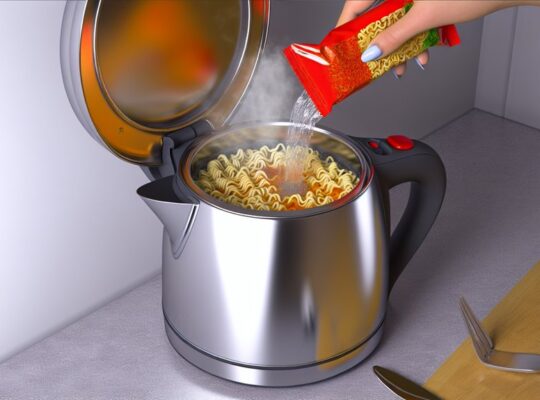
Can Kettles Be Used to Heat Milk or Soups?
If you’re thinking of using your kettle for more than boiling water — especially in a glass model you just read about — be careful: most electric kettles are designed only for plain water, and heating milk or soups can cause mess, damage, or safety risks. You’ll likely face boiling-over, burnt residue, and sensors that fail when viscous liquids contact heating elements. Cleaning becomes harder; lingering milk scum can shorten the kettle’s life and worsen hygiene.
Use this checklist before trying anything other than water:
- Check the manufacturer’s instructions — if they forbid milk/soups, don’t risk voiding the warranty or causing electrical faults.
- Prefer stovetop or microwave-safe cookware for milk and soups, where you can watch, stir, and control simmering to avoid boil-overs and scalding.
- If you must heat non-water liquids in an appliance, use only devices explicitly rated for dairy or thick liquids, and clean thoroughly after each use to prevent bacterial growth and damage.
What’s the Average Lifespan of a Good Electric Kettle?
Reliability depends on build quality and use: a good electric kettle typically lasts 3–8 years in everyday Indian kitchens, with stainless-steel and high-end models often reaching the upper end and budget plastic kettles tending toward the lower. How long your kettle serves you depends on water hardness, frequency of use, and maintenance. Hard water causes limescale that impairs heating elements and safety switches; descaling every 4–8 weeks in hard-water areas extends life. Avoid overfilling, running dry, or repeatedly switching on with residue—those stresses shorten lifespan. Check for warranty coverage and common failure points: heating element, thermostat, base connector, and lid seal. Replace kettles showing persistent malfunction, strange smells, visible corrosion, sparking, or unreliable auto-shutoff—those are safety risks. With moderate use, basic care, and prompt attention to faults, you’ll maximize service life and keep boiling safe and predictable in your kitchen.
How Does Altitude Affect Boiling Time and Kettle Performance?
If you’re brewing at higher elevations, you’ll notice water boils at a lower temperature because atmospheric pressure drops with altitude. That means your kettle will reach a rolling boil faster by clock time but at a lower heat level, which can affect recipes and sterilization. Also consider that heating efficiency may change slightly—some kettles cycle differently to maintain temperature—so models with precise temperature control or higher wattage perform more predictably in hilly regions.
Boiling-Point Vs Altitude
Because air pressure drops as you gain elevation, water reaches its boiling point at lower temperatures, which means your kettle will boil faster by clock time but deliver water that’s actually cooler than boiling at sea level. You should know this for cooking, sterilising, and making tea: the number on a dial isn’t the true energy in the water. Adjust expectations and procedures rather than forcing higher temperatures.
- Altitude effect: every 300 m up reduces boiling point by ~1°C — so your kettle’s “boil” may be several degrees lower in hill stations.
- Safety: lower boiling means longer pasteurisation times for water; simmer longer or use an insulated vessel to retain heat.
- Calibration: use a thermometer if you need precise temperatures for recipes or sterilisation.
Kettle Heating Efficiency
Knowing that boiling point falls with elevation, you’ll notice not just cooler “boil” temperatures but also changes in how your kettle uses energy and time. At higher altitudes water boils sooner in seconds because less heat is needed to reach the lower boiling point, yet it carries less thermal energy, so brewing strength and sterilization differ. Your kettle’s thermostat may cycle differently, causing slightly shorter runs but not necessarily lower energy consumption per useful result. Expect longer simmering for the same extraction or pasteurization effect. For safety, use a thermometer when needed, follow manufacturer guidance about altitude operation, and avoid overfilling. If you live above 2,000 m, consider adjusting heating routines or choosing models with precise temperature control to ensure consistent performance.
Are Speedy-Boil Kettles Better for Large Families?
How quickly do speedy-boil kettles actually help when you’re serving a large family? You’ll notice shorter wait times for multiple rounds of tea, coffee, or instant meals, which reduces crowding in the kitchen and lowers the chance someone spills boiling water. But speed isn’t the only factor — capacity, safety features, and consistent performance matter more for families.
- Capacity vs speed: A fast 0.5–1.0 L kettle may boil quick but forces repeated refills; a 1.7–2.0 L model balances fewer cycles with acceptable boil time.
- Safety controls: Look for automatic shutoff, boil-dry protection, cool-touch handles and secure lids to minimize scald risks when serving children or elders.
- Energy and scheduling: Faster boils save small amounts of energy per litre and let you stagger hot-water needs, helping you manage multiple servings without haste.
Choose a kettle that pairs sensible capacity with verified safety features so you can serve quickly and securely.
Which Kettles Are Easiest to Maintain and Repair?
Pick kettles with simple removable parts — like detachable lids, filters, and bases — because you’re more likely to clean and replace those components yourself. Choose models from manufacturers with widely available spares so repair is quick and affordable. That combination keeps upkeep straightforward and extends the kettle’s usable life.
Simple Removable Parts
Want a kettle that you can clean, service, or replace parts on without a screwdriver marathon? You’ll prefer designs with snap-off lids, detachable filters, and lift-out heating elements or housing plates that let you access scale and wiring safely. Look for clear instructions and tool-free removal so you won’t risk damage or electric shock. Prioritize parts that click back securely and have silicone seals you can inspect. When shopping, check service manuals or product images to confirm accessibility.
- Snap-off lid — fast cleaning, prevents burns when rinsing.
- Removable mesh filter — keeps spout clear, simple to descale.
- Lift-out base plate or exposed heater well — aids safe inspection and repairs.
Widely Available Spares
Knowing parts are removable is only half the battle — you also want a kettle whose spare parts you can actually find. Choose brands with local service networks (Philips, Bajaj, Prestige) and stainless-steel models with standard elements and switches; those are easiest to repair and safest long-term. Keep receipts and model numbers, and prefer replaceable cords, lids, filters, and heating elements. If a vendor lists part codes online, you’re in good shape.
| Part | Easy-to-find brands |
|---|---|
| Heating element | Philips, Bajaj |
| Lid/filter | Prestige, Morphy Richards |
| Power cord | Universal replacements |
| Switch/thermostat | Local service centres |
Always use genuine parts and qualified technicians; DIY fixes can risk shock or leaks.
How Do I Choose a Kettle for Hostel or Office Use?
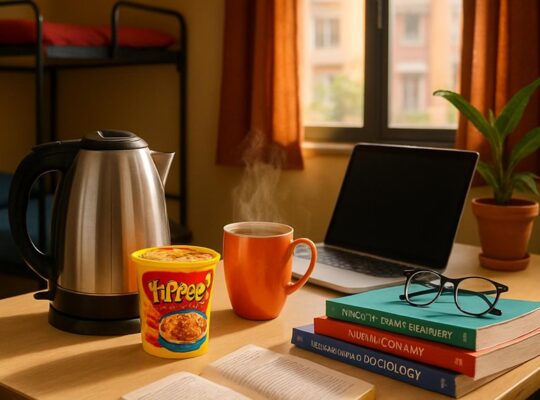
Looking for a kettle for hostel or office use means balancing size, safety and convenience so it fits shared spaces and limited storage. You’ll want a compact capacity (0.8–1.2 L) to avoid wasting power and to fit small cupboards; choose a model with automatic shut-off, boil-dry protection and cool-touch exterior to reduce burn and fire risks. Stainless steel or BPA-free inner lining is safer than cheap plastics, and a concealed heating element and firm lid cut splashes. Cordless bases with 360° rotation help in tight desks; a visible water gauge prevents overfilling.
- Capacity and footprint: pick 0.8–1.2 L, narrow base, stackable storage-friendly design.
- Safety features: auto shut-off, boil-dry cutout, cool-touch handle, locked lid.
- Durability and maintenance: stainless or glass interior, removable limescale filter, easy-to-clean surfaces.
Prioritise safety certifications (ISI/BIS) and simple controls so anyone in shared spaces can use it without risk.
Do Smart Wi‑Fi Kettles Add Real Value for Indian Buyers?
You’ll appreciate the convenience of remote boil control when you can start heating water from another room or schedule boils for your morning tea. Weigh that against real energy and cost tradeoffs — some smart features use standby power and the time-saving may not justify the higher purchase price. Also consider network reliability risks: if your Wi‑Fi drops, the smart functions become useless and can even create safety or convenience issues.
Remote Boil Control
Wondering whether a smart Wi‑Fi kettle’s remote boil control is worth it in India? You’ll appreciate convenience, but safety and reliability matter most. Remote start/stop lets you boil from another room, schedule pre-boils, and check status via app—but only if the app and connection are robust. Choose models with clear auto-shutoff, boil-dry protection, and local manual control so you’re never dependent on the network.
- Verify safety features: auto-shutoff, boil-dry protection, and thermal cutouts so remote starts won’t cause hazards.
- Check app reliability: look for stable updates, clear notifications, and offline fallback to manual operation.
- Consider practical use: remote control for mornings and guests, but ensure you can always cancel or override locally.
Energy and Cost Tradeoffs
How much energy and money will a smart Wi‑Fi kettle actually save you in India? You’ll likely see modest savings: pre-scheduling and precise volume control cut wasted boiling, but the kettle’s standby power and higher purchase price offset gains. If you value convenience and controlled energy use, it can pay off over years; if you want quick recoupment, a simple efficient kettle is safer financially. Compare real usage, electricity tariffs, and device standby draw before buying. Keep safety in mind: auto-shutoff and boil‑dry protection matter more than connectivity.
| Feature | Benefit | Practical note |
|---|---|---|
| Scheduling | Reduces wasted running | Use small volumes |
| Precise temp | Saves reheats | For tea/coffee lovers |
| Standby | Minor drain | Check specs |
Network Reliability Risks
After weighing energy and cost tradeoffs, think about how often you’ll actually be able to use those smart features: Wi‑Fi kettles depend on a steady network and reliable app/cloud services, and in many parts of India intermittent broadband, router resets, or power outages can make scheduling and remote commands spotty or useless. You don’t want a kettle that claims convenience but fails when you need hot water or worse, creates unsafe behavior because automation didn’t complete. Consider what backup controls exist and whether manual operation is straightforward and safe.
- Check offline fallback: does the kettle boil safely without app access?
- Inspect firmware update policy: will the maker support security fixes?
- Verify local power resiliency: can schedules resume correctly after outages?
What Price Range Offers the Best Balance of Quality and Value?
Curious what price actually gets you a dependable electric kettle in India? Aim for the mid-range: roughly ₹1,200–₹3,000. In that band you’ll typically find stainless-steel or high-grade plastic bodies, automatic shut-off, boil-dry protection, and safer heat-resistant handles—features that reduce risk and prolong service life. Below ₹1,000 you’ll see basic models that may lack robust safety cut-offs or durable heating elements. Above ₹3,000, you pay more for brand, aesthetics, faster heating, or added features like temperature control; those help, but aren’t essential for safe daily use.
When comparing models in the mid-range, check wattage (1,500–2,200 W), build material, warranty, and safety certifications (ISI/BIS). Inspect the spout and lid design to avoid drips and scald hazards. Prioritize a trusted brand with a clear warranty and accessible service centers—value isn’t just price, it’s dependable, safe performance over time.
Are Cordless Pour-Over Kettles Useful for Home Brewing?
If you’ve settled on a mid-range kettle for everyday use, you might wonder whether a cordless pour-over model is worth adding to your brewing kit. You’ll find cordless pour-over kettles offer clean handling and nimble pouring, which helps you control flow rate and extraction. They’re handy if you brew in different rooms or want a tidy counter without cords. Prioritize models with a secure lid, stable base, and cool-touch handle so you can pour safely. Keep in mind maintenance: inspect seals and descale regularly.
- Precision handling: narrow spout and balanced weight let you target the bed without splashing or overpouring.
- Mobility and safety: cordless lift-off bases reduce cord-trip risks, but always set the base on a flat, dry surface.
- Practical trade-offs: you’ll gain pouring control and convenience, while sacrificing nothing critical if you choose a reputable brand and follow care instructions.
How Accurate Are Temperature Displays on Kettles?
How close a kettle’s temperature display is to the water’s actual temperature depends on its sensor type, placement, and calibration — and you’ll usually see a small but noticeable variance. You’ll want to know this for safety and brewing precision: most displays are accurate within ±1–3°C if the sensor sits in the water path and the unit’s calibrated. Surface-mounted sensors or those near the base can read slightly lower or lag during rapid heating. To check accuracy, compare with a calibrated metal-probe thermometer once or twice.
| Sensor type | Typical accuracy | Notes |
|---|---|---|
| Built-in immersion | ±0.5–1°C | Best for quick, accurate readings |
| Base-mounted | ±1–3°C | May lag during heat-up |
| Infrared/skin | ±2–5°C | Less reliable for boiling water |
If precision matters (baby, medical, specialty tea), verify readings and favor kettles with stated calibration and service support.
Can Kettles With LED Indicators or Lights Be Distracting?
If you’re sensitive to light, bright LEDs on a kettle can disturb sleep or draw attention at night, so check for dimmable or switchable indicators. In daytime, coloured lights affect kitchen ambience and can clash with your decor or make it harder to spot steam and spills. From a safety angle, clear, well-placed indicators can actually help you notice boiling or error states without being needlessly distracting.
Brightness and Sleep
Can a kettle’s LED glow really keep you awake? You’ll often find that low‑intensity blue or red LEDs are unlikely to fully disrupt sleep, but bright, cool‑white lights aimed toward your bed can cause micro‑arousals and reduced melatonin. Choose safely: dimmer, warm‑toned indicators are less intrusive and better for night use.
- Place the kettle so LEDs don’t face your sleeping area; distance and angle cut brightness effectively.
- Prefer kettles with adjustable indicators or a simple on/off switch so you can eliminate light while sleeping.
- If unavoidable, use a small physical cover or cabinet door to block direct LED exposure without altering the appliance or voiding warranty.
These steps protect sleep while keeping safety features intact.
Kitchen Ambience Impact
Beyond sleep concerns, LED indicators on kettles also shape your kitchen’s overall ambience and can be either subtle accents or distracting visual clutter depending on design and placement. You’ll notice that cool-white, blinking, or high-intensity LEDs draw the eye, especially in low-light cooking or when you enter the room. Softer, warm-toned LEDs or concealed strips blend with under-cabinet lighting and feel intentional. Placement matters: lights at eye level or near reflective surfaces amplify distraction; base or handle illumination is less intrusive. If you prefer calm, choose kettles with dimmable LEDs, single-color indicators, or an option to switch lights off. That way you maintain a pleasant kitchen atmosphere without compromising your focus on tasks or safe appliance use.
Safety and Attention
Although LED indicators are meant to keep you informed about a kettle’s status, they can sometimes pull your attention away from other tasks—especially in busy or low-light kitchens. You’ll want to balance visibility with safety: a bright or flashing LED might distract you while cooking, causing spills or missed steps. Choose kettles with adjustable or subtle indicators, and position the unit so the light won’t reflect into your eyes. If you have children or elders at home, a constant glow can attract curious hands.
- Use subdued or switchable LEDs to reduce visual distraction and prevent accidental contact.
- Prefer kettles with audible alerts plus low-intensity lights for redundant, safe notifications.
- Place kettles away from edges and high-traffic paths to minimize risk.
What Should I Check When Buying a Second-Hand Kettle?
Wondering what to look for when buying a second-hand kettle? Start by inspecting the exterior for cracks, dents, rust or melted plastic—these indicate drops or overheating. Check the power cord and plug for fraying, exposed wires, or loose connections; don’t buy if the cord looks compromised. Open the lid and examine the interior for heavy limescale, corrosion, or pitting; light descaling is acceptable but deep corrosion isn’t safe. Test the on/off switch and any indicator lights; they should click and respond reliably. If possible, run the kettle briefly to confirm it boils without strange smells, noises, or tripping the circuit breaker. Verify the kettle’s make, model and age against the manufacturer’s support and parts availability; older units may lack safety cut-offs. Ask for the original manual and recent service history. If anything seems uncertain or repair costs approach a new unit, opt for a new kettle to ensure safety.
How to Store a Kettle When Not in Use to Prolong Life?
How should you store your kettle when it’s not in use to keep it working well for years? You’ll want a simple routine that prevents damage, contamination and electrical faults. Empty all water, dry inside and out with a soft cloth, and leave the lid open briefly to air-dry fully — trapped moisture invites corrosion and odors. Unplug and coil the cord loosely; don’t wrap it tightly around the base.
- Clean & dry: wipe interior and exterior, descale only when needed, ensure no water remains.
- Protect & ventilate: store in a cool, dry cupboard off the floor; keep lid ajar or use a breathable cover to avoid stale smells.
- Inspect periodically: check the plug, cord insulation and base for damage or residue; run a short boil before first use after long storage.
Follow this routine, and you’ll reduce safety risks and extend your kettle’s reliable service life.
Are Kettles With Removable Limescale Disks Effective?
Do removable limescale disks actually make a noticeable difference, or are they more of a convenience feature? They can help, but their effectiveness depends on water hardness and how you use the kettle. If you live in a hard-water area, a disk catches some floating scale before it settles on heating elements or pours into your cup. You’ll still see residue over time, so disks aren’t a substitute for periodic descaling with vinegar or citric acid. Choose stainless-steel or easily washable plastic disks rather than glued-in materials, and inspect them regularly for buildup or damage. Removing and rinsing the disk is simple and reduces loose particles that could block spouts or affect thermostats, which supports safer operation. For safety, always unplug and cool the kettle before touching internal parts. In short: disks add convenience and reduce visible debris, but treat them as one layer in a routine maintenance plan rather than a complete solution.
How Quickly Should a Decent Kettle Boil 1 Litre?
Want to know what’s reasonable? For a decent electric kettle, you should expect roughly 3 to 5 minutes to boil 1 litre of water. Speed depends on rated power, element design, and starting water temperature, but that range balances efficiency and safety for everyday use.
- Power and time: A 1500–2000 W kettle typically hits boiling in about 3–4 minutes; lower-power units take longer.
- Practical factors: Cold tap water, high altitude, or frequent auto-shut tests can add time; well-insulated kettles maintain faster cycles.
- Safety trade-offs: Faster isn’t always better — very high-power elements can overheat or shorten lifespan if design and thermal cutouts aren’t robust.
You want a kettle that reaches boiling swiftly while offering reliable auto-shut, boil-dry protection, and a secure lid. Test a unit with 1 litre at home once you buy it to confirm the real-world boil time and safety features.
Which Kettle Models Are Top Picks for Indian Kitchens?
Looking for the best electric kettle for an Indian kitchen? You’ll want models that blend speed, safety, and durability. Consider stainless-steel kettles with concealed elements—they resist scaling and are safer than exposed coils. Brands like Havells, Philips, and Prestige offer reliable options with auto shut-off, boil-dry protection, and cool-touch handles. If you prefer glass for visible boiling, pick borosilicate glass models with sturdy lids and thermal-resistant bases; Croma and Morphy Richards make good ones. For small families, 1–1.5 L kettles heat quickly; for larger households, choose 1.7–2 L with stable bases. Look for detachable, washable filters to reduce limescale and IPX-rated cordless bases for safer countertop use. Energy-efficient 1500–2000 W models balance speed and power consumption. Finally, check warranty and service network in your city—prompt after-sales care matters for long-term safety and performance.
Frequently Asked Questions
Can I Use an Electric Kettle to Sterilize Baby Bottles or Nipples?
Yes — you can, but don’t assume all kettles sterilize properly. Boil bottles/nipples fully submerged for at least five minutes, avoid plastic contact with heating element, and let items air-dry on a clean surface before use.
Do Electric Kettles Affect Water Taste for Sensitive Palates?
Yes — kettles can change taste, especially if they’re new or unclean; you’ll notice metallic or plastic notes. Descale, rinse, and boil fresh water a few times, and choose stainless steel or glass for neutral flavor.
Are Energy-Efficient Kettles Actually Cheaper Over Time?
Yes — energy-efficient kettles usually save you money over time, especially with frequent use; they heat faster, lose less heat, and cut electricity consumption, but savings depend on local rates, usage patterns, and initial purchase cost.
Can Kettles With Plastic Lids Emit Odors After Repeated Use?
Yes — plastic lids can trap odors after repeated use, especially with low-quality plastics or mineral buildup. You’ll notice musty or plastic smells; clean regularly, descale, and replace damaged lids to maintain safety and neutral taste.
How Do I Troubleshoot a Kettle That Won’T Power On?
Check power and socket first; you’ll guarantee the kettle’s plug and cord aren’t damaged, confirm the base connection, test another outlet, inspect the fuse/switch, descale if sensor clogged, and contact service if still dead.