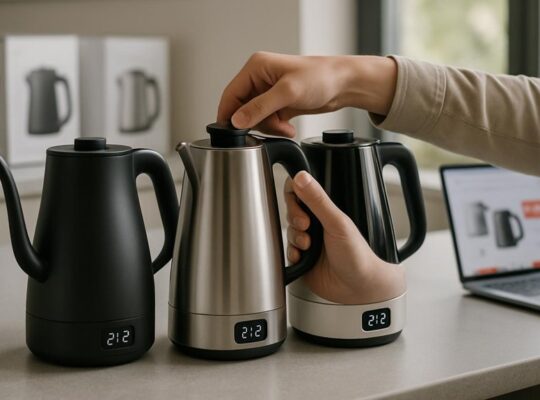
If you’re weighing Philips against Prestige for an electric kettle, you’ll want to compare speed, build quality, safety and aftercare rather than just price. Philips often wins on rapid heating, global certifications and longer warranties, while Prestige leans on sturdy construction, local dealer support and simple, reliable safety features. Which matters more—faster boil times and wider service reach, or rugged durability and quicker local fixes—will guide your pick.
Key Takeaways
- Choose Philips for lighter, faster-heating models with international certifications and broad national service centers.
- Choose Prestige for heavier stainless-steel build, perceived durability, and stronger local dealer after-sales support.
- Philips offers advanced safety features (boil-dry, concealed element, double-wall on some models) and uniform compliance.
- Prestige typically provides thicker gauge bodies, easier descaling stainless interiors, and practical safety additions like cool-touch exteriors.
- Compare warranties, available certified replacement parts, and local service access to decide based on repair safety and longevity.
Brand Histories and Reputation
Curious which name you can trust more in the kitchen? You’ll find Philips and Prestige offer distinct legacies that affect safety expectations. Philips, a long-standing global electronics brand, emphasizes rigorous testing, standardized certifications, and documented recalls when needed; that history signals consistent quality controls you can rely on. Prestige, rooted in kitchenware and appliances with strong regional presence, focuses on practical designs and customer service responsiveness in your market, which can shorten repair or replacement cycles.
Comparatively, Philips tends to present broader international compliance—CE, RoHS, and familiar safety marks—so you can expect uniform standards across regions. Prestige often tailors features to local cooking habits and may prioritize accessible after-sales support. For safety-minded buyers, that means Philips gives consistent certification reassurance, while Prestige may offer quicker hands-on assistance. You should weigh certification transparency against local service reliability when deciding which brand to trust in your home. An electric kettle can also serve many unexpected purposes like making instant oatmeal or boiling eggs quickly.
Build Materials and Durability Comparison
How do Philips and Prestige kettles hold up day-to-day? You’re looking for materials that resist wear and keep water safe. Philips often uses stainless steel interiors with BPA-free plastic exteriors; Prestige tends to offer thicker gauge stainless steel bodies and metal lids on mid-to-high models. Compare them by construction, joints, and finish.
- Philips: lighter-weight shells, corrosion-resistant inner lining, snap-fit handles.
- Prestige: heavier panels, welded seams on premium units, sturdier lids.
- Safety features: both specify food-grade materials and insulated exteriors to reduce burn risk.
- Limescale management: smooth stainless surfaces on Prestige may be easier to descale; Philips coatings vary.
- Longevity: look for warranty length, replaceable parts, and visible welds or mould lines.
You’ll want a kettle with solid seams, secure handle attachment, and clear material certifications. For safety-conscious buyers, choose the model with documented food-grade materials, a robust lid mechanism, and a reliable warranty. Prestige’s strong reputation in India and product range from the Prestige Smart Kitchen division make it a common choice for durability-minded shoppers.
Heating Performance and Boil Time
Want the fastest boil or the steadiest heat control? You’ll find Philips often prioritizes rapid heating with smart element placement that brings a kettle to rolling boil a bit quicker, while Prestige tends to favor consistent temperature maintenance across repeated boils. In practice, Philips cuts time when you need hot water fast; Prestige gives you fewer temperature swings if you’re topping up multiple times.
You’ll notice Philips models trigger boil-dry and auto-shutoff sensors promptly, reducing risk if you forget the kettle. Prestige’s thermal cutouts and insulated handles emphasize safe handling during longer use. For precision, some Philips units offer variable temperature presets that hold target temps briefly; Prestige usually focuses on accurate single-temp performance with sturdy thermostats.
If safety’s your priority, compare how quickly each kettle senses low water and shuts off, how stable the lid and spout seals are, and whether the handle stays cool through repeated cycles. Regular descaling and following manufacturer instructions will help maintain efficiency and prolong kettle life.
Energy Efficiency and Power Ratings
Looking for the most cost-effective boil? You’ll want to compare wattage and real-world efficiency between Philips and Prestige. Higher watts heat faster but can draw more energy; efficiency depends on design, insulation, and heating element placement. Consider these measurable differences:
- Philips: typically 1800–2200W, rapid boil, well-sealed base reduces standby loss.
- Prestige: often 1500–2000W, slightly slower but lower peak draw on some models.
- Boil time vs energy: faster boils may use similar or less total energy despite higher wattage.
- Variable power modes: models with 60–80% power options cut consumption for small quantities.
- Auto-shutoff and keep-warm settings: limit wasted energy when compared across similar models.
You should weigh your typical use—small cups or full kettles—and note that lower wattage suits lower-capacity use. Opt for models with good insulation and reliable controls to minimize wasted energy while maintaining safe operation. The wattage range and insulation quality noticeably affect boil speed and safety, as seen in faster models like some Tesora and V-Guard kettles.
Safety Features and Certifications
Why does safety matter as much as speed? You want a kettle that protects you and your kitchen. Philips often includes boil-dry protection, auto shut-off, concealed heating elements, and double-wall insulation on select models; these reduce burn risks and prevent damage if water’s absent. Prestige typically offers auto shut-off and boil-dry features as standard, with some models adding cool-touch exteriors and safety locks on the lid. Look for certifications: Philips frequently carries IEC and CE markings (or equivalent regional approvals) and sometimes BIS in India; Prestige models commonly list ISI/BIS or CE depending on market. You’ll want grounding, certified plastic free of BPA in water-contact parts, and clear temperature cut-offs. Compare warranty terms tied to electrical faults and whether the kettle has thermal fuses or redundant safety switches. Check labels and manuals for test standards and third-party certification numbers — those details tell you which brand has had its safety claims independently verified. Also consider power ratings like 1500 watts since they affect boil time, energy use, and potentially safety under prolonged use.
Capacity Options and Practicality
Safety features matter, but capacity determines whether a kettle actually fits your daily routine. You’ll compare Philips and Prestige on usable volume, fill markings, and how each size matches your household. Philips tends to offer compact 1.2–1.5 L models for small families and quick boils; Prestige commonly supplies 1.5–1.7 L options that suit larger cups or guests. Consider these practical points:
- Typical household match: Philips for 1–3 people, Prestige for 3–5 people.
- Boil time trade-off: smaller capacity = faster heating, larger = fewer refills.
- Visible water window and accurate markings reduce overfilling risks.
- Cordless pour and spout design affect controlled, safe pouring at different volumes.
- Weight when full: check handle ergonomics to avoid spills or strain.
You’ll want a kettle that balances capacity with safe handling. Choose the size that minimizes reheating and avoids frequent lifting when full, while keeping fill markings clear for safe use. Electric kettles designed for dairy or with automatic shut-off features can also help prevent overheating or damage when heating milk.
Ease of Cleaning and Maintenance
Anyone who values low-maintenance appliances will notice clear differences between Philips and Prestige when it comes to cleaning and upkeep. You’ll find Philips often has wider openings and removable limescale filters that let you reach the interior easily; Prestige models may use narrower spouts and sealed heating elements that limit access but reduce water contact. Descaling frequency depends on your water hardness; both brands recommend regular descaling and wiping dry to prevent rust and bacteria. Pay attention to filter removal, lid mechanism, and whether parts are dishwasher-safe—those features cut cleaning time and improve safety.
| Feature | Philips | Prestige |
|---|---|---|
| Filter access | Removable, easy | Fixed or semi-removable |
| Interior access | Wider mouth | Narrower mouth |
| Maintenance tips | Descale monthly in hard water | Descale monthly; dry after use |
Choose the model whose access and removable parts match your routine so you’ll maintain safe, hygienic kettles with minimal effort. A faster boiling time can also reduce scale buildup over repeated use, so consider models with boiling speed when choosing.
Design, Ergonomics, and Aesthetics
Now let’s compare how Philips and Prestige stack up on build quality, handle comfort, and overall look. You’ll want to note materials and construction for durability, feel the handle for grip and balance when pouring, and judge finishes and color options for how they fit your kitchen. These factors often sway a purchase as much as performance, so we’ll point out specific differences. Consider also the brand reputation and model range when choosing, since best kettle brands can indicate reliability.
Build Quality and Materials
How does each kettle feel in your hand and on the counter? You’ll notice Philips uses matte plastic with stainless accents, while Prestige leans more heavily on brushed steel—both feel solid, but the steel gives Prestige a heavier, more durable impression. Focus on surfaces, seams, and weight distribution for safety and longevity.
- Exterior material: plastic vs. stainless steel
- Lid fit and seal quality
- Base connection and cord strain relief
- Interior finish: exposed heating element vs. concealed
- Corrosion and heat-resistance ratings
You’ll prefer Philips if you want lighter handling and cooler exterior touch; choose Prestige if you prioritize impact resistance and higher perceived build integrity. Inspect welds and seals—those details affect leak risk and long-term safety.
Handle Comfort and Grip
After feeling the bodies and testing weight distribution, the handle is the next thing you’ll notice—it’s where ergonomics meet daily usability. You’ll find Philips opts for a slightly thicker, contoured grip with soft-touch coating that reduces slip when hands are damp; it gives predictable hand placement and sensible thumb rests for one-handed pouring. Prestige goes slimmer, with a firmer plastic that feels lighter but can be less forgiving if your grip isn’t exact. Both keep the handle cool, but Philips’ insulation and rounded profile lower wrist strain during fuller fills. If safety is your priority, Philips’ non-slip surface and wider contact area offer better control under brisk pouring; Prestige trades some security for a sleeker, lighter feel that may demand more careful handling.
Visual Style and Finish
What catches your eye first—the glossy chrome accents or the matte shell? You’ll notice Philips leans toward a polished, modern look while Prestige favours a utilitarian, muted finish. Both balance form and safety: no sharp edges, clear water windows, and heat-resistant coatings. Compare specifics so you can choose confidently.
- Philips: sleeker lines, fingerprint-prone chrome, LED indicators integrated, slightly lighter.
- Prestige: robust matte body, textured surface for grip, larger base for stability.
- Finish durability: Philips resists stains but shows scratches; Prestige hides wear better.
- Visual cues: Philips uses color accents for status; Prestige relies on clear markings.
- Safety touches: cool-touch zones, insulated handles, secure lid fit on both.
You’ll pick based on kitchen style and visible safety reassurances.
Price Range and Value for Money
You’ll want to compare the upfront purchase cost of Philips and Prestige models side-by-side to see which fits your budget. Consider long-term running expenses like energy efficiency and replacement parts, since a cheaper kettle can cost more over time. Finally, weigh the feature-to-price ratio — are temperature settings, safety features, and build quality worth any extra you pay? Philips models typically start at Rs 1995 while Prestige offers options starting from Rs 700, so factor in the price range when deciding.
Upfront Purchase Cost
How much you’ll pay up front depends on whether you choose Philips’ mid-to-high-tier models or Prestige‘s budget-friendly lineup: Philips kettles typically range from about $40–$100 with features like rapid boil, stainless-steel/or glass builds, and extra safety options, while Prestige models often sit between $20–$50, offering simpler plastics or basic stainless steel and fewer advanced features—so compare exact specs against price to judge real value rather than just the sticker.
- Philips: higher initial cost, stronger build, more safety features
- Prestige: lower initial cost, basic materials, fewer safety extras
- Consider warranty length when valuing the upfront price
- Look for boil-dry protection and auto-shutoff as safety priorities
- Factor in ergonomics and lid design for safe daily use
Long-Term Running Expense
Wondering which kettle will cost you more over time? You’ll compare Philips’ often higher initial price against Prestige’s budget-friendly models, but running costs hinge on energy efficiency, durability, and safety-related repairs. Philips tends to use better insulation and precise thermostats, cutting boil cycles and energy use slightly; you’ll save a few rupees monthly if you boil frequently. Prestige units are economical upfront but may need replacement parts sooner, raising lifetime expense. Consider warranty length, availability and cost of genuine spare parts, and ease of service—these affect long-term value and safe operation. Factor in scale buildup: models with better descaling guidance and removable filters reduce maintenance expense and safety risks over years.
Feature-To-Price Ratio
Which kettle gives you more bang for your buck depends on the features you actually use: Philips typically charges a premium for precise temperature control, better insulation, and longer warranties, while Prestige packs core functions—fast heating, basic safety cut-offs, and simpler filters—into lower price points. You’ll weigh upfront cost versus long-term value: fewer features can mean lower replacement risk but less convenience.
- Philips: temperature presets, double-wall insulation, longer warranty, finer filters, advanced boil-dry protection
- Prestige: lower MSRP, rapid boil, straightforward auto-shutoff, easy-to-clean design, replaceable simple filters
- Consider how often you need temperature accuracy
- Factor warranty and parts availability for safety
- Choose Philips if you value precision and insulation; choose Prestige for budget-conscious, safe basics
Warranty, Customer Support, and Aftercare
What kind of support can you expect after the purchase? You’ll get clear differences: Philips typically offers a standard 1–2 year warranty with accessible service centers and online support, while Prestige usually provides 1 year and localized service via dealers. If safety matters, Philips’ wider authorized-repair network can be reassuring; Prestige’s dealer-based aftercare can be faster locally but varies by region.
| Issue | Typical Response |
|---|---|
| Warranty length | Philips: 1–2 yrs · Prestige: 1 yr |
| Service access | Philips: national centers · Prestige: dealer network |
| Safety repairs | Philips: certified parts · Prestige: local technician |
When choosing, prioritize reliable warranty coverage, documented repair procedures, and availability of certified replacement parts. You should register the product, keep receipts, and follow maintenance guidelines to preserve warranty and safety. If prompt certified repair matters most, lean toward the brand with better national support; if quick local service is essential, confirm Prestige’s dealer responsiveness in your area.
A wide 24-hour Keep Warm Function can add convenience for frequent users.
Frequently Asked Questions
Do Either Kettles Support Cordless Pouring Functionality?
Yes — both models typically offer cordless pouring: you lift the kettle from its 360° base for spill-free serving. You’ll want to check specific Philips or Prestige models for weight, handle grip, and automatic shut-off safety features.
Can Either Model Keep Water Warm After Boiling?
Neither model maintains heat after boiling; they shut off automatically to prevent dry-boil and scald risks. If you need keep-warm, you’ll want a kettle with explicit keep-warm or insulated thermos features for sustained safe warmth.
Are There Dishwasher-Safe Parts on These Kettles?
Yes — some parts are dishwasher-safe: you’ll find removable filters and sometimes lids or drip trays marked dishwasher-safe on both brands, but always check the model’s manual, since seals, heating bases and interiors usually shouldn’t go in.
Do These Kettles Have a Rapid-Boil Indicator Light?
Yes — both typically include a rapid-boil indicator light, though Philips’ is usually brighter and quicker to signal, while Prestige’s is more subtle; you’ll want the clearer light for safer, faster visual confirmation of boiling.
Can Either Kettle Make Tea Using Temperature Presets?
No — neither model typically offers tea-specific temperature presets; you’ll need to monitor or choose kettles with adjustable thermostats. For safety, pick one with clear temperature markings, auto-shutoff, and boil-dry protection to avoid accidents.