You want green tea that tastes as delicate as it smells, so temperature and stability matter more than speed. Look for kettles with ±1–2°C accuracy, PID control or real-time displays, and narrow spouts for steady pours; sensors and insulation affect aroma and mouthfeel. I’ll walk through the precise features and best models that keep your leaves from burning — and what to avoid next.
Key Takeaways
- Choose a kettle with precise temperature control (70–80°C) and ±1–2°C accuracy for optimal green-tea extraction.
- Look for PID or stable hold-warm settings to prevent overshoot and maintain repeatable brewing temperatures.
- Prefer concealed stainless heating elements, sealed interiors, and boil-dry protection for flavor purity and safety.
- Select compact (0.5–1.2 L) double-wall designs with narrow pour spouts for delicate leaf unfurling and controlled pours.
- Ensure easy cleaning and descaling (clear min-fill lines, removable lids, stainless or glass interior) to preserve aroma and taste.
Why Temperature Control Matters for Green Tea
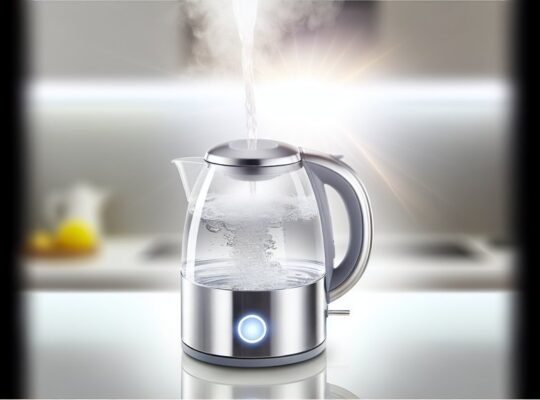
Why does temperature matter so much for green tea? You’ll notice flavor and safety shift with just a few degrees. Green tea’s catechins and amino acids extract optimally between about 70–80°C; hotter water ruptures delicate leaves, releasing bitter tannins and scalding aromas. You’ll perceive brightness and umami at lower temperatures, while tones turn astringent when chlorophyll and polyphenols over-extract. From a safety perspective, controlled heating prevents localized overheating and steam surges that can burn you when pouring. Precise temperature lets you reproduce results: set, wait, steep, and don’t guess. Use a thermometer or an accurate kettle that holds temperature within ±1–2°C to avoid repeated reheating, which degrades volatile aromatics. Pay attention to water chemistry—mineral content affects heat transfer and mouthfeel—so filter if needed. In short, meticulous temperature control preserves desirable sensory compounds, reduces harmful scald risk, and ensures consistent, safe brews every time. Electric kettles use a heating element that converts electrical energy into heat, making precise temperatures possible.
Key Features to Look for in a Green Tea Kettle
When you’re choosing a kettle for green tea, focus on components that control heat, preserve aroma, and give repeatable results. Look for clear, graduated water markings and a tight-sealing lid so steam and volatile aromatics stay put; you want scent preserved, not blown off. Prioritize an even-heating element—concealed stainless steel or high-grade titanium delivers stable ramp-up without hot spots that scorch leaves. A precision spout and narrow pour lip let you judge flow for delicate leaf unfurling. Insulation and a cool-touch handle protect you during handling; tactile feedback should be secure, not flimsy. Safety cutoffs and boil-dry protection are non-negotiable for unattended brewing. A dependable temperature-hold function is useful for multiple steeps without reheating, while simple, clear controls reduce operator error. Finally, choose materials with low reactivity—glass, food-grade stainless steel, or BPA-free plastics—so the taste stays clean and the kettle remains safe over years of daily use. Also consider kettles with automatic shut-off and overheat protection to reduce fire and electrical risks when traveling.
Best Kettles for Precise Temperature Settings
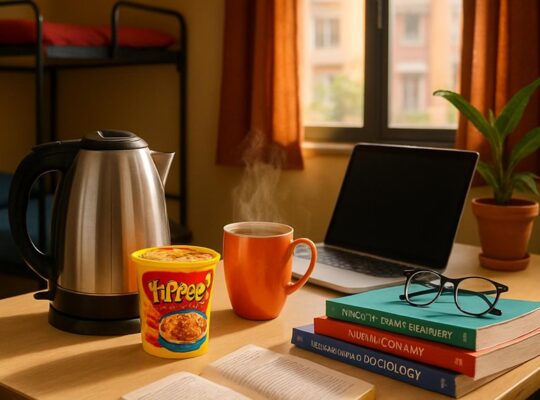
For green tea fans who want exact control, a kettle with precise temperature settings lets you unlock aroma and avoid bitterness by holding water within a few degrees of the target; think tactile feedback from a solid dial or crisp button clicks, clear digital readouts, and fast, even heating that doesn’t overshoot. You’ll want a unit that displays real-time temperature and lets you program common setpoints (140–175°F / 60–80°C). Look for PID or similar control electronics that stabilize heat rather than cycling wildly; these give a smooth ramp and stable hold. Materials matter: stainless interiors with sealed heating elements reduce contamination risk, while insulated exteriors protect your hands. Safety features should include automatic shutoff at boil or when the set temperature is reached, boil-dry protection, and a locking lid to prevent scalds. Prioritize kettles with repeatable accuracy (±1–2°C), intuitive controls, and clear status indicators so you can brew safely and consistently every time. An electric kettle is also great for quick prep of instant noodles when you want a fast snack.
Quiet and Fast Electric Kettles for Daily Use
You’ll appreciate kettles that hit target temperatures in under a minute, where the rapid heat is audible as a tight, high-frequency hiss rather than long, rolling boils. Choose models engineered with powerful concealed heating elements and thin stainless walls so water heats fast while vibration and fan noise stay below conversation level. Look for compact footprints and cordless bases that tuck neatly on a counter without sacrificing 1–1.2 L capacity for daily green-tea routines. Many users prefer kettles with double wall construction for added safety and cooler exterior surfaces.
Rapid Heat Performance
How fast do you need your water to be ready? You’ll notice the difference the moment you hit the switch: a low, steady hum, faint metallic warmth at the base, and water reaching target temperature in under three minutes for a half-liter. Rapid heat performance hinges on wattage, flat heating elements, and sealed base design that channels energy directly into the liquid while minimizing heat loss. Look for clear temperature presets and precise thermostats so you can hit 70–80°C for delicate green teas without overshoot. Safety features—auto shutoff, boil-dry protection, and cool-touch exteriors—must be integrated with speed, not sacrificed for it. Fast doesn’t mean reckless; rely on verified specs and a short, sharp heat curve for predictable, safe brewing.
Low-Noise Operation
Although quiet kettles still need power, you’ll notice the difference in a few measured senses: a muted, steady whir instead of a harsh buzz, minimal vibration underfoot, and only faint metallic resonance from the base. You’ll appreciate insulated handles and rubber feet that damp mechanical noise and stabilize the unit during rapid boil cycles. Look for low-dB ratings (ideally under 50 dB in independent tests) and sealed motors or magnetic drive elements that reduce air turbulence. Noise control often pairs with efficient heating—less wasted energy means less acoustic byproduct. Prioritize models with clear safety interlocks, automatic shutoff, and overheat sensors; quieter operation shouldn’t compromise protective circuitry. Test touchpoints for warm spots to ensure surface insulation meets safety expectations.
Compact Daily Design
A compact daily kettle balances footprint, speed, and quiet so it becomes an almost invisible part of your routine: think slim bodies that sit comfortably on a small counter, fast 0.8–1.5 L boils that reach temperature in under five minutes, and construction that channels heat efficiently while damping sound. You’ll appreciate a narrow base and vertical profile that reduce surface area and conduction to the countertop; stainless or insulated double-wall shells that feel cool to the touch; and a low-profile spout and lid that minimize steam noise. Choose models with reliable auto-shutoff, boil-dry protection, and tactile controls so you can set exact temperatures for green tea safely. The result is a kettle that performs fast, quietly, and predictably every day.
Kettles With Hold-Warm and Preset Functions
Ever wanted your water ready at the exact temperature for delicate green teas without babysitting the kettle? You’ll appreciate hold-warm and preset functions that lock in a specific degree and maintain it quietly. Presets give you repeatable targets — 140°F, 160°F, 175°F — so aroma-releasing catechins aren’t scorched by boiling. Hold-warm uses low-power pulses and insulated chambers to stabilize temperature for minutes or hours; you’ll notice less noise, minimal steam, and a steady weight when you lift the pot. Technically, check for precise sensors (±1–2°F accuracy), PID or microcontroller control, and auto-shutoff redundancies to prevent overheating. Choose models with clear digital displays, audible and visual confirmations, and cool-touch exteriors to reduce burn risk. For safety, ensure thermistors are sealed away from water pathways and that the base cuts power if the kettle is removed. These features save time, protect flavor compounds, and keep your brewing predictable and safe. You can also use an electric kettle to quickly prepare simple hot-water recipes like instant noodles when you need a fast snack, but take care to follow safe handling practices and avoid leaving the kettle unattended electric kettle basics.
Compact and Travel-Friendly Options
When you’re choosing a travel kettle, think first about size and weight—small, lightweight bodies mean less bulk in your bag and quicker heat response. Check the power and speed rating so you know how fast it reaches target temperature on hotel or campsite outlets. Finally, prioritize precise temperature control (or at least accurate presets) so your green tea’s delicate aromas aren’t scalded. Consider also reputable brands like Prestige that offer compact, reliable models suitable for travelers.
Size and Weight
For green-tea lovers who value ritual on the go, compact kettles let you brew precise, delicate pours without sacrificing performance. You’ll want a unit that’s lightweight for travel yet balanced so you can pour steadily; look for kettles under 1.2 kg with a low center of gravity and an ergonomic handle that prevents wrist strain. Volume markings should be clear and scaled for single cups (200–350 ml) to avoid overheating excess water. Materials matter: stainless steel or BPA-free, double-walled polymer give tactile warmth control and reduce scald risk. Check that the lid seals snugly and that the spout provides a narrow, controlled stream for accurate infusion. Compact doesn’t mean flimsy—prioritize sturdy construction, secure feet, and an easy-to-read safety indicator.
Power and Speed
After choosing a compact, well-balanced kettle, you’ll want to check how quickly and consistently it heats—power and speed determine whether you can hit green tea’s narrow temperature windows without waiting or repeatedly reheating. For travel-friendly models, look for wattage that balances rapid boil with available outlet supply; 800–1200W often delivers fast heat in small volumes without tripping circuits. Pay attention to element type: concealed stainless-steel or rapid-response coil gives even thermal transfer and minimal hot spots you can feel through the handle. Assess boil time in seconds per 100 ml and consistent rise rate across fills. Also confirm automatic shutoff, boil-dry protection, and cool-touch exterior; those safeguards keep you safe when speed and compactness raise thermal risks.
Temperature Control
How precisely do you want your water heated on the road? You’ll want a compact kettle with clear, tactile controls that let you set exact temperatures—72°C for delicate greens, 80°C for sencha, 85°C for hojicha. Look for digital displays with +/-1°C accuracy, short heat-up times, and insulated bodies that stay cool to the touch. Auto-shutoff and boil-dry protection are non-negotiable; they prevent burns and element damage when you’re in unfamiliar kitchens. Travel models with foldaway handles and dual-voltage capability reduce risk and simplify use abroad. A stainless-steel interior resists odors; a tight-sealing lid prevents spills. Pack a small thermometer to verify calibration occasionally. Precision, compactness, and verified safety give you reliably balanced cups anywhere.
Stylish and Durable Designs for Tea Rituals
Elegance in an electric kettle isn’t just visual—it’s tactile and structural: you’ll notice how balanced weight distribution, a cool-touch handle, and a snug lid change the ritual from functional to intentional. You want materials that feel solid under your palm: brushed stainless resists pitting, ceramic-lined interiors avoid metallic notes, and matte finishes minimize fingerprints. Look for precise seams and reinforced spouts that pour without drips; the sound of a lid seating should be damped, not clanky. Feet with rubberized pads keep the base steady on wet surfaces, and a low-center design reduces tip risk when you lift to pour. Hinges and handles should have torque tested tolerances so they don’t loosen after months of use. Visual cues matter too: contrast between grip and body helps your eyes align for a steady pour. Overall, choose a kettle that communicates durability through measured weight, restrained movement, and tactile assurance—so every steep feels deliberate and secure. Regular descaling with white vinegar helps prevent mineral buildup and keeps flavor and heating performance optimal.
Energy Efficiency and Safety Features to Consider
Why does energy efficiency matter for a kettle you’ll use daily? You’ll save on electricity and reduce heat wasted into the kitchen air, so each boil is leaner and quieter. Look for rapid, low-wattage heating elements engineered for fast heat transfer and insulated walls that keep exterior surfaces cool to the touch.
You’ll want precise temperature control: adjustable presets, accurate thermostats, and minimal overshoot mean you won’t reheat beyond your target, preserving delicate green tea flavors and cutting cycles. Automatic shutoff and boil-dry protection provide fail-safe responses if water runs low or reaches set temperature; audible and visual alerts should be clear but unobtrusive.
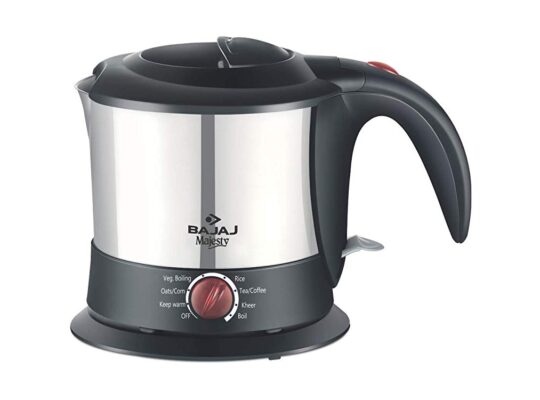
Check build materials—food-grade stainless steel or glass without exposed heating coils—and secure lids and non-slip bases to prevent steam scalds and tipping. Favor models with energy-saving standby modes and programmable scheduling so the kettle’s active heating time is limited. These choices give you efficient brewing with predictable, safe operation. Additionally, when traveling by train in regions like India, consider a travel-certified kettle or alternatives such as a portable thermos to stay safe and comply with onboard regulations.
How to Choose the Right Capacity for Your Brewing Needs
Wondering how much water you actually need in the kettle? Think in terms of cups per brew and brewing rituals. If you mostly steep single cups, a 0.5–0.8 L kettle minimizes reheating and keeps water fresh; you’ll notice crisper aroma and cleaner cup temperature control. For two to four people or rinsing teaware, 1.0–1.5 L gives flexibility without excessive bulk. Larger than 1.7 L stores heat longer but increases boil time and surface exposure, which can degrade delicate green tea oils.
Measure by weight: 1 cup (240 ml) ≈ 240 g; accuracy keeps you within target infusion volumes. Check the kettle’s minimum fill line to avoid dry-boil risks and ensure automatic shutoff works at low volumes. Prefer models with clear graduated markings and a narrow spout for precise pour control. Choose capacity that matches routine servings while maintaining short heat cycles and clear visibility of fill level for safe, repeatable brewing. Consider also whether you might want to contribute a guest post or request a sponsored article on electric kettle topics when sharing detailed brewing tips.
Tips for Maintaining and Cleaning Your Kettle
Longevity of flavor starts with clean water and a clean kettle: rinse the interior after each use, wipe the exterior and spout dry to prevent mineral streaks, and descale regularly to remove scale that dulls heat transfer and alters taste. You’ll want to use filtered water when possible to limit deposits; if you spot cloudy residue, descale immediately with a 1:1 white vinegar-to-water solution, boil gently, let sit 15 minutes, then rinse thoroughly until no vinegar aroma remains. For stainless interiors, use a soft brush to avoid scratching; for glass, a microfiber cloth preserves clarity. Always unplug and cool the kettle before cleaning to avoid burns. Check seals and heating elements for residue; replace damaged gaskets. Dry completely before storage to prevent bacterial growth and odors. Follow manufacturer instructions for removable filters. Consistent, careful maintenance preserves thermal efficiency and the pure, delicate aromatics of green tea. Regular descaling is recommended at least once a month to prevent limescale buildup from affecting performance.
Frequently Asked Questions
Can Kettles Affect the Flavor of Different Green Tea Varieties?
Yes — kettles shape taste: deposits, metallic surfaces, uneven heating and leftover odors change aroma, mouthfeel and bitterness. You’ll want inert materials, precise temperature control and clean, descaled equipment to keep delicate green teas safe and true.
Are Glass Kettles Safer Than Stainless Steel for Long-Term Use?
Yes — glass feels safer long-term because you’ll avoid metallic taste and potential leaching; it shows mineral buildup, heats cleanly, and you can visually monitor scaling, though borosilicate quality and careful handling are essential for durability and thermal shock resistance.
Do Kettles With Quick-Boil Harm Delicate Green Tea Leaves?
Quick-boil kettles won’t inherently harm delicate green tea leaves, but they’ll raise water temperature too fast; you’ll need to stop heating early or use variable-temperature control so the leaves aren’t scorched and flavors remain fresh and sweet.
Can Hard Water Damage My Kettle or Alter Tea Taste?
Yes—hard water will damage your kettle and change tea flavor. Mineral deposits build scale, reducing heating efficiency, causing metallic or flat tastes, and risking overheating. Descale regularly, use filtered water, and monitor element integrity.
Are Smart App-Controlled Kettles Worth the Extra Cost?
They’re worth it if you want remote temperature control, scheduled starts, and safety alerts; you’ll feel precise feedback, avoid overheating, and reduce scald risk, but prioritize reliable apps, secure firmware updates, and hard-water maintenance to protect performance.