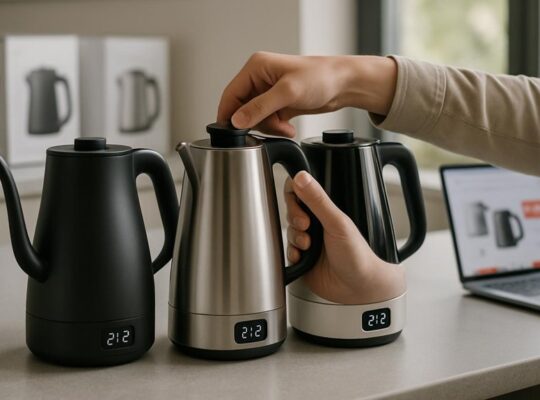
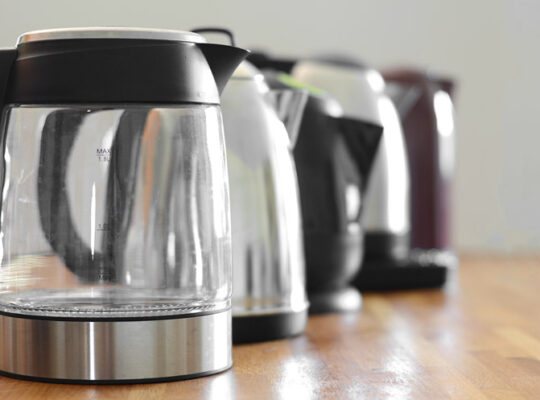
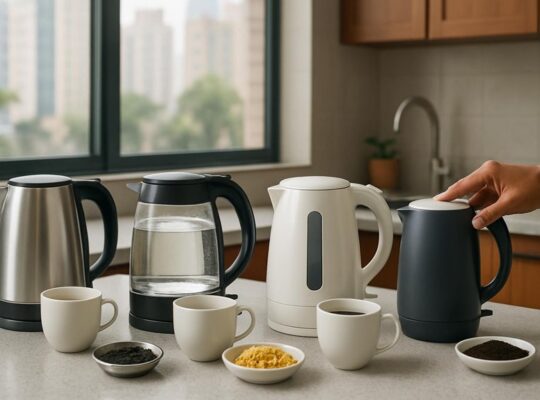
Choosing between a 1 L, 1.5 L, and 2 L kettle comes down to how you use hot water and how often you want to refill. If you live alone or value speed and compact size, a 1 L fits; 1.5 L suits small households or light cooking; 2 L works for families or guests. Consider energy, storage, and safety features — and keep going to see which trade-offs matter most for your setup.
Key Takeaways
- 1 Litre kettles suit solo users or couples, offering fast boils, lower energy use, and compact, safer handling.
- 1.5 Litre kettles balance capacity and footprint, ideal for small households needing two to three cups without frequent refills.
- 2 Litre kettles serve larger households or cooking needs, reducing boil cycles and hot-water trips but take longer to boil.
- Prioritize safety features—automatic shut-off, boil-dry protection, stable base, and cool-touch handle—regardless of capacity.
- Choose stainless steel for durability and heat retention, and descale regularly to maintain efficiency and lifespan.
Who Should Choose a 1 Litre Kettle
Wondering if a 1 litre kettle is right for you? You’ll find it suits solo users, couples, or anyone who values speed and lower energy use. Compared with larger kettles, a 1 litre model boils faster and uses less electricity per boil, so you’ll save time and reduce running costs when you only need one or two cups. It’s also lighter and takes up less counter or storage space, which helps if your kitchen is compact.
For safety-minded buyers, a smaller kettle cools quicker and is easier to handle when pouring, lowering scald risk. Look for automatic shut-off, boil-dry protection, and a stable base to further reduce hazards. If you frequently host, need large pots filled, or prefer topping up only occasionally, a larger size may be better—but for efficient, safe daily use focused on individual servings, a 1 litre kettle is a practical, conservative choice. Many travelers also prefer compact models like the InstaCuppa for its foldable design and portability.
When a 1.5 Litre Kettle Makes the Most Sense
When do you choose a 1.5 litre kettle over a 1‑litre or 2‑litre model? You pick it when you need a middle ground: enough water for two to three cups without wasting energy or risking boil‑dry by underfilling. It’s practical for small households, quick meal prep, or sharing tea safely with a guest.
| Scenario | Why 1.5 L fits |
|---|---|
| Two to three cups | Heats enough at once, avoids repeated boils |
| Small family meals | Useful for pasta, soups without excess |
| Limited counter space | Compact but higher capacity than 1 L |
| Energy awareness | Lower energy per boil than 2 L when not full |
| Safety focus | Easier to handle; less hot water to spill |
You’ll still watch fill levels, use safety features (auto shutoff, boil‑dry protection), and avoid overfilling. Regular descaling with limescale removal helps maintain heating efficiency and prolongs the kettle’s life.
Benefits of a 2 Litre Kettle
Need more hot water at once? A 2 litre kettle gives you that capacity without constant refills, so you’ll serve multiple cups, fill a French press, or handle cooking tasks faster. Compared with 1 and 1.5 litre models, it reduces boil cycles, cutting wear on the element and lowering the chance you’ll overfill in haste.
You’ll also get practical safety advantages: fewer trips to the kettle mean fewer hot-pour moments and less chance of spills. Look for models with auto-shutoff, boil-dry protection, and cool-touch handles to keep that larger volume manageable and safe. Expect slightly longer boil times, but modern kettles balance power and capacity to keep waiting reasonable.
If you host, have a family, or often need hot water for cooking, a 2 litre kettle is a sensible, efficient choice — as long as you use safe pouring techniques and choose a model with the right safety features. Many users also prefer materials like stainless steel for durability and better heat retention.
Frequently Asked Questions
Can a 2 Litre Kettle Boil Water Faster Than a 1 Litre Model?
No — you won’t boil 2 litres faster than 1 litre; more water takes longer and uses more energy. You should choose capacity for need, guarantee proper heating element wattage, and follow safety guidelines when filling and operating.
Are 1.5 Litre Kettles More Energy-Efficient Than Larger Ones?
Yes — if you usually boil less than 1.5 L, you’ll use less energy than with larger kettles; smaller boils less water faster, reduces wasted heating, and minimizes scald risk when you pour.
Do Kettle Size Differences Affect Kettle Lifespan or Durability?
Yes — size can influence lifespan: smaller kettles heat less water so cycle more often, potentially wearing elements faster; larger ones stress components when frequently underfilled. You’ll want proper maintenance, descaling, and avoiding dry-boil to stay safe.
Can I Use a 1 Litre Kettle for Sterilizing Baby Bottles?
Yes — you can, but a 1‑litre kettle’s limited capacity means you’ll sterilize fewer bottles per cycle, may need multiple boils, and must ensure bottles fully immerse or use steam methods to guarantee safe sterilization.
Are There Size Differences in Safety Features Across Kettle Capacities?
Yes — you’ll find differences: larger kettles often add boil-dry protection, sturdier lids, and thermostat controls, while smaller models may lack advanced sensors. Compare features, certifications, and user safety reviews before choosing one.