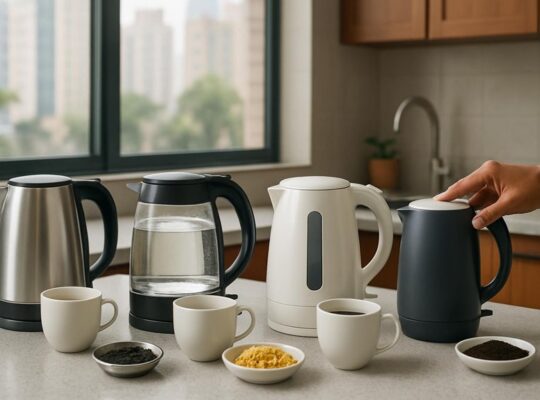
When you use an electric kettle, auto shut-off quietly keeps things safe by cutting power once water boils or when it senses a problem. It relies on sensors and control circuitry to detect temperature, steam, or dry conditions, so the element won’t overheat or cause a hazard. Understanding how it works helps you spot failures and choose better models—there’s more to know about the mechanisms, reliability, and when to repair or replace.
Key Takeaways
- Auto shut-off is a feature that automatically cuts power when the kettle reaches boiling or a preset temperature.
- It uses sensors (thermostats, thermistors, or steam switches) to detect temperature rise or steam generation.
- The control circuit trips a switch to stop the heating element and prevent continuous boiling or overheating.
- Boil-dry protection, a related safety, cuts power if the kettle runs low or has no water to avoid damage.
- Regular descaling and inspection keep sensors reliable; recurring failures indicate servicing or replacement.
How Auto Shut-Off Works in an Electric Kettle
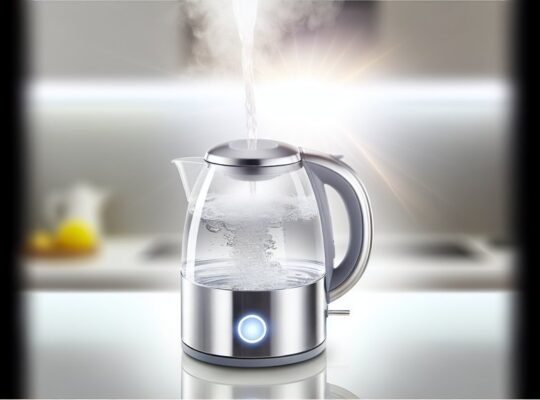
How does an electric kettle know when to stop boiling? You rely on sensors and control logic that detect temperature and steam changes. Inside the kettle, a temperature sensor or a thermostat monitors the heating element’s temperature. As water nears boiling, heat transfer changes and the sensor registers a rapid rise. Some designs use a steam-sensitive switch near the spout; when steam hits it, the switch triggers. The control circuit then cuts power to the element, preventing continued heating. This automatic interruption reduces overheating and dry-boil risk, protecting both you and the appliance. Safety-focused designs include fail-safes: a secondary cutoff if temperatures exceed safe limits or if no water is detected. Because these systems act quickly and mechanically, you get consistent shut-off performance without needing to watch the kettle. You should still ensure proper maintenance and avoid tampering, so the sensors and switches can operate reliably and keep you safe. Choosing a kettle with automatic shut-off is an important safety and energy-saving feature to look for.
Common Types of Auto Shut-Off Mechanisms
When you look at common auto shut-off systems, you’ll see three practical approaches: boil-dry protection that stops heating when water is absent, thermostat or temperature cutoffs that react to reached temperatures, and lid or steam sensors that detect steam flow or closure. Each method targets a specific risk—overheating, uncontrolled boiling, or safety when the kettle isn’t properly closed. You’ll compare how they work, their reliability, and typical failure modes. Place the kettle on a stable, heat-resistant surface away from edges and heat sources to reduce risk and ensure sensors work correctly.
Boil-Dry Protection
Ever wondered what protects your kettle if it boils dry? Boil-dry protection detects absent or low water and cuts power to prevent overheating, warping, or fire. You’ll find mechanical or electronic sensors that monitor steam, temperature rise, or conductivity; each acts quickly to stop damage. When choosing a kettle, prioritize models with certified boil-dry systems and clear test records. Regularly inspect the sensor area for scale and clean according to the manufacturer—maintenance preserves reliability. If a kettle trips frequently, don’t ignore it; that indicates sensor fault or residue buildup. Below is a compact comparison to help you assess features and upkeep needs.
| Feature | Benefit |
|---|---|
| Detection method | Responds to no-water condition |
| Maintenance | Keeps sensor accurate |
| Safety outcome | Prevents overheating and fire risk |
Thermostat/Temperature Cutoff
Curious how your kettle knows when to stop once the water’s boiled? The thermostat or temperature cutoff is a simple, reliable safety device that senses temperature and breaks power when a set point is reached. You’ll find it in most kettles because it prevents overheating and reduces fire risk.
- A bimetallic thermostat bends with heat to open the circuit quickly.
- A thermistor detects rapid temperature change and triggers electronic cutoff.
- A fixed cutoff uses a fusible link that melts at high temperature for backup safety.
- Adjustable thermostats let manufacturers set precise shut-off thresholds for different models.
You should expect consistent shut-off at boiling point; if yours fails or becomes erratic, stop using the kettle and have it serviced or replaced.
Lid and Steam Sensors
Thermostats handle temperature, but kettles also rely on lid and steam sensors to decide when boiling’s reached and when to cut power. You’ll find two main designs: lid-contact sensors detect when the lid’s closed or when it’s jostled, and steam sensors monitor rising vapor or pressure changes. Lid sensors prevent operation with an open lid and can halt heating if the lid pops off; they’re mechanical and reliable but need proper seating. Steam sensors use a thermistor or humidity/pressure switch positioned near the spout; they’re sensitive and react quickly to real boiling, reducing dry-boil risk. For safety, you should check that sensors aren’t obstructed by scale and that they reset properly after trips. Regular inspection and descaling keep these systems effective.
Benefits of Auto Shut-Off for Safety and Energy Savings
When you choose a kettle with auto shut-off, it prevents dry boil by stopping heating once water is gone or too hot. That feature also cuts the risk of fire from unattended kettles by eliminating prolonged high temperatures. Plus, automatic shut-off lowers energy use by stopping power draw as soon as boiling is reached. Regular descaling every 1-3 months helps maintain efficient operation and reduces mineral buildup.
Prevents Dry Boil
How does auto shut-off stop a dry boil and why does that matter for safety and savings? Auto shut-off senses when there’s no water or when steam patterns change, cutting power before the element overheats. That prevents damage to the kettle, reduces the chance of releasing toxic fumes from scorched materials, and saves energy by stopping wasted heating cycles. You get reliable protection without watching the kettle constantly.
- Protects the heating element from accelerated wear when run dry
- Minimizes overheating that can degrade internal seals and coatings
- Prevents wasted electricity during unattended boil cycles
- Reduces likelihood of costly repairs or premature replacement
You’ll want this feature if you value predictable, low-risk appliance operation and efficient energy use.
Reduces Fire Risk
A reliable auto shut-off cuts power the moment boiling finishes or abnormal steam patterns indicate an empty kettle, and that simple action substantially reduces the chance of a kitchen fire by preventing the heating element from reaching ignition temperatures. You’re protected from prolonged high temperatures that can degrade insulation, scorch surrounding surfaces, or ignite residues on the element. Because the system reacts automatically, it eliminates reliance on memory or attention during distractions, lowering human error. Modern units often combine temperature and steam sensors, so false negatives are rare; you still should maintain the kettle and keep vents clear to ensure sensors work. Choosing a certified model with tested shut-off circuitry gives you measurable risk reduction and clearer expectations for safe use.
Lowers Energy Use
Reducing fire risk also helps your utility bills, because an auto shut-off prevents the kettle from running longer than necessary and wasting electricity. You’ll use less energy overall when the element cuts out at boiling or if the kettle boils dry, so your meter reflects purposeful heating instead of excess. That lowers costs and reduces standby heat loss.
- Cuts wasted electricity by stopping unnecessary boiling
- Shortens active heating time for each use
- Prevents repeated reheating after accidental dry boil
- Reduces cumulative energy consumption over months
Boil-Dry Protection Versus Auto Shut-Off
Wondering which safety feature actually prevents damage when your kettle runs dry? You’ll want to distinguish boil-dry protection from basic auto shut-off. Auto shut-off senses steam or a temperature threshold and stops heating once water reaches boiling—its primary goal is preventing overboiling and unnecessary energy use. Boil-dry protection is specifically designed to detect the absence of water: it cuts power if the element overheats or if thermal sensors sense no liquid cooling, preventing damage to the heating element and reducing fire risk. In practical terms, you should treat boil-dry protection as the last line of defense for appliance integrity and safety, while auto shut-off is more about user convenience and routine safety. Look for kettles that list both features; boil-dry mechanisms are especially important if you might forget to refill or run a kettle briefly without water. When choosing, prioritize explicit boil-dry labeling and clear manufacturer testing claims for peace of mind. Many users also rely on kettles with automatic shut-off for everyday convenience and added safety.
How Reliable Is Auto Shut-Off Technology?
How reliable is auto shut-off technology in everyday use? You can generally trust modern systems: reputable kettles use thermostats and timers that cut power when water boils or when dry conditions are detected. Reliability depends on build quality, sensor placement, and electrical components. You should expect consistent performance from certified models, but occasional faults happen with wear, limescale, or physical damage.
- Manufacturer reputation and safety certifications improve dependability.
- Proper maintenance (descaling, avoiding drops) preserves sensor accuracy.
- Simple designs with fewer electronic parts often last longer.
- Environmental factors (voltage spikes, hard water) can reduce reliability.
When you pick a kettle, check reviews and certifications rather than relying on marketing claims. Regular inspection and maintenance reduce risk and extend service life. If you prioritize safety, choose models with redundant protections (auto shut-off plus boil-dry) and clear user instructions to minimize failure chances. Rapid-boil models with 1500W or higher elements may include enhanced safety and efficiency features rapid boil.
Signs Your Kettle’s Auto Shut-Off Is Failing
Noticed your kettle staying on after the water boils? That’s a primary sign the auto shut-off might be failing. You’ll also see repeated overheating—steam continuing long after boiling or the kettle remaining hot to the touch—indicating the thermostat or sensor isn’t cutting power. Another clear sign is unexpected cycling: the kettle turns off, then back on without you touching it, suggesting intermittent contacts or a faulty relay. Burning or electrical smells, discoloration near the base, or visible scorch marks are urgent warnings of internal failure; stop using the appliance if you detect these. If the indicator light behaves erratically—flickering, staying solid when it shouldn’t, or not illuminating at all—that points to electrical control issues tied to the shut-off mechanism. Finally, older kettles that require progressively longer to shut off signal wear in mechanical switches or sensors. Also consider whether your kettle’s stainless steel construction or materials could affect heat transfer and fault symptoms.
How to Test the Auto Shut-Off Function Safely
Before testing, you’ll want to clear the area, place the kettle on a stable surface, and fill it to the recommended water level. Start a boiling cycle and watch how the kettle behaves as it approaches a boil to confirm the auto shut-off activates reliably. While it runs, check that the lid seals properly and that any visible sensors or vents aren’t obstructed. Consider the kettle’s material—stainless steel models can offer better durability and insulation when handling repeated tests.
Prepare Kettle and Area
Ready to test the auto shut-off? You’ll first prepare the kettle and surrounding area to minimize hazards and guarantee repeatable results. Clear countertops, unplug other appliances, and have a heatproof surface ready.
- Ensure the kettle is cool, clean, and dry inside and out.
- Place the kettle on its base on a stable, level surface away from edges.
- Keep children, pets, and flammable materials at least one meter away.
- Have a timer and heat-resistant gloves or a cloth within reach.
Check the water-fill marking and do not overfill; follow manufacturer minimums. Inspect the cord and plug for damage, and position the cord so it won’t be pulled. Confirm ventilation is adequate to avoid steam buildup. You’re ready for a controlled, safe test.
Boil Water Test
How will you run a safe, controlled boil-water test to confirm the auto shut-off works? You’ll fill the kettle to the recommended level, place it on a stable surface, and plug it into a grounded outlet. Start timing when you switch it on. Stay at a safe distance but keep visual contact; don’t leave it unattended. Note audible cues and watch for steam to indicate boiling. The auto shut-off should cut power within a short interval after vigorous boiling begins. If it doesn’t, switch it off immediately and unplug. Record the time from switch-on to shut-off and any irregular behavior. Repeat once to verify consistency. If performance is inconsistent or absent, stop using the kettle and seek repair or replacement.
Observe Lid and Sensors
Curious about whether the lid and sensors are behaving correctly? You’ll want a calm, safe approach to confirm the auto shut-off works. First, fill the kettle to the recommended level and place it on a stable, dry surface. Start boiling while watching for proper lid seating and sensor indicators. Don’t touch hot surfaces.
- Check that the lid locks or rests fully; a misaligned lid can delay shut-off.
- Observe any sensor lights or audible cues; they should activate as the kettle nears boil.
- If the kettle keeps boiling without cutting out, unplug immediately and let it cool before inspecting.
- Repeat the test once after cooling; inconsistent shut-off suggests a sensor or lid mechanism fault that needs repair.
If unsure, consult the manual or a technician.
Maintenance Tips to Keep Auto Shut-Off Working
Because the auto shut-off relies on sensors, heating elements, and clean contacts, regular maintenance keeps it reliable and prevents safety failures. You should descale the kettle on a schedule based on water hardness — typically every 1–3 months — using vinegar or a manufacturer-recommended descaler to prevent mineral buildup that can insulate sensors and heat elements. Wipe the sensor area, spout, and lid gasket with a soft cloth after each use to remove residue and moisture that can corrode contacts. Inspect the power base and cord for damage or discoloration; don’t use the kettle if you find frayed wiring or burn marks. Test the auto shut-off periodically by boiling a small amount of water and listening for the click and observing that boiling stops promptly. Keep vents and air gaps clear so temperature sensors read accurately. Store the kettle dry and upright, and follow the user manual for cleaning agents and procedures to avoid damaging sensor housings or electronic components. Many modern kettles, including some iBell models, feature auto turn on and off and safety locks that add extra protection and convenience.
When to Repair or Replace a Kettle With Faulty Auto Shut-Off
When should you consider repairing versus replacing a kettle with a faulty auto shut-off? You’ll weigh safety, cost, and reliability. If the kettle risks boiling dry or staying on, don’t ignore it—faulty shut-off is a safety hazard. Evaluate these factors before deciding.
- Age and warranty: newer units or those under warranty are better candidates for repair.
- Repair cost vs. replacement price: if parts and labor approach replacement cost, replace.
- Nature of the fault: simple issues (sediment, switch cleaning) can be fixed; electrical or intermittent failures suggest replacement.
- Safety record and future reliability: if the kettle has recurring problems or poor build quality, replacement is safer.
You should also consider availability of certified repair services and genuine parts. If you choose repair, use a qualified technician and test thoroughly. If you choose replacement, dispose of the old unit safely to avoid residual hazards. Electric kettles are designed for boiling water and not for tasks like frying, so prioritize fixes that restore safe automatic shut-off design purpose to prevent overheating or fire risk.
Choosing a Kettle: Features to Look for Beyond Auto Shut-Off
What else should you check besides an auto shut-off? Look for boil-dry protection, which cuts power if water runs out; that prevents overheating and fire risk. Check the kettle’s build: stainless steel or BPA-free plastics resist corrosion and leaching. A concealed heating element is easier to clean and reduces scale buildup, lowering failure risk. Confirm a cool-touch exterior and insulated handle to prevent burns during use and pouring. Examine the lid mechanism — a secure, lockable lid avoids steam scalds and accidental spills. Prefer models with an audible cue and indicator light so you’ll know when boiling stops. Evaluate the base: a stable, non-slip design and 360-degree swivel improve safe handling. Consider a removable, washable filter to keep sediment out of cups and reduce clogging. Finally, review certification labels (UL, ETL, CE) to ensure the appliance meets recognized safety standards. These features together give reliable, safer daily operation. Also consider whether the kettle is travel-friendly and allowed in carry-on luggage by airlines, especially if you plan to bring it on trips to avoid surprises at security carry-on rules.
Frequently Asked Questions
Can Auto Shut-Off Be Disabled for Slow Simmering?
No, you usually can’t safely disable auto shut-off; it’s built to prevent boiling-dry and fire risk. If you need slow simmering, use a stove or kettle designed with a simmer/keep-warm function and follow safety instructions.
Does Auto Shut-Off Affect Water Taste or Mineral Content?
No, auto shut-off won’t change water taste or mineral content; it just stops heating. It can prevent off-flavors from overheating or scorching, so it actually helps safety and preserves intended flavor by avoiding prolonged boiling.
Are There Travel-Friendly Kettles With Auto Shut-Off?
Yes — you can get travel-friendly kettles with auto shut-off; they’re compact, often cordless with boil-dry and overheat protection, and use dual-voltage designs. You’ll want UL/CE certification and insulated exteriors for safe, reliable travel use.
Do Warranties Cover Failures of the Auto Shut-Off Mechanism?
Often yes, but it depends on warranty terms and evidence of normal use; you’ll need proof of defect, avoid unauthorized repairs, and check exclusions for wear, misuse, or electrical damage to confirm coverage.
Can Children Accidentally Trigger or Defeat Auto Shut-Off?
Yes — children can accidentally trigger or defeat auto shut-off by pressing buttons, tipping the kettle, or obstructing sensors; you should supervise, use safety locks or cordless bases with automatic cutouts, and store kettles out of reach.