You can safely use an electric kettle most of the time, but safety depends on design, materials, and maintenance. Kettles heat water to temperatures that kill most microbes, yet issues like plastic leaching, mineral scale, and poor seals can pose risks over time. I’ll explain which materials and practices reduce those risks and what to watch for so you can decide which kettle is safest for you.
Key Takeaways
- Boiling water in a stainless steel or borosilicate glass kettle is generally safe and kills most microbes.
- Avoid kettles with exposed or degraded plastic interiors to reduce risk of chemical leaching.
- Regular descaling and rinsing prevent mineral buildup that can affect taste and heating efficiency.
- Use certified appliances (UL/CE/ETL) with auto shut-off and boil-dry protection for electrical safety.
- Replace kettles showing rust, persistent staining, damaged cords, or lingering odors to protect health.
How Electric Kettles Work and Common Types
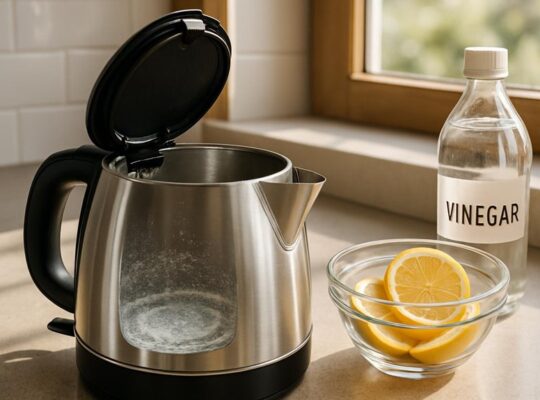
How do electric kettles actually bring water to a boil? You’ll find that most kettles use an internal heating element—either exposed or concealed—that converts electrical energy into heat via resistive heating. When you switch the kettle on, current flows through the element, raising its temperature and transferring heat to the water until it reaches boiling point. Automatic shut-off is commonly achieved with a thermostat or bimetallic sensor triggered by steam or temperature, reducing risk of overheating. Kettles come in basic models, temperature-controlled units for specific beverages, and rapid-boil designs; each type alters control precision and energy delivery. You should note that features like boil-dry protection, secure lids, and stable bases materially affect safe operation. For safety-minded users, choosing models with tested automatic cutoffs and clear user instructions reduces misuse. Always follow manufacturer guidelines and inspect cords and components regularly to mitigate electrical and scald risks. Regular descaling with white vinegar helps prevent mineral buildup and maintain performance.
Materials Used in Kettles and Their Safety Profiles
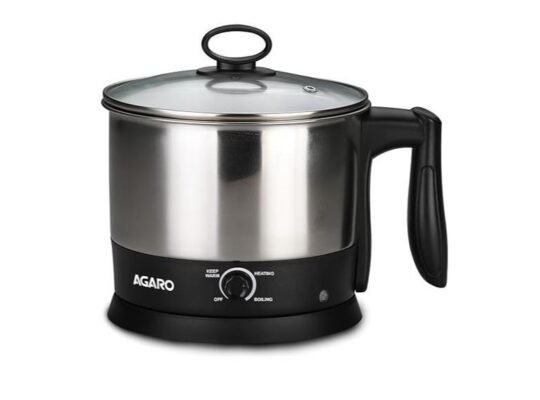
Knowing how a kettle heats water and what safety features it has helps when you compare the materials used in its construction, since those materials affect both performance and potential health risks. You’ll want to choose based on durability, heat transfer, and inertness. Stainless steel (especially 18/8 or 304) is corrosion-resistant and widely recommended; it’s easy to clean and shows consistent evidence of low reactivity. Glass provides visual clarity and is chemically inert when borosilicate is used, though it’s heavier and breakable. Ceramic-lined kettles offer inert surfaces but require intact glaze to remain safe; chips can expose substrates. Electric components and insulation should be isolated from water pathways. Consider trusted brands and models like Orpat OEK-8137 when assessing real-world features and build quality.
- Stainless steel: durable, low reactivity, recommended for most users.
- Glass (borosilicate): inert and visible, watch for thermal shock.
- Ceramic glaze: inert if intact; inspect for chips.
- Internal electrical parts: must be sealed to prevent contamination.
Choose models with third-party certifications and readable material specs.
Risks From Boiling Plastics and Chemical Leaching
What happens when you boil water in a kettle that contains plastic parts? You may be exposed to low levels of chemicals that can migrate from heated plastics into water. Studies show heat accelerates leaching of substances like BPA or non-BPA analogues from some polymers; migration depends on plastic type, temperature, and age. To reduce risk, use kettles certified as BPA-free, with food-grade plastics or stainless steel interiors, and avoid prolonged storage of hot water in plastic-lined reservoirs. Frying in an electric kettle is discouraged due to fire hazard potential and poor temperature control.
| Concern | Practical note |
|---|---|
| Chemical types | BPA, phthalates, oligomers (varies by polymer) |
| Risk factors | High heat, degraded plastic, repeated use |
If you want greater assurance, choose kettles with minimal plastic contact and check manufacturer testing or independent certifications. If you have heightened sensitivity (pregnancy, infants), prefer metal interiors. Regularly inspect plastic for discoloration or warping and replace the appliance if deterioration is visible.
Mineral Buildup, Scale, and Water Quality Concerns
Along with concerns about heated plastics, the composition of your water itself affects kettle safety and performance: hard water—rich in calcium and magnesium—forms mineral scale on heating elements and inner surfaces, while other dissolved solids can alter taste and carry trace contaminants. Scale reduces heating efficiency, may cause localized overheating, and can trap residues that concentrate metals; evidence supports routine descaling in hard-water areas to maintain safe operation.
- Test water hardness: municipal reports or simple kits tell you if scale risk is elevated.
- Use filtered or softened water where appropriate: reduces scale-forming ions but assess sodium if you have dietary concerns.
- Descale on manufacturer recommendations using approved agents (citric acid or vinegar where advised) to avoid corrosion and residue.
- Inspect kettle interiors regularly for persistent deposits or discoloration; replace appliances if cleaning fails to restore surfaces.
Be cautious: follow appliance guidance and local water quality data to minimize health and performance risks. Regular cleaning, including monthly descaling in hard-water areas, helps maintain efficiency and prevent heavy limescale buildup monthly descaling.
Microbial Growth and Cleaning Practices
Why might a boiled-water appliance still harbor microbes, and when does that matter for your health? You should know that boiling kills most organisms, but contamination can occur after cooling, from hands, spouts, or residual water that supports biofilm formation. This matters mainly for immunocompromised people, infants, or when kettles are left unused and warm.
| Risk factor | Practical control |
|---|---|
| Residual water and warmth | Empty after use; dry interior |
| Handling and spout contamination | Use clean hands; avoid touching rim |
| Scale and biofilm niches | Descale regularly; inspect seals |
Follow manufacturer cleaning guidance and use a descaling agent recommended for potable water systems. Rinse thoroughly after chemical treatments. If you notice odor, visible film, or discoloration, clean immediately and consider replacing the kettle if contamination persists. Routine cleaning and drying greatly reduce microbial risk; be especially diligent if someone using the water has increased susceptibility to infection. A regular descaling schedule using vinegar or lemon helps prevent scale that can harbor microbes and maintain kettle performance.
Electromagnetic Fields and Health: What the Evidence Shows
How concerned should you be about electromagnetic fields (EMFs) from electric kettles and other household appliances? You can be reassured that everyday appliances produce low-frequency EMFs far below international safety limits; existing epidemiological and laboratory studies haven’t demonstrated consistent health risks at these exposures. Still, it’s reasonable to be cautious and informed.
- Exposure levels: Measurements show kettles emit very low magnetic fields during brief operation; strength drops sharply with distance.
- Health evidence: Large reviews by WHO and national agencies find no convincing link between low-frequency EMFs from household devices and cancer or chronic disease.
- Practical steps: If you want extra caution, increase distance when kettles boil and avoid prolonged close contact during operation.
- Uncertainties: Research continues on long-term, low-level exposures; current guidelines incorporate conservative safety margins.
Follow established exposure limits and common-sense measures rather than assuming everyday EMFs pose a significant health threat. Glass kettles are corrosion-resistant and make it easy to monitor water levels and build-up, which can help with maintenance and safety.
Fire, Scalding, and Electrical Safety Precautions
Concerned about burns or fires from an electric kettle? You should follow straightforward, evidence-based precautions to reduce risk. Place the kettle on a stable, heat-resistant surface and keep cords clear of edges to prevent tipping; instability and trailing cords are common causes of spills and subsequent scalds. Never overfill: water that boils over can reach heating elements and create steam or short-circuits. Unplug the kettle before cleaning or if you’ll leave it unattended for long periods. Check the cord and plug regularly for fraying or damage; exposed wiring increases fire and shock risk. Use dry hands when plugging or unplugging, and avoid operating the kettle near sinks to reduce electrical hazard from splashed water. If you smell burning or see smoke, unplug immediately from a safe distance and seek professional inspection; do not immerse the base in water. Regular maintenance and cautious use markedly lower injury and fire incidents. Always verify the kettle’s automatic shut-off is functioning to prevent overheating and potential hazards.
Choosing a Safer Kettle: Features to Look For
After taking basic safety steps to prevent burns, fires, and shocks, you’ll want to pick a kettle that reduces those risks by design. Look for durable materials, clear safety certifications, and features that limit user error. Prioritize objective evidence—test reports, verified standards, and manufacturer specifications—over marketing claims.
- Auto shut-off and boil-dry protection: these cut power when water boils or if the tank is empty, lowering fire and element-failure risk.
- Cool-touch exterior and insulated handle: they reduce scald incidents by limiting surface temperature and improving grip.
- Certified electrical safety marks (e.g., UL, ETL, CE): third-party testing confirms compliance with regional safety standards.
- Simple controls and visible water level: straightforward on/off and accurate markers reduce misuse and overfilling, which can cause spills and short-circuits.
Choose kettles where independent testing data is available, and avoid models with ambiguous specifications or missing safety labels. Consider reputable brands with proven after-sales service and practical features like flat heating element that speed boiling and simplify cleaning.
Best Practices for Maintenance and Safe Use
To keep your kettle operating safely and to minimize contamination, follow a regular descaling schedule based on your water hardness and manufacturer’s guidance. Always handle and store water with clean hands and containers, and don’t overfill to avoid spills and mineral carryover. Inspect cords and plugs for damage before each use, unplug when filling or cleaning, and replace any compromised components promptly. Choose the right materials like stainless steel or glass when possible to improve durability and heat retention.
Regular Descaling Routine
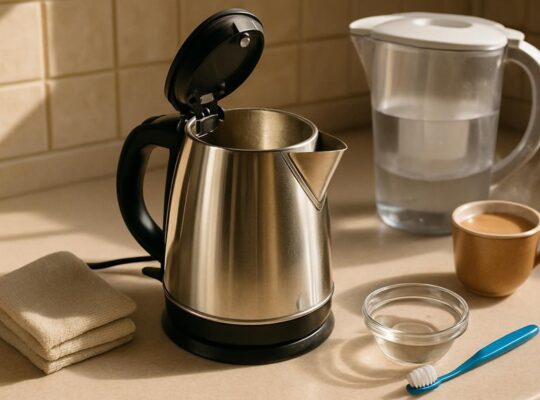
Because mineral buildup reduces heating efficiency and can harbor bacteria, you should descale your electric kettle on a regular schedule and with safe methods. Aim for monthly descaling in hard-water areas and every 2–3 months where water is soft; increase frequency if you see visible scale. Use mild, evidence-backed agents (white vinegar or citric acid) at recommended dilutions, rinse thoroughly, and run a plain-boil cycle afterwards to remove residues. Avoid abrasive tools or harsh chemicals that can damage interior coatings.
- Empty kettle, add descaling solution per product instructions.
- Let sit 15–30 minutes or boil briefly for rapid action.
- Scrub gently with a soft brush if needed.
- Rinse and perform two full boil-and-discard cycles before reuse.
Safe Water Handling
How should you handle water for your kettle to minimize health risks and keep the appliance functioning properly? Use fresh potable water every time; standing water can promote microbial growth and mineral deposition. Fill only to the required level to avoid boiling over, which can contaminate the exterior and heating element area. If your tap water is hard, consider filtered or bottled water to reduce scale; this lowers energy use and bacterial harborage. Empty the kettle after use if you won’t reboil within a few hours, and dry the interior occasionally to limit lingering moisture. Avoid adding substances (like oils or milk) that aren’t meant for boiling in kettles designed for plain water. Periodically inspect the interior for deposits or discoloration and descale per manufacturer guidance.
Cord and Plug Care
Why should you pay close attention to your kettle’s cord and plug? Damaged insulation or loose connections raise risk of electric shock and fire; inspections and prompt repairs reduce those risks. Follow these evidence-based, practical precautions.
- Inspect cord and plug before each use for cuts, fraying, melting, discoloration, or exposed wires; stop using if you find defects.
- Avoid pulling the cord to unplug; grasp the plug body and keep the cord clear of hot surfaces and water to prevent insulation failure.
- Use the original or manufacturer-approved replacement cords and plugs; improper replacements can bypass safety features.
- If the plug feels hot, trips breakers, or sparks, discontinue use and have a qualified technician assess or replace the kettle.
When to Replace Your Electric Kettle
When should you consider replacing your electric kettle? You should replace it when you observe functional decline, safety risks, or persistent contamination that cleaning won’t fix. Regularly inspect the heating element, lid seal, and base for corrosion, loose parts, or exposed wiring. If the kettle sparks, emits burning smells, or trips a breaker, stop using it immediately and replace it. Scale is normal, but heavy mineral buildup that won’t detach or causes discolored water warrants replacement. For plastic kettles, replace if you detect cracks, persistent odors, or staining that suggests leaching; for metal kettles, replace if rust appears. Manufacturer age guidelines and safety recalls are important—follow them. Consider choosing a kettle made from food-grade stainless steel for reduced risk of plastic-related issues and improved durability.
| Sign | Action |
|---|---|
| Visible rust or corrosion | Replace immediately |
| Sparks or burning smell | Stop use and replace |
| Persistent scale/discoloration | Replace if cleaning fails |
| Cracks or damaged plug | Replace immediately |
| Manufacturer recall/age limit | Replace per guidance |
Frequently Asked Questions
Can Kettles Affect the Taste of Coffee or Tea Beyond Mineral Content?
Yes — kettles can alter flavor beyond minerals: scale, residual cleaning agents, plastic or metal leachates, and uneven heating affect extraction. You should use stainless or glass kettles, descale regularly, and avoid scented cleaners.
Are Cordless Kettles More Hazardous Than Corded Models?
No, cordless kettles aren’t inherently more hazardous than corded models; they share similar electrical and boiling risks. You’ll want to check build quality, safety certifications, automatic shut-off, and heating-element design to minimize hazards.
Can Kettles Be Safely Used to Sterilize Baby Bottles or Pacifiers?
Yes — you can safely use a kettle to sterilize baby bottles or pacifiers by boiling them fully submerged for at least five minutes, ensuring heat-resistant parts only, avoiding plastic damage, and letting items cool on a clean surface.
Do Temperature-Hold Features Promote Bacterial Growth?
Yes — if a kettle’s keep-warm setting holds water between roughly 20–50°C, it can allow bacterial survival and growth; you should use higher temperatures (≥60°C) or periodically boil and clean to minimize contamination risks.
Are Warranties Voided by Descaling or Self-Repair Attempts?
Generally, warranties can be voided if you descaling improperly or perform unauthorized self-repairs; follow manufacturer instructions, use approved descalers or service centers, keep receipts, and document actions to preserve warranty coverage and safety.