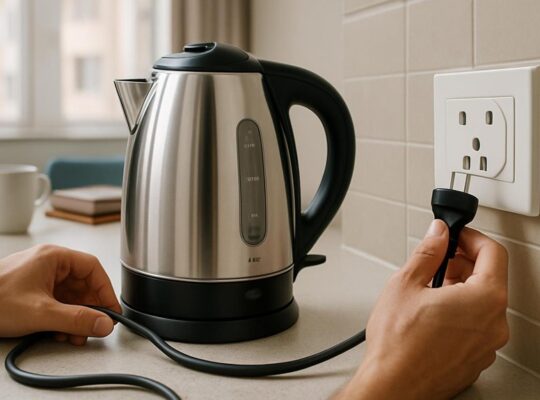
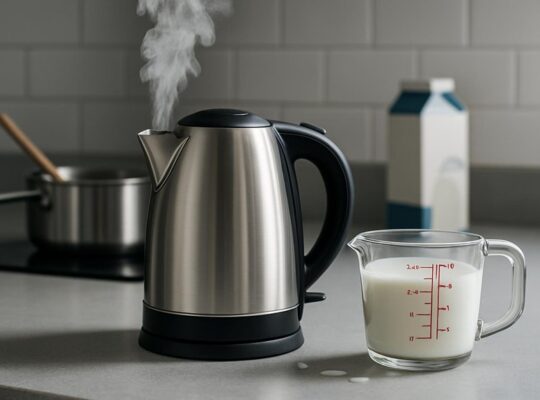
If you make tea and coffee at home, water temperature is one of the few things you can control reliably, and it’ll change how your brew tastes. You’ll want accurate presets for green tea and coffee, a repeatable hold function, and good pour control more than flashy lights or the fastest boil. There are trade-offs worth knowing before you pick a model—so let’s look at what really matters.
Key Takeaways
- Choose variable-temperature control (incremental presets, e.g., 80°C, 90°C, 96°C) for optimal extraction of different teas and coffee.
- Accurate, repeatable temperature (±1–2°C) and a hold function ensure consistent flavor and easier recipe replication.
- Fast boil power (high wattage) matters for speed, but insulated or controlled-heat modes preserve delicate tea volatiles.
- Safety and usability: clear display, auto-shutoff, boil-dry protection, and locked presets reduce scald risk and user error.
- Durable, non-reactive interior (stainless steel or glass), easy descaling, and good build quality maintain flavor and long-term reliability.
Why Water Temperature Changes Flavor
Why does temperature matter when you’re brewing tea or coffee? It controls which compounds dissolve from leaves or grounds and at what rate, so you get different flavors, bitterness, and aroma. At lower temperatures, delicate volatile aromatics and fewer tannins extract, which preserves floral and sweet notes in green and white teas. Higher temperatures increase extraction speed and draw out oils, acids, and astringent polyphenols, which can make black tea and coffee taste fuller but also harsher if too hot. Consistent temperature reduces under- or over-extraction, so your cup is predictable and safer to handle. Rapid boiling can denature some desirable volatiles and increase dissolved gases that change mouthfeel. For safety, avoid scalding temperatures when pouring or steeping with inexperienced hands; let water rest briefly if needed. In practice, matching temperature to beverage type and following measured steep times gives controllable, repeatable results without unnecessary risk. Also, using a kettle with variable temperature settings helps you reach and maintain the ideal heat for different beverages.
Temperature Presets and Why They Help
How do temperature presets make brewing easier and more consistent? They take the guesswork out of reaching target temperatures that different beverages require. Instead of watching a thermometer or repeatedly reheating, you press a button and the kettle heats to a vetted set point — for example 80°C for green tea or 96°C for coffee — then holds or notifies you. That repeatability reduces under- or over-extraction risk, so your cups taste closer to expected profiles every time.
Presets also improve safety: automatic shutoff or hold functions prevent boiling dry or prolonged overheating, and many models include clear indicators so you’re not handling hot water unnecessarily. From a practical perspective, choosing a kettle with well-spaced, labeled presets and a reliable thermostat gives you control without extra steps. For consistent, safe brewing, presets are a simple feature that delivers measurable improvement in flavor reproducibility and reduces common user errors. Regular descaling helps maintain those temperature controls by preventing mineral buildup from affecting performance.
Rapid Boil Vs Controlled Heat for Extraction
You’ll notice rapid-boil kettles get water to temperature fast, which saves time but can overshoot delicate targets and introduce more dissolved gases that alter extraction. Controlled-heat kettles let you hold or slowly approach precise temperatures, giving you repeatable extraction for tea and pour-over coffee. Choose based on whether speed or extraction control matters more for your routine and beverage of choice. Selecting the right kettle material can also affect heat retention and boiling speed, so consider stainless steel or glass when prioritizing performance.
Rapid Boil Pros and Cons
Want water boiling in minutes? Rapid-boil kettles heat fast, saving time and energy for busy mornings or quick French press batches. You’ll appreciate consistent boil times and often automatic shutoff, reducing overheating risk. However, rapid boil isn’t ideal when delicate extraction matters; boiling can drive off volatile aromatics and increase bitterness if you use the water immediately for sensitive teas. From a safety standpoint, fast heating demands sturdy lids, cool-touch handles, and reliable cutoffs—look for models with boil-dry protection and clear indicators. Maintenance-wise, rapid heat can accelerate scale buildup in hard-water areas, so plan regular descaling. In short: rapid-boil kettles give speed and convenience with solid safety features, but they’ll require care if you prioritize nuanced flavor or live in hard-water regions.
Temperature Control for Extraction
While rapid-boil kettles are great for speed, controlled-temperature kettles give you the precision needed for proper extraction of tea and specialty coffee. You’ll get consistent water temperatures—important because different leaves and beans extract best at specific ranges (green tea ~75–85°C, coffee 90–96°C). That precision improves flavor and reduces bitterness or under-extraction, and many controlled kettles include hold timers and safety cutoffs to prevent overheating.
- Set temperatures for the beverage type to avoid scalding and preserve aroma.
- Use hold and pre-infuse functions to control steeping or blooming times safely.
- Rely on built-in sensors and automatic shutoff to reduce burn and fire risk.
- Prefer kettles with accurate displays and repeatable settings for reliable extraction.
Keep-Warm Functions: Useful or Unnecessary?
Ever wondered whether a kettle’s keep-warm setting is genuinely worth it or just a convenience gimmick? If you want hot water at a set temperature without reboiling, keep-warm can save time and marginal energy—studies show reheating from warm water uses more energy than maintaining a temperature for short periods. It’s useful when you brew multiple cups over 15–30 minutes or have guests. However, continuous keep-warm modes raise safety and quality concerns: prolonged heat can concentrate minerals, speed scale buildup, and slightly alter taste. For safety, choose kettles with automatic shutoff timers, thermal insulation to limit surface heat, and clear indicators so you don’t leave water dangerously hot. If you only boil once or prefer freshest flavor, skip keep-warm and reheat when needed; modern kettles reboil quickly. In short, keep-warm is practical for convenience and brief intervals, but prioritize safety features and regular descaling to avoid risks and diminished taste. Place the kettle on a stable, heat-resistant surface away from edges and heat sources to reduce accident risk and protect electrical components, and always follow the manufacturer’s cleaning recommendations for regular descaling.
Pouring Control and Gooseneck Spouts for Coffee
How you pour makes a big difference in extraction, so kettles with precise pouring control—especially gooseneck spouts—matter if you brew pour-over coffee. You’ll get steady flow, directional accuracy, and better saturation of the grounds, which improves consistency. A gooseneck gives slow, controlled pours that let you manage bloom and flow rate without splashing or over-extracting.
- Flow rate control: look for spouts and handles that let you modulate pour speed for even extraction.
- Spout design: narrow, tapered gooseneck tips offer precise placement and reduce splatter; test for wobble-free pouring.
- Ergonomics and safety: comfortable grip, balanced weight, and secure lids minimize spills and burns during slow pours.
- Electric features: variable temperature and keep-warm help, but prioritize steady pour mechanics; quick-boil without controlled pour increases risk of scalding.
Choose a kettle that combines a reliable gooseneck shape with safe handling to make better, repeatable coffee while reducing spill hazards. Consider kettles with precise pouring control that also serve well for brewing tea and other hot beverages.
Materials and How They Affect Taste and Safety
When you pick a kettle, the materials—like exposed heating elements versus concealed stainless steel—shape both flavor and longevity. Interior coatings (plastic, enamel, or none) affect taste uptake and cleaning, while some metals can leach minerals into your water, especially with hard water or acidic brews. Knowing which combinations resist transfer and corrosion helps you choose a kettle that keeps tea and coffee tasting clean and stays safe over time. Stainless steel models are highly durable and often offer additional features like double-walled construction for better insulation.
Heating Element Materials
Curious which heating-element material will actually change the taste or safety of your brew? You’ll mostly encounter exposed stainless steel, concealed stainless, and concealed aluminum alloys. Material choice affects heat transfer, corrosion resistance, and potential leaching—factors that matter if you’re safety-conscious.
- Exposed stainless steel: durable, low reactivity, minimal taste impact when maintained.
- Concealed stainless element: isolates metal from water, reduces scale buildup and direct contact.
- Aluminum alloys (less common): good conductor but can corrode if protective coating fails; avoid prolonged exposure to acidic water.
- Copper elements: excellent heat transfer but may leach if uncoated; choose units with proper barrier layers.
Pick kettles with certified materials and clear manufacturer testing to minimize risk and preserve flavor.
Interior Coating Types
The interior coating you choose can influence both taste and safety, so it’s worth knowing the common options and their trade-offs. Stainless steel is durable, non-reactive, and won’t impart flavors; look for 304/18-8 food-grade grades and welded seams. Glass-lined interiors are inert and preserve flavor, but can be heavier and more fragile. Ceramic or enamel coatings are inert and easy to clean, though chips expose base metal and must be inspected. Non-stick coatings (PTFE/PFOA-free types) resist scale and are convenient, but avoid scratched surfaces and follow manufacturer temperature guidance. If you’re sensitive to off-flavors or want long-term safety, choose inert materials, inspect coatings regularly, and replace kettles that show wear or damage.
Mineral Transfer Risks
How might the materials inside your kettle change the water you brew with? You’ll want materials that don’t leach metals or alter taste. Stainless steel (food-grade 304/316) is low-risk; aluminum or cheap alloys can impart metallic flavors and trace metals. Ceramic- or glass-lined interiors minimize transfer but can chip. Plastic parts in contact with water may release contaminants when heated, so avoid them or choose BPA-free, tested options. Scale buildup from hard water concentrates minerals and can trap bacteria; regular descaling reduces risk. For safety and flavor, pick kettles with certified materials and follow maintenance guidelines.
- Prefer food-grade stainless steel or glass/ceramic linings
- Avoid uncoated aluminum or unknown alloys
- Minimize plastic contact with hot water
- Descale regularly to reduce mineral concentration
Build Quality, Durability and Warranty Considerations
When you’re choosing an electric kettle, pay attention to materials, assembly, and finish — they predict how long the kettle will perform reliably. Inspect seams, lid fit, and the base connection; loose parts and thin plastics increase failure and safety risks. Stainless steel or glass interiors resist corrosion; food-grade coatings matter if you’re sensitive to mineral transfer. Check user reviews for long-term leaks and heating-element failures, and prefer brands with clear service policies.
| Feature | What to check | Why it matters |
|---|---|---|
| Materials | Interior finish, housing | Corrosion resistance, taste safety |
| Assembly | Seals, hinge, cord entry | Prevents leaks, shorts, and burns |
| Warranty | Length, coverage details | Lowers repair costs, shows manufacturer confidence |
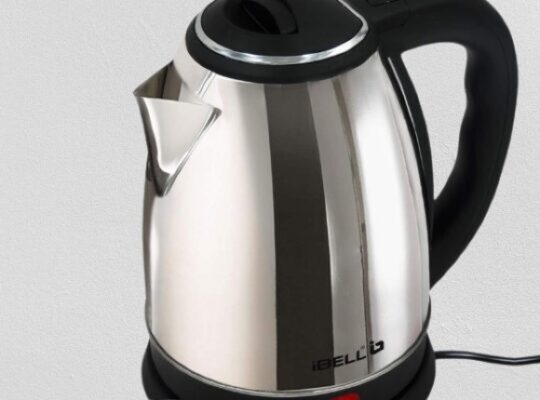
Read warranty terms: look for at least one year covering heating elements and electrical faults. Keep receipts and register the product to simplify claims. A reliable model like the iBell SEK150L offers fast boiling at 1500 watts and a 2-year warranty, which can give added peace of mind.
Speed, Energy Use and Everyday Convenience
Want your kettle to be fast without wasting electricity? You should pick one with a high wattage base (1500–3000 W) for quick boil times, but balance that with insulation so heat isn’t lost once water’s hot. Variable temperature settings save energy by heating only to what’s needed—90°C for coffee, 80°C for green tea—so you avoid overheating and repeated reheats. An auto-shutoff and boil-dry protection keep operation safe and prevent wasted cycles. For everyday convenience, look for a wide spout, comfortable handle and a clear indicator so you can act quickly and safely.
- Choose higher wattage plus good insulation for faster, more efficient boils.
- Use temperature presets to match beverage needs and reduce energy use.
- Rely on reliable auto-shutoff and boil-dry protection for safety and efficiency.
- Prefer clear indicators and ergonomic design to speed routine use without risk.
These choices are practical, evidence-backed and reduce both energy waste and safety hazards. Major brands like Philips offer varied models with features such as concealed elements, different capacities and safety protections to suit these needs.
Cleaning, Limescale Prevention and Maintenance
Keeping your kettle fast and efficient also means preventing limescale and staying on top of simple maintenance so performance—and safety—don’t degrade. You should descale regularly if you have hard water; mineral buildup reduces heating efficiency and can trap bacteria. Use a 1:1 white vinegar–water solution or citric acid per manufacturer guidance, boil briefly, let sit 15–30 minutes, then rinse thoroughly. For light cleaning, wipe the exterior and filter with a soft cloth; don’t immerse the base or electrical components. Check seals, lids, and spouts for wear or blockage and replace parts specified by the maker. If your kettle has a replaceable filter, change it on the schedule recommended to avoid taste and flow issues. Always unplug before cleaning and allow the kettle to cool. Keep a simple maintenance log if you rely on it daily; recording descaling dates helps you avoid missed intervals. Regular, evidence-based upkeep preserves performance and reduces safety risks. For heavy limescale buildup, consider using a vinegar solution and scrubbing gently with a non-metallic sponge.
Choosing the Right Kettle for Your Brewing Habits
Think about how you actually make drinks: if you brew pour-over coffee or delicate green teas, temperature control matters for extracting the best flavors. Match capacity to how many cups you usually make and to the counter space you have, since oversized kettles waste energy and crowd worktops. Also weigh boil speed against energy use—faster kettles save time but can use more power, so choose what fits your routine. Consider brand reputation and after-sales service when deciding which kettle to buy.
Brewing Temperature Control
How precise do you need your kettle’s temperature to be? You’ll want control if you brew delicate green or specialty coffee; small errors change flavor. Choose kettles that let you set specific targets (e.g., 80°C for green tea, 93°C for pour-over coffee) and hold temperature safely.
- Look for ±1–2°C accuracy documented by manufacturers or verified reviews.
- Use a hold function to keep water at target without repeated boiling, reducing scald risk.
- Prefer models with easy-to-read displays, locked settings, and automatic shutoff for safety.
- Consider incremental presets (5°C–10°C steps) rather than only “warm” modes for consistent results.
Accurate, repeatable temperatures improve extraction and safety; match features to the teas and coffee you brew.
Capacity and Counter Space
Where will you put the kettle and how much tea or coffee do you usually make? Think about daily servings: single mugs need 0.5–1.0 L kettles; households of two to four often prefer 1.5–1.7 L. Measure available counter depth and outlet placement so the base and cord fit without crowding appliances or blocking ventilation. Choose a model whose external dimensions match your space; a tall slim kettle may fit narrow counters, while compact wide bases are steadier. Consider fill marks and minimum-fill requirements to avoid dry-boil hazards. If you store the kettle on a shelf, check weight when filled and ease of lifting. Prioritize stable placement and clearances to reduce accidental tipping and ensure safe handling during pouring.
Speed and Energy Use
Wondering how fast your kettle should be or how much electricity it’ll use? You’ll want a balance: faster boils save time but can draw more power briefly; efficient elements and good insulation cut waste. Choose a kettle that matches your routine—small, quick boils for single cups; larger capacity if you often make several drinks. Look for clear power ratings and consider variable temperature control to avoid overheating delicate teas. Prioritize safety features like auto-shutoff and boil-dry protection to prevent hazards when running quickly.
- Check wattage: higher watts = faster boil, more instantaneous draw
- Insulation: keeps heat, reduces reheating energy
- Variable temps: avoid unnecessary full-boil energy use
- Safety: auto-off and boil-dry protection are essential
Frequently Asked Questions
Can I Use an Electric Kettle on Induction Cooktops?
Yes — you can use an electric kettle on an induction cooktop only if its base is induction-compatible (magnetic). You’ll want to verify manufacturer guidance, avoid damaged bases, and never heat an unplugged electric-only kettle on induction.
Are Glass Kettles Microwave-Safe?
No, glass kettles usually aren’t microwave-safe; they’re designed for stovetop or electric bases and may have metal parts or non-microwave-rated seals. Don’t microwave them—use a microwave-safe container and follow manufacturer guidance for safety.
Do Kettles Affect Water Mineral Content for Health?
Yes — kettles don’t change mineral content much; they heat water, so dissolved minerals stay. Boiling can concentrate minerals slightly by evaporation and precipitate hardness (scale). You should use filtered water if you want lower minerals.
Can I Descale With Vinegar Safely?
Yes — you can descale with diluted white vinegar safely for many kettles. Use a 1:1 or 1:2 vinegar-to-water mix, boil or soak, rinse thoroughly several times, and avoid vinegar on aluminum or damaged coatings.
Are Cordless Kettles Safe for Children?
Yes — cordless kettles can be safe for children if you supervise, choose models with cool-touch exteriors, automatic shutoff, boil-dry protection, stable bases, and concealed heating elements, and keep cords, hot water, and bases out of reach.