You’re choosing between 1 L, 1.5 L and 2 L kettles, so think about how you actually use hot water each day. A 1 L saves counter space and energy for solo use, 1.5 L fits couples or small families, and 2 L gives headroom for guests but takes longer and uses more power. We’ll compare boil times, energy waste, and practical trade-offs so you can pick the size that makes sense.
Key Takeaways
- Choose 1L if you’re single or brew one to two cups frequently, for faster boils and lower energy use.
- Pick 1.5L for couples or small families when you need 2–3 servings without excessive bulk or long boil times.
- Opt for 2L if you regularly serve several people or want spare capacity for guests, accepting longer boil time and higher energy use.
- Favor the smallest capacity that meets peak needs to save counter space, reduce wasted boiled water, and speed heating.
- Prioritize safety features (auto shut-off, boil-dry protection), cool-touch handle, and removable filter over extra presets.
Choosing the Right Kettle Capacity for Your Household
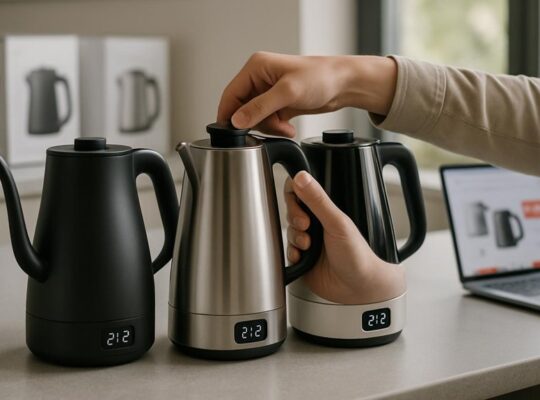
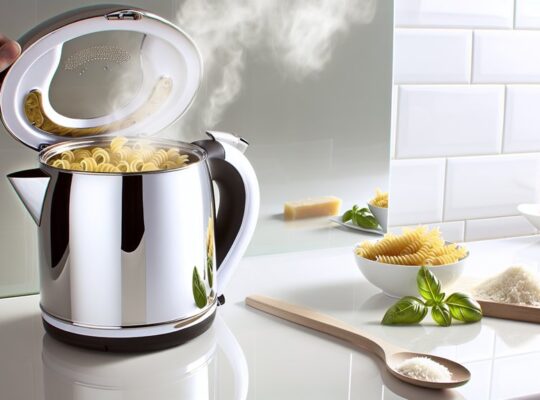
How many liters do you actually need? You’ll want to match capacity to daily use: single occupants often find a 1L kettle adequate for one or two cups, taking less counter space and reducing wasted boiled water. Couples or small families may prefer 1.5L as a balanced choice—it covers morning routines without being bulky and still fits most cupboards. If you regularly serve guests or make larger batches (soups, pasta), a 2L model gives margin so you won’t underfill and risk repeated boiling. Consider storage, pouring safety, and handling: bigger kettles are heavier when full, so you’ll need a sturdy grip and a stable base to avoid spills. Think about frequency of use versus needing extra volume for safety margins; occasional large boils are fine, but routinely overfilling small kettles increases risk. Choose the smallest capacity that meets your peak needs while keeping safe handling and storage practical. Many high-quality 2L kettles feature stainless steel construction which ensures durability and efficient boiling.
Energy, Boil Time, and Practical Trade-Offs
Once you’ve matched capacity to your household needs, consider how energy use and boil time affect daily convenience and costs. A 1L kettle heats less water faster and uses less energy per boil, so it’s efficient if you regularly make single cups. A 1.5L model balances speed and volume: it’s still relatively quick for smaller boils but can handle two to three servings without repeated heating. A 2L kettle takes longer and uses more energy per full boil, but it’s practical when you need multiple cups at once and want fewer boil cycles.
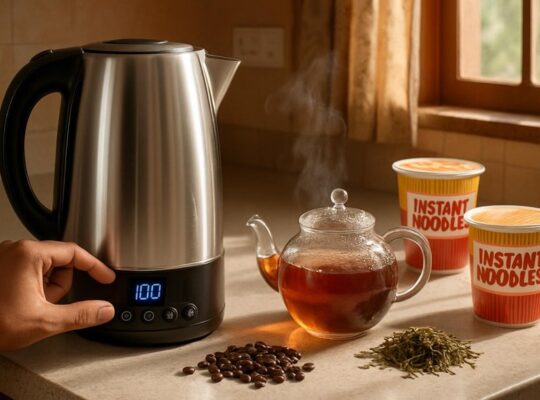
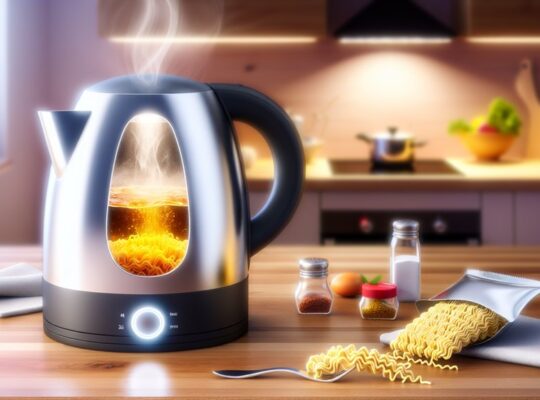
You’ll trade time for efficiency: smaller boils save energy and time overall if you rarely need full capacity, while larger kettles reduce interruptions at the cost of higher single-boil energy. For safety, always avoid overfilling, follow minimum-fill guidance, and allow cooling between rapid successive boils to prevent dry-boil risks and prolong element life. Electric kettles are also handy for quick tasks like making instant noodles or hot chocolate when you need hot water fast.
Buying Guide: Features, Portability, and Budget Considerations
Wondering which features are worth paying for? You’ll balance safety, portability, and cost when choosing between 1L, 1.5L, and 2L kettles. Smaller kettles heat faster and use less energy for single cups; larger ones suit families but cost more to run per boil. Prioritize auto shut-off, boil-dry protection, and cool-touch handles for safe daily use. If you move often, pick a lightweight model with a compact base and cord storage. If budget’s tight, focus on core safety features rather than extras like fancy temperature presets.
- Auto shut-off and boil-dry protection
- Removable limescale filters for cleaner water
- Compact footprint and light weight for portability
- Simple, durable controls over digital complexity
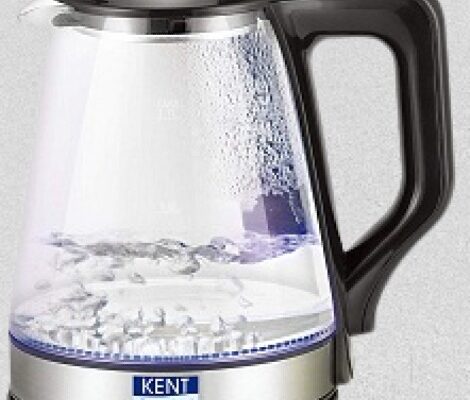
- Clear water window and secure lid for safe pouring
Compare warranties and read reviews for reliability. Pick the size that matches typical servings, then choose the safest, most durable model your budget allows. Also, place the kettle on a stable, heat-resistant surface away from edges and heat sources to ensure safe operation and reduce risk of damage or spills, following basic placement precautions.
Frequently Asked Questions
Can Kettle Size Affect Water Taste Over Time?
Yes — size can influence taste over time: smaller kettles heat and cool faster, causing mineral concentration and potential scaling; larger ones may hold stale water longer. You’ll want regular descaling, fresh fills, and proper drying to stay safe.
Are There Safety Differences Between Plastic and Metal Interiors?
Yes — plastic can leach chemicals if heated or scratched, while metal (stainless steel) won’t, is more durable and easier to clean; you’ll want BPA-free plastics, avoid damaged liners, and prefer stainless for long-term safety.
Do Warranty Terms Change With Kettle Capacity?
Yes — warranty terms usually don’t hinge on capacity; they focus on defects, materials, and use. Still, you’ll want to check specifics: larger models might have different components or coverage durations, so compare policies before buying.
Can a Kettle Be Used for Sterilizing Baby Bottles?
Yes — you can use a kettle to sterilize baby bottles, but only if it fully submerges bottles/teats in boiling water, you follow manufacturer safety/warranty guidance, avoid plastic parts melting, and ensure thorough drying to prevent recontamination.
How Does Altitude Affect Boiling Performance?
Higher altitude lowers boiling point, so your kettle boils at a lower temperature and takes longer to sterilize; you’ll need longer boiling times or higher-pressure methods, and you shouldn’t assume sea-level pasteurization or sterilization times remain safe.